Wave Mobile Application (Android/iOS) – User Guide
Updated on October 6, 2026
WELCOME
Thank you for using the Grandstream Wave mobile app. Wave is a free mobile app that provides remote voice and video collaboration tools for businesses utilizing Grandstream’s UCM IP PBXs. Ideal for remote and traveling workers, Wave offers an easy-to-use platform that allows users to remotely join, schedule, and hold meetings, calls, and conferences from mobile devices. It also allows UCM series users to directly call other extensions, landlines, and mobile numbers. Wave is available for Android™ and iOS™ devices, can be quickly configured by scanning a QR Code produced by the UCM series, and is compatible with Grandstream’s UCM RemoteConnect cloud service to ensure fully secure remote connections. With Wave, businesses can provide remote workers with a powerful mobile app to meet and collaborate from anywhere, boosting communication and productivity for multi-location organizations.
PRODUCT OVERVIEW
Feature Highlights
Supported by Android™ 8.0+ and iOS™ 13.0+ with 2G/3G/4G/5G and Wi-Fi networks.
Voice channel switching between Bluetooth, mobile device, speakerphone, and 3.5mm handset jack.
Native integration with mobile devices, including contacts and call history, and the ability to display SIP users’ online status
LDAP support makes finding contacts easier
Supports call display, voicemail, and call encryption
Full integration with Grandstream’s series of IP PBXs, including the creation of a QR code for automatic login, call transfer, call recording from the server, etc.
Supports Multi-factor authentication for login when integrated with UCM6300/A IP PBX.
Supports Microsoft login when integrated with Microsoft Entra ID (Azure AD).
Supports H.264
Conveniently join meetings without logging in
High-quality point-to-point audio/video calling, jitter resilience up to 50% audio packet loss, and 20% video packet loss
Support schedule meetings and meetings now anywhere, anytime
Built-in NAT traversal, including automatic NAT discovery and TURN/ICE.
Support basic chat features, including point-to-point chat and group chat features, sending documents and emojis, starting video meetings in group chat, synchronizing group chat and meeting chat, etc.
Wave Technical Specifications
Background Mode
When the background mode is enabled, the user can still receive incoming calls, messages, and notifications when the application is running at background It is recommend to enable this if issues are experienced with message notifications and receiving incoming calls.
Disable Battery Usage Optimization
This allows Wave to use the battery in the background. If this option is disabled, issues like not receiving notifications and incoming calls might not be received.
Enable Background Data
Enable this option to allow Wave to use data in the background. Disabling this will prevent any messages or calls to be delivered when Wave is on the background.
Wave Technical Specifications
Please visit our website for more Wave application information and product documentation:
Hardware: Compatible with most Mobile phones and tablets running Android™ 4.2+ or iOS 13+
Network: Wi-Fi, 2G, 3G, 4G, and 5G networks
Download and Installation
Wave app can be downloaded from Google Play or App Store and installed.
Click on the Wave app icon to open it.
Notes
When running the Wave app for the first time, users will be prompted to confirm whether to allow the application to access contacts. If allowed, users could view local contacts on the Wave app.
Wave app requires permission related to making calls, managing calls, as well as accessing the camera, microphone, some system files, call status, mobile network information, etc. When prompted to allow permission, please select Allow for the Wave app to be used normally.
For some Android devices, the Wave app requires users to enable floating window or background pop-up window permissions. Otherwise, incoming call notifications cannot be received.
Touchscreen Gestures
Gestures on Touchscreen
When using the Wave app, users can manipulate the above-shown gestures to control the touchscreen.
Tap: Touch the screen with a fingertip once to select or open a menu.
Press and hold: Touch and hold the screen with one fingertip for about 2 seconds to bring up more operations.
Flick and Slide: Slide a fingertip across the screen. For example, users can swipe up/down to scroll through a page or slide left/right to switch video feeds during a video conference.
USING WAVE MOBILE APP
Signing In
Users can sign in on different platforms at the same time and use different methods:
The multi-device login option must be enabled on the UCM6300/A series. For more details, refer to the UCM6300/A Series User Manual.
For more details on how to manage the logged-in devices, refer to [Login Device Management].
Signing In Using Credentials
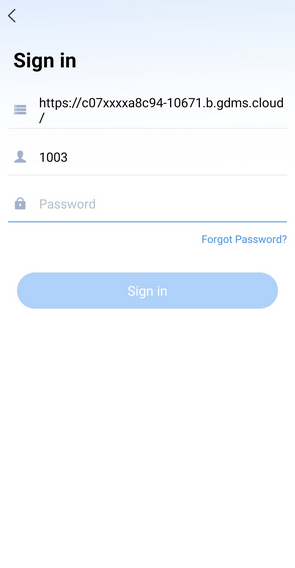
Step 1: After opening the Wave app, tap on “Sign in” to open the login interface.
Step 2: Enter the server address, account number, and User password. Then click “Sign in”.
Wave Mobile Welcome Page
Wave Mobile Login Page
Signing In Using QR Code
The user can also tapto log in using the QR code provided in the Wave welcome email, or if the user has already open his/her account on Wave Desktop or Wave Web.
Scan QR Code
Signing in using Biometrics
The Wave mobile app allows the user to set biometrics as a login method. Wave relies on the biometric readers and the configuration of the mobile phone to provide a quick login. Therefore, they should be preconfigured before being enabled on Wave. The common biometrics that can be found on commercial smart mobile phones are fingerprint scanners, facial recognition, and iris recognition.
To enable biometric login, please follow the steps below.
Tap on your profile on Wave to open your account-related settings.
Tap on Account Security Settings, then tap Biometric Login to enable it
Verify your identity
Profile Options
Biometrics Verification
When logging in, enter your server address and your extension number, then select “Biometric Login”.
Wave Login Page
If you have set more than one biometric on your phone, you will be prompted to choose one of them to log in, as seen in the screenshot below.
Biometric Login
If you have chosen to log in using your fingerprint, please place your finger on the fingerprint reader. If you have chosen to log in using facial recognition, then face your phone’s camera to authenticate.
Signing In Using Microsoft Account
Wave mobile supports Single Sign-On (SSO) via Microsoft accounts (Microsoft Entra ID/Azure AD), when enabled by the UCM administrator. This allows users to log in using their Microsoft 365 credentials.
The extension must be associated with a Microsoft account by the administrator.
This feature is only supported on UCM6300/A series firmware 1.0.29.6 or later.
Once Microsoft Entra ID is integrated, follow these steps to enable SSO on the UCM:
Log in to the UCM web interface as administrator.
Navigate to Integrations → Microsoft Entra ID (Azure AD).
Under Single Sign-On (SSO) section:
Enable “Single Sign-on (SSO)”.
Add the UCM’s SSO redirect URI to Microsoft Entra ID application settings.
UCM SSO Configuration Page
Note:
SSO cannot be activated unless at least one Microsoft Entra ID user is successfully bound to a UCM user account.
To verify if an extension is bound to a Microsoft account, navigate to Extensions/Trunk → Extensions. Bound extensions will display a Microsoft logo badge, as shown in the screenshot below.
Microsoft bound Extension
To login to Wave mobile with a Microsoft account, please follow the instructions below:
Launch the Wave mobile application.
On the login screen, enter the server address, then click “Log in with Microsoft Account”.
Microsoft Account Login Option
Specify the SIP server from which the authentication will be completed:
Once redirected to Microsoft’s login page, enter your organizational email address and complete the authentication process.
Microsoft Organizational Login
Upon successful authentication, you’ll be automatically logged into Wave Desktop.
Extension Successful Login
Log In With Google Workspace
Wave Desktop supports Single Sign-On (SSO) via Google Workspace account, when enabled by the UCM administrator. This requires that the Google Workspace integration is enabled on the IPPBX.
Wave Desktop supports Single Sign-On (SSO) via Windows® AD account, when enabled by the UCM administrator. This requires that the Windows® AD integration is enabled on the IPPBX.
Wave Desktop supports Single Sign-On (SSO) using SAML, when enabled by the UCM administrator. This requires that the SAML SSO integration is enabled on the IPPBX. This integration allows using any identity provider that support SAML to be used for single sign-on.
To strengthen account security and protect user data, Wave includes support for Multi-Factor Authentication for mobile application users.
When this feature is enabled, users will be prompted to complete the MFA Binding process immediately after their login to the Wave mobile app. The system will prompt for a time-based one-time password (TOTP) or other configured MFA method during each login session.
If multi-factor authentication is enabled for a user, they must first log in to Wave Desktop or Web to complete the setup before using it on the mobile app.
Please follow the steps below to enable and configure MFA for Wave mobile app users:
Enable MFA Binding on the Extension Level
Navigate to Extensions on the UCM web interface.
Locate the desired extension and enable “Multi-Factor Authentication” under the Wave Client settings.
Extension Wave Client Settings
When a user attempts to log in to the Wave mobile app, they will be notified that multi-factor authentication is enabled on their account and must complete the setup to proceed.
MFA Prompt on Wave iOS app
Log in to Wave Web/Desktop
The user needs to log in to the Wave Web/Desktop using their User/Wave credentials.
After logging in, the following message will be displayed.
MFA Enabled Prompt
Click the Bind button to begin the MFA setup.
Select Authentication Method, the available MFA options are:
Authentication App: Authenticate via a time-based one-time password (TOTP) generated by an authentication app (e.g., Google Authenticator, Microsoft Authenticator) installed on a mobile device or PC.
TOTP Hardware Token: Authenticate using a hardware token that displays a TOTP code.
Email Authentication: Sends a verification code to your email. You check your inbox, copy the code, and enter it to complete the login.
Please refer to the Multi-factor Authentication How-To Guide for step-by-step instructions on configuring both authentication methods.
Once setup is complete, the selected MFA method will be required for all future Wave mobile app logins associated with that extension.
MFA Login Prompt
Making a Call
Step 1: Click on the bottom right corner of the app to bring up the dial pad.
Step 2: Enter the number to dial. Recent numbers and contacts will appear automatically as you type.
Step 3: Click to make a video call or click on to make an audio call.
Note:
When dialing a number, the dial panel supports searching the last 50 call logs.
Recent Calls
Recent Calls
Notes
With the Wave app, users can dial other extensions and any other number allowed by the UCM server.
The user can select the Wave app as the Default phone app to make calls.
Default Phone App
The user can also use the phone assistant (supports only Siri and Google Assistant) to start a call. The user can start a call by uttering “Hey Siri!” or “Hey Google!” and then say, for example, “Please use Wave to call Max”. Wave will be opened, and a call to Max will be initiated.
Initiating Wave Call With Siri
Redial
Users can quickly call the last dialed number as long as it exists in the call history.
Method 1: Open the dialing interface by tapping on the Dial tab.
Method 2: Tap on the pound key # on the dial pad to automatically call the last dialed number.
Call History
Call history is displayed on the Dial page. It displays all call history and voicemail messages in each Wave client for the Wave account.
Note:
In Call Queue and Ring Group scenarios, the call history displays the name and number of the person who actually answered the call.
To hide the dial pad, swipe down on the page. Users will be able to view more call history entries.
Click on the button on the bottom right corner of the app to bring up the dial pad.
Recent Calls
Recent Calls
By clicking on the user can delete the entries in the call history tab.
Delete Call History Entries
Select the entries that you want to delete and then tap on . To delete all the entries, tap
Answering a Call
While Wave is running in the background, incoming calls will ring the device and bring up the following screen, shown in the images.
For incoming audio calls, users can tap on to answer the call or tap on to reject it.
For incoming video calls, an additional button is available to answer the call with video on.
Audio Call Received
Video Call Received
Note
Limited by the network, the call reminder will have a delay of about 4-5 seconds. If the region of the iPhone is set to China, you will not be able to receive a call reminder. It is suggested to change the region of the mobile phone to a non-China area.
Call History Search
Wave allows users to search and filter call history to quickly locate specific calls. Users can search by contact name or number and filter results by call type, call tag, and date range. The date range can cover a maximum period of three months.
To search the call history, enter a contact name or number in the Name/Number Search field, then use the available filters to narrow the results. The Call Tag filter can be used to display calls associated with specific tags, while the date filter allows users to specify the required time period.
Message Deletion Period
Wave follows the Message Deletion Period configured on the UCM. This setting determines how long users can edit or delete messages after they are sent. Once the configured time period expires, the Edit and Delete options are no longer available for the message.
The setting can be configured on the UCM, and Wave applies the configured period to messages sent through the application.
Note
Cached chat images and files older than 30 days are automatically cleared to reduce mobile storage usage.
During a Call
During a call, users can hold/unhold the call, mute/unmute, bring up the dial pad to enter DTMF, switch audio channel, etc.
Audio Call
Video Call
Use the speaker as the audio channel. The user can select to switch to the earpiece, the wired headset, or a specific Bluetooth headset.
Use the earpiece as the audio channel. The user can select to switch to the speaker, the wired headset, or a specific Bluetooth headset.
End call: Tap to end the current call.
Mute/unmute: Click to mute or unmute.
Video on/off: After tapping on enable video, a video invitation will be sent to the remote party. If the remote party accepts, video feeds for both parties will be displayed.
N-way conference. Click to add participants to the conference.
Hold/unhold: Tap on hold a call or retrieve a held call.
Transfer: Click to transfer the call. Blind transfer and attended transfer are supported.
DTMF: Tap to bring up the dial pad and enter DTMF.
When multiple Bluetooth devices are connected, the user can quickly switch between the devices by tapping the icon then the user can select the channel on which the sound will be transmitted.
Choose Device
Call Waiting
Wave application supports call waiting; users can receive multiple calls at the same time and switch between calls by following the steps below:
Step 1: During a call, the user receives a second call and answers it.
Step 2: Click onto switch to the other call.
Audio Call Received
Call Lines
Hold/Unhold and Multiple Lines
Wave Mobile application supports up to 6 simultaneous lines. The user can hold each call or switch between them.
Step 1: During a call, tap on to put the call on hold.
Step 2: Tap to resume the call
Step 3: The user can click the button to switch the call to the other line.
Ongoing Call
Mute
Step 1: During the call, tap on the Mute buttonto mute your microphone. The remote party will no longer be able to hear you.
Step 2: Tap the unmute button to unmute your microphone.
Ongoing Call
Switching Audio Channel
The Wave Mobile application supports changing the audio channel during calls. To perform this action, tap on the icon at the top right corner of the application to bring up audio channel selections. The following options will be available:
Use a Bluetooth headset.
Use a wired headset.
Use a phone earpiece.
Use the phone speaker.
Switching Audio Channel
Missed Call
Missed calls will be indicated in the call log with the extension number highlighted in red, with a missed call icon right next to it
Call History
Call Transfer
The Wave app supports transferring calls from one party to another. Blind transfer and attended transfer are supported. To initiate a transfer, please refer to the screenshots below, and to understand how each type of transfer works, please refer to their respective sections below.
Step 1: Tap “Transfer” to initiate the transfer process
Initiate a Transfer
Step 2: Either enter an extension number or select a contact from the list of contacts.
If you entered an extension number, please select the type of transfer that you want to perform by clicking either or To start the transfer.
Choose a Contact
If you select a contact from the list of contacts, a menu will appear to select the type of transfer that the user desires to initiate.
Choose the Type of Transfer
Step 3: As an example, we have picked the Attended transfer. The user can either wait until the contact that the call is transferred to picks up the call, or they can tap “Transfer now” to transfer and leave the call even before the contact picks up the call.
Call Transfer Call Screen
Blind Transfer
Step 1: Establish a call between User A and User B.
Step 2: Tap the “Transfer” button.
Step 3: User A enters User C’s number to transfer the call to, then presses “Attended” to transfer the call.
Step 4: User C rings. User B will be put on hold.
Step 5: If User C answers, the call between User A and User C will be established. User A can press the END call button to complete the call transfer. The call is established between User B and User C.
Step 6: If User C does not answer the call, User C will continue ringing. Now User A can press the END call button to complete the call transfer. When User C answers, the call will be established between User B and User C.
Attended Transfer
Step 1: Establish a call between User A and User B.
Step 2: Tap the “Transfer” button.
Step 3: User A enters User C’s number to transfer the call to, then presses “Attended” to transfer the call.
Step 4: User C rings. User B will be put on hold.
Step 5: If User C answers, the call between User A and User C will be established. User A can press the END call button to complete the call transfer. The call is established between User B and User C.
Step 6: If User C does not answer the call, User C will continue ringing. Now User A can press the END call button to complete the call transfer. When User C answers, the call will be established between User B and User C.
Call Tags
Wave allows users to assign call tags to ongoing and completed calls. Call tags can be used to categorize calls and make it easier to identify and organize different types of calls. The available tags are synchronized from the UCM configuration.
To assign a call tag, open the Call Notes panel during an active call or from the relevant call record, select Call Tag, choose the desired tag, and save the selection. Multiple tags can be selected when supported.
Call Notes
Wave allows users to add a text note to an ongoing call or to a completed call. Notes can contain up to 512 characters and can be used to record additional information related to the call.
During an active call, open Call Notes, select the desired call tag if applicable, enter the required information in the Remark field, and tap Save. Call notes can also be viewed and edited from the call history after the call ends. Related call parties can jointly view and edit the same call note when supported.
N-Way Conference
N-Way Conference allows users to add multiple parties to a conference call. No access codes are required. Below are the steps to follow:
Step 1: Dial or receive a call from the first party and accept the call.
Step 2: Tap the “More” button.
Step 3: Select the option “N-way conference”.
Start N way Conference
Step 4: The user will be redirected to the conference page, where they can add more participants.
N way Conference
Step 5: To add more participants, click on then on to bring more people to the call.
Invite Participants
Step 6: Then select “Invite Participants”.
If there are calls already established on multiple lines, the user can quickly merge all the calls into one meeting by clicking on the “N-way Conference” button. Once clicked, it will prompt whether to invite all the other members from other lines. Select that option, then click “Done“.
Convert to a meeting
Call Flip Function
Wave Desktop/Mobile/Web client and other desk phones can switch the ongoing calls between clients. For example, the Wave mobile app and Wave Desktop client both have account 1003 logged in, and if the Wave mobile app user establishes a call between 1003 and 1004, the user can also transfer the active call to the Wave Desktop client, and the account 1004 owner will not notice that. If the user is using the desk phone, the user can dial *46 to implement the call flip function.
Record an Ongoing Call
The user can record a call even if the call has already started. To do that, swipe up from the bottom of the screen to bring up the options menu, then tap the recording button during the call to start recording the call. Once the call is ended, the user can click the button to view the recording files on the call history interface. Please see the screenshots below:
Start a Call Recording
Listen to the Call Recording
Note
In the UCM settings (Maintenance → User Management → Edit User → Portal Wave Privileges), you can disable the recording status. When this option is turned off, calls may still be recorded, but the recording icon will no longer be displayed to the user.
Screen Sharing
Using Wave mobile, the user can share the screen of his/her mobile phone for other users in a one-to-one call or a meeting. To do that, the user should swipe the contextual menu to reveal more options and select “Share Screen” as shown in the screenshot below:
Share Screen
A prompt will appear telling the user that everyone in the meeting/call will be able to see the user’s screen. Click “OK” to confirm that you want to share the screen with the other users.
Share Screen
Then the screen-sharing will immediately start
Note:
If the Screen Capture and Recording restriction is enabled, participants will see a black screen while the Wave app is open. The shared content becomes visible again once the user exits the Wave app.
Stop Sharing
To end the screen-sharing, please click on .
General Search
Wave provides a global search function to quickly locate information across the app. Users can search for:
Messages containing specific keywords
Contacts and group members
Files shared in any conversation
Search results are grouped by type. Users can access each tab to filter matches to a specific type only. To use this feature:
Open the Search function from the main chats menu.
Global Search Icon
Enter keywords in the search box.
Review results grouped by type (messages, files, contacts, etc).
Search Results
Tap a result to navigate directly to the corresponding group, message, file, or contact.
Safe Driving Mode
Wave has a safe driving mode, which enables a reduced user interface to make it easier to access the main controls of Wave call/meeting. This feature has been introduced to remove any kind of distractions from the Wave user interface. The camera will be turned off by default while this mode is enabled, and the user can use the button shown in the screenshot below to unmute and mute themself.
In the Wave meeting, the user can slide the meeting UI to the left side to access the safe driving mode. Please see the screenshot below:
Safe Driving Mode
Please make sure that safe driving mode has been enabled first by going to Wave settings, as the screen below shows:
Settings Safe Driving Mode
Screen Capture and Recording Restriction
The Wave app may restrict screenshot and screen recording actions depending on the permissions configured.
When the Screen Capture and Recording restriction is enabled, users will not be able to take screenshots or record the screen while using the Wave app.
Notes:
This restriction is controlled by the UCM administrator. Please refer to the following section of the Wave Admin Guide for more information.
When enabled, this restriction applies to all pages and windows in the Wave app.
A notification message is displayed whenever a screenshot or screen recording attempt is detected.
WhatsApp Calling
Wave Mobile supports WhatsApp voice calling, allowing users to receive incoming WhatsApp calls and place outgoing WhatsApp calls directly from the Wave mobile application.
To use WhatsApp calling, the UCM administrator must first configure a WhatsApp Business number and connect it to the UCM through a WhatsApp Trunk. The WhatsApp Business number must have voice calling enabled and SIP configured in Meta. The WhatsApp Trunk must then be configured on the UCM with the required Meta credentials and an appropriate call route. Doc Center
Prerequisites
Before using WhatsApp calling in Wave Mobile, ensure that:
The UCM is running a supported firmware version. The WhatsApp Trunk is supported on UCM630x/UCM630xA Series with firmware 1.0.35.8 or later.
The UCM has an active RemoteConnect plan.
A WhatsApp Business phone number is configured through Meta.
Allow voice calls is enabled for the WhatsApp Business phone number in WhatsApp Manager → Phone Numbers → Call settings.
Use Session Initiation Protocol (SIP) is enabled under the Meta Developer settings for the phone number.
The WhatsApp Trunk is configured on the UCM using the required Phone Number, Phone Number ID, and Access Token.
An appropriate inbound route is configured for the WhatsApp Trunk so that incoming WhatsApp calls can be delivered to the required UCM destination.
The Wave Mobile application is signed in with a UCM extension that is authorized to use the configured calling service.
Note
The WhatsApp phone number used for the WhatsApp Business API cannot simultaneously remain registered in the WhatsApp Business mobile application. If the number is currently associated with a WhatsApp account, it must be unregistered before configuring it for the integration.
Receiving WhatsApp Calls
Once the WhatsApp Trunk and inbound route are configured, customers can call the configured WhatsApp Business number. The incoming WhatsApp call is received by the UCM through the WhatsApp Trunk and routed to the configured destination. Doc Center
If the call is routed to a Wave extension, the user can answer the WhatsApp call directly from Wave Mobile, in the same way as other incoming Wave calls.
Placing WhatsApp Calls
Wave Mobile users can also place outgoing WhatsApp calls to authorized WhatsApp users.
To place a WhatsApp call:
Open Wave Mobile and locate the required WhatsApp contact.
Open the contact or conversation.
Tap the WhatsApp Call button to initiate the call.
Wave sends the call through the configured WhatsApp Trunk.
If the WhatsApp user is authorized to receive calls from the business, the call is initiated normally.
If the WhatsApp user has not yet authorized the business to call them, Wave prompts the user to send a message requesting authorization. The WhatsApp call cannot be initiated until the recipient grants permission.
Note
Note: Outgoing WhatsApp calls are subject to WhatsApp authorization requirements. A user must have authorized the business to call them before an outgoing WhatsApp call can be placed.
WhatsApp Trunk Configuration
For detailed instructions on creating the Meta application, obtaining the Phone Number ID and Access Token, enabling WhatsApp voice calling, configuring the WhatsApp Trunk, and setting up the required inbound route, refer to the WhatsApp Trunk Configuration Guide.
AI Transcription
Wave provides AI-powered transcription and summary capabilities for calls, meetings, recordings, and voicemails. Transcription converts spoken content into text, while the AI summary provides a concise overview of the conversation. Transcription can also be used as the basis for real-time translation during calls and meetings.
To use the AI features, the UCM must be configured to enable AI functionality, and the corresponding AI permissions must be assigned to the users. The availability of individual features also depends on the UCM firmware version.
Call/Meeting Transcription and Summary
During a call or meeting, Wave can convert the conversation into a real-time transcript and generate an AI summary. This allows users to review the spoken content in text form and quickly understand the key information discussed during the session.
For meetings, an option is available to control whether participants can view the generated summary. Once the AI summary has been successfully generated, Wave automatically sends a notification to the participants.
Transcription for Transferred Calls
When a call is transferred while transcription is active, the user performing the transfer can choose whether to share the transcript and summary generated up to that point with the transfer destination.
This allows the receiving user to access the conversation context that was captured before the transfer without requiring the caller to repeat the information.
Transcription for Parked Calls
Wave supports transcription for parked calls. When AI transcription is enabled, the conversation associated with a parked call can be transcribed and processed for the available AI summary.
Transcription for Follow Me Calls
Wave supports transcription for calls handled through the Follow Me feature. When AI transcription is enabled, the conversation can be captured as a transcript and processed for the corresponding AI summary.
Voicemail Transcription
Wave can convert voicemail recordings into text using AI-powered transcription. This allows users to review the content of a voicemail as text instead of relying only on the audio recording.
Call/Meeting Recording Transcription and Summary
Wave can process existing call and meeting recordings to generate a transcript and AI summary. This is useful when users need to review the content of a previously recorded session.
Recording transcription supports files under 1 GB in size and 10 hours in length. Stereo or mixed-channel recordings are not supported.
To view the transcript and generate an AI summary:
After the call or meeting ends, open the Recording Files section.
Locate the recording you want to review.
Click the Play button to access the recording.
Click Generate AI Summary to process the recording and generate its AI summary and transcription.
Once processing is complete, view the generated transcript and AI summary for the recording.
Multiple Recording File Transcription
When a call or meeting contains multiple recording files, Wave can process the files together and generate a combined transcription and summary. This allows the complete recorded session to be analyzed as a single conversation.
Speaker Identification
After a recording has been transcribed, Wave automatically identifies the speakers using voiceprint recognition. The identified speaker names can be edited to improve the clarity and readability of the transcript.
Real-Time Transcription Translation
During an active call or meeting, users can translate the real-time transcript when voice transcription is enabled. Wave provides two translation options: users can enable Auto-Translate to automatically translate supported content, or select a specific transcript block and translate it individually.
Translation settings can be configured independently by each participant, subject to the permissions assigned by the UCM administrator. Translated text is not saved after the call or meeting ends.
CHAT
Wave application supports single chat, group chat, and meeting chat.
Single chat
To start a single chat with a user, please follow the steps below:
Step 1: Go to the Chats page and click on
Start a One to One Chat
Step 4: Start chatting.
Chat Window
Step 2: Select the type of contacts repertoire.
Contact Category
Step 3: Select a contact to send a message to, then click “OK”.
Contact List
When a message is delivered, a small icon will appear next to the message . When the user reads the message, Wave will indicate that by showing a small icon .
To delete a single chat, please tap and hold the chat you wish to delete, then tap Delete Chat.
Delete a Specific Chat
To delete all the chats at once, please tap on the plus icon in the top right corner of the screen. Then select Delete All Chats.
Delete All Chats
End-to-End Encryption Chat
Wave supports end-to-end encryption, which encrypts the messages from the terminal sending the messages and decrypts the message once it reaches the recipient’s terminal. This protects the confidentiality of the messages exchanged; this includes all types of messages exchanged, text messages, images, documents, files, voice recordings, etc. Wave uses advanced asymmetric encryption technology to ensure that nobody, other than the two involved parties, can read the messages.
Important Note
Please note that end-to-end encryption is not supported on group chat and on audio/video calls.
To start a single end-to-end encrypted chat, please go to Contacts, then select the contact you wish to message. Then click on and select E2EE chat as shown below in the screenshot.
Start an End to End Encrypted Chat
E2EE Chat
Group Chat
To chat with multiple contacts at the same time, please follow the steps below:
Step 1: Go to the Chats page and click on
Start a New Group Chat
Step 2: Select the contact repertoire.
Choose Contact Category
Step 3: Select the departments or the contacts that you wish to message in a group chat.
Choose a Department or a Direct Contact
Step 4: Set a name for the group. Then click Create.
Create New Group
Step 5: Start chatting.
Group Chat
The chat group creator can access the group’s settings to allow or prohibit other users from inviting other members, as the screenshot below shows.
Allow Group Members to Invite
Note
The newly joined members in the group chat cannot view the group chat history by default (Only the group owner can set the chat history that the group members can view: No, All, 1 Day, 7 Days).
Allow Viewing Chat History
In the point-to-point chat and group chat, users can view the file list. Click the button at the top right upper corner of the interface to access the group settings interface.
Files List
Files Exchanged in the Chat
At any point, the group owner can relegate his/her role to another member of the group. To do that, please refer to the steps below:
Step 1: Click on the three dots at the top right corner of the application, then select “Change Group Owner”.
Change Group Owner
Step 2: Select the member to whom you want to relegate the group chat host.
Select The New Group Owner
Important Note
Please note that group chat is not supported by end-to-end encryption.
The message sender can view who has seen his/her message by tapping on the message, then tapping on the “Read” option to display the names of the users who have seen the message.
Read Message
The user can set an avatar for the group of contacts. To do that, please tap on the name of the group to open the group settings.
Group Settings
Tap on “Group Avatar”, then a menu will appear to either choose a photo from preexisting photos in the device, or to take a picture which will be directly used as a group avatar.
Group Information
Meeting Chat
Participants can chat during an audio/video meeting by following the steps below:
Step 1: Start an audio/video meeting.
Step 2: Click on to initiate chatting with participants.
Step 3: Start chatting.
Meeting Call
Meeting Chat
Instant Messaging
In the chat interface, the application allows the user to send text, emoji, documents, voice messages, and pictures.
For the message contents in the chat interface, if the user long-presses the contents, the user can copy/forward/reply/recall the contents/reply with emojis.
The original message of a quoted reply can be clicked to jump to the position of the original message, making it easy to follow conversations.
Users can send quick replies with emojis. For example, if the user enters “[Smile]” in the chat window, the emoji 😀 will be shown directly. Emoji replies display the name of the responder alongside the emoji reaction.
Users can record a short video for up to 15 seconds and send it to the current chat.
Drag the chat window to the left, and the user can pin/unpin/hide/set the group settings for the chatbox. If the user clicks the “Group Settings” button, the user can access the group settings interface to pin/unpin the chatbox and enable/disable DND for the new message notification.
If the user has set the DND for the new message notification for the group chat, the new messages from the group will no longer be notified or reminded
Note
The upper limit of the input content is up to 5000 characters. If it exceeds 5000 characters, the content in the input box will be converted to a document. The uploaded file/image size limit is 50 MB.
Info
It’s possible to slide left and write when a user opens an image in a conversation to view all the images that have been sent before.
Rich Text Formatting
Rich text formatting features allow the user to format the text in instant messaging. The formatting includes making the text bold, italic, underlining the text, strikethrough, changing the color of the text, bullet list, enumerated list, and quoting.
To access rich text options, please tap the button on the left side of the chat box.
Then choose “Rich Text”
Rich Text
The example below illustrates how formatted text looks in the chat window.
Wave Chat
Message Forwarding
Wave allows forwarding one or multiple messages to one recipient or multiple recipients. Please follow the steps below.
Step 1: Long-press the message that you want to send, then select Forward to forward one message. Or select Multi-choice to forward multiple messages.
Forward a Message
Step 2: Select the messages you want to forward. You can also choose the option “Select all following messages” to include all subsequent messages in the selection. Then, tap Forward one-by-one or Merge and Forward.
Forward One or Multiple Messages
Step 3: Select one or multiple recipients of the forwarded messages.
Select the Recipient of The Message
Scheduled Message
The Scheduled Message feature allows users to compose a message and schedule it to be sent automatically at a specific date and time. Messages can be created directly from the chat interface using the following steps:
In the Chat tab, tap the plus (+) icon.
Select “Scheduled Message” from the available options.
Select Scheduled Message
Choose the delivery time for the message. Users can select from predefined options or set a custom date and time.
Set Date and Time for Scheduled Message
Enter the message content and tap the Send icon. The message will be queued and delivered automatically at the scheduled time.
Compose Scheduled Message
To manage a scheduled message within the chat, click View next to the message to open the detailed window. From here, users can:
Edit the message content
Send the message immediately
Modify the scheduled time
Delete the message entirely
ViewEdit Scheduled Message
The general messages tab provides a Scheduled Messages list where all pending messages can be reviewed.
Scheduled Messages List
Clicking on a message in this list redirects the user to the corresponding chat for detailed editing.
Pin Message
The pin message feature allows the user to pin a message in a group for all the members of the group. To pin a message in a group chat, press and hold the message, then a menu will appear, and press the “Pin” button .
Once the message has been pinned, it will be displayed at the top of the group chat as shown in the figure below.
Wave Group Chat
The user can view all the pinned messages in a chat group, access the group settings using the three dots button on the top right corner of the conversation, and then select “Pinned Messages“.
Group Settings
Save Message
To save a message from a specific discussion, you should press and hold the message you’d like to save. Once the menu appears, tap on the save button .
To view all the saved messages, please click on the bookmark icon on top of the chat window, as shown below.
Wave Chat
Saved Messages
Delete Message
Step 1: In the chat interface, the user can select a message and long-press on it, then click the “Delete” button to delete the message.
Step 2: After deleting the message, the remote party will delete the message synchronously.
Step 3: The deleted text can be re-edited by the user.
Note: After deleting the message, it will be deleted permanently, and the message cannot be recovered.
Delete Message
Note:
To delete a message, the user must have the “Delete Chat” permission. Please refer to the UCM63xx User Manual for more details.
Set a Reminder for a Message
The user can set a reminder for a specific message that has been received on the Wave application.
Set a Message Reminder
Reminder Time
Message Saved
To view the messages that had a reminder scheduled. Either tap or . The messages will be displayed as a list, as displayed in the first figure below.
All the messages will be displayed as can be seen in the first figure below. The user can either mark the message as “done” or the user can tap the “Jump to Message” button to read the message in the context of the conversation.
The user can also modify the date and time of the reminder, or can simply choose to cancel the reminder for the message, as seen in the second figure.
Saved Messages
Saved Message Options
When the time of the reminder arrives, the user will receive the following prompt
Message Reminder
If the user taps “Remind Later”, a reminder will be set to remind the user of the message 10 minutes later. If the user taps “Marked Successfully”, the prompt will be dismissed.
If the user taps the following button , they will be able to see the list of all the messages that have had a reminder set for them. Please see the screenshot below.
Saved Messages
Voice Messages
Wave Mobile application supports recording and sending voice messages instantly in point-to-point chat or group chat. To use this feature, please follow the instructions below
Step 1: Tap on the microphone icon in the chat window.
Record a Voice Message
Step 2: Then tap and hold “Hold to Talk” to start recording
Hold to Talk
Step 3: Once your message has been recorded, please tap on send message.
Send The Voice Message
The voice note will be sent, and it can be played by tapping the play button.
Sent Voice Message
Note
Please note that sending voice messages is only possible on the Wave Mobile application.
Send an Image
You can also send an image to any contact or a group chat. To do so, tap the image icon as shown in the figure below:
Send an Image
Then select an image and press send.
To view an image in full screen on Wave, please tap to open the image.
View Image
When viewing an image, the user has three options on the bottom right of the screen. : This button can be used to rotate the image clockwise. : This button can be used to forward the image to another contact. : This button can be used to download the image to the smartphone.
Send a Link
You can also send a link to any contact or a group chat. To do so, just paste the link or type the link in the chat window.
Send a Link
You can preview links in chat messages, and you can click on a link in the Wave app to view the web page through a small pop-up window.
Preview Link
Send a File
The user can share a file with one contact or with a group of contacts. The user can also choose to send one file at a time or to send multiple files at once.
To send a file, please follow the steps below.
Tap on the “+” button to open additional chat options.
Wave Chat
Select “Files”
Attach Files
Select the files to send by tapping on them. The user can select multiple files as shown in the screenshot below. Once the files are selected, tap “Select”.
When the files are sent successfully, they will be displayed as shown in the screenshot below.
Group Settings
In the group settings interface, the user can modify the group name, add/delete group members, and leave/dismiss the group chat. The user can click the button in the upper-right corner of the interface to access the group settings interface.
Modify Group Name: The user can click the group name to edit it.
View All Group Members: The user can click the “Group Members” option to view all group members.
Delete Group Members: In the group member list, the user can long-press a specific member icon and delete the group member. Only the group owner can operate.
Add Group Member: The user can click the button to add group members and select from the contacts.
Pin: The user can select this option, and the current group chat window will be displayed at the top of the chat list.
DND: The user can select this option, and all new messages from this group chat will not be notified or reminded.
Dismiss Group: The user can click this option to remove all members from the current group chat. All group chat history will be deleted. Only the group owner can operate.
Leave Group: The group member can click to leave the group at any time and the group chat history will be deleted for this user.
Search in a Chat History
The Wave app allows searching within a discussion using keywords to find the information you are looking for and read the context in which it was relayed. To use the chat search functionality, please follow the instructions below.
Step 1: Go to the conversation you wish to search in, then tap on on the top right corner of the screen
Step 2: Tap on “Search Chat History”
Step 3: In the search box, enter the keywords you’d like to search for, and the result will be displayed similarly to the screenshot below.
Create Poll/Survey
To create a poll or a survey, please tap on the plus button at the bottom right corner of the chat window.
Then choose either Poll or Survey.
Create a Poll
To create a poll, tap then click on
Add Poll
Enter the necessary information for the poll.
Add Poll Subject and Options
Background Mode
When the background mode is enabled, the user can still receive incoming calls, messages, and notifications when the application is running at background It is recommend to enable this if issues are experienced with message notifications and receiving incoming calls.
Disable Battery Usage Optimization
This allows Wave to use the battery in the background. If this option is disabled, issues like not receiving notifications and incoming calls might not be received.
Enable Background Data
Enable this option to allow Wave to use data in the background. Disabling this will prevent any messages or calls to be delivered when Wave is on the background.
Then click on to save the poll, or click on to save and publish the poll. The published poll will be posted to the conversation and will look like the following figure.
Published Poll
Create a Survey
To create a Survey, please tap on
Create a Survey
Background Mode
When the background mode is enabled, the user can still receive incoming calls, messages, and notifications when the application is running at background It is recommend to enable this if issues are experienced with message notifications and receiving incoming calls.
Disable Battery Usage Optimization
This allows Wave to use the battery in the background. If this option is disabled, issues like not receiving notifications and incoming calls might not be received.
Enable Background Data
Enable this option to allow Wave to use data in the background. Disabling this will prevent any messages or calls to be delivered when Wave is on the background.
Stop a Poll/Survey
Step 1: To stop a poll or a survey, please click on your profile picture.
Wave Mobile Profile
Step 2: Then tap on “Poll” or “Survey”. For the sake of this example, we will choose “Survey”.
List of Surveys
Step 3: Open the survey you wish to stop, then tap
Stop a Survey
Step 4: Click on “Stop” to end the survey.
Notification Assistant
The administrator of your UCM can log in to the Web UI of the UCM → Messaging → Message Broadcast to publish a broadcast message to all extension users, and Wave users can receive this message and display it through the Notification Assistant.
Notification Assistant
Live Chat
When customers initiate Live Chat sessions, the agent can receive the message on the Wave mobile client and reply to the customer. The agent can also view the sessions that have already been processed.
Live Chat
Live Chat Session
Once the agent has provided the needed support to the customer, the agent can click on to mark the session as resolved. If the user wishes to transfer the session to a different agent, he/she can click on .
MEETING
Meet Now
Immediately create a new meeting using one of the UCM’s meeting rooms. Step 1: Tap on “Meet now”. Step 2: Set the meeting subject. Step 3: Select the participants from contacts/group members. Step 4: Click “Meet now” button to create a video conference and join the video conference room. Note: After creating the instant meeting, the video meeting number is a random meeting number. If the user wants to use the public meeting room, the user can access the public meeting room list and join the public meeting room.
All Meetings
Meeting Room
Users can also directly enter a meeting room by dialing its extension from the Dial page.
Schedule Meeting
Click the “Schedule” button to open the interface as shown below.
Meetings
Select whether to use the public meeting room. If the user wants to use the public meeting room, the user needs to select the public meeting room number.
Set the meeting time and repetition cycle. Meetings can be scheduled daily, weekly, or monthly. For custom recurrence, users can choose to repeat every N days or N weeks, set the repeat frequency, and define an end date or allow the cycle to continue indefinitely.
Set the password for the meeting room.
Select meeting participants.
Select the meeting host. Set the host code, set the meeting property, etc. Note: If “Allowed to Override Host Mute” is enabled, the participant can unmute themself after they have been muted by the host of the meeting.
Configure advanced settings such as email reminders, whether or not to call invitees, allowing participants to invite others, and enabling or disabling the meeting join/leave prompt.
Click on the “OK” button in the upper right corner to complete the conference room reservation.
When scheduling a meeting, the user can create a group chat by tapping on . Then, tap on “Create”.
After the meeting ends, the system will prompt the user whether to forward the chat history of the meeting to the new meeting group chat.
If the user decides to cancel a meeting, he/she can do so by navigating to the list of meetings, tapping on the meeting, and then tapping cancel meeting as the figure below indicates.
Then the user will be prompted to enter the reason for the cancellation of the meeting. The reason will be relayed by the meeting assistant to the extension added in the meeting.
Meeting Invitation
When the user receives the meeting invitation, the user can quickly click to join the meeting through the message reminder in “Meeting Assistant”.
There will be a notification 10 minutes before the meeting starts, or when the scheduled meeting is about to begin.
Link to Join
There are two methods to join a meeting via the link:
Click on to scan the QR code from the meeting invitation email or provided by the meeting host to join the meeting.
Fill in manually the Meeting URL and password. By default, meeting invitation emails also provide a link to join the meeting.
Note
Meeting participants can invite the IP camera devices they have permission to access to meetings. Other meeting participants will be able to view the video feed of the invited IP camera devices.
If an ongoing meeting sends an invitation to a user, the user will not only receive the message notification, but also receive an incoming call notification, so that the user can be notified in time.
Meeting History
To review the previously hosted meetings, users can always go back to “Meeting history” to display information about old meetings. To do so, please follow the steps below:
Step 1: Click on Meeting History.
Step 2: Select the desired meeting to display more details.
Meeting History
Information:
You can search for the recent 6 months meeting history. The period will be counted by natural month.
During the Meeting
During a meeting, the participant will be presented with the screen shown below. The participant will be able to perform several actions and use the features offered by Wave to have a productive meeting.
During the Meeting
: Enable or disable the microphone. : Enable or disable the camera. : Open the chat box. : Open the list of participants. : Leave the meeting. For the host of the meeting, when he/she clicks on this button, it will prompt two options: “End Meeting” and “Leave Meeting”. End Meeting will finish the meeting, and Leave Meeting will result in the host leaving, and another member will be assigned as the host, and the meeting will carry on. : Raise your hand. : Open the keypad. : Share your screen with the meeting’s participants. : Create a poll. : Create a survey. : Toggle the Chat Bubble on and off.
: Toggle to display the current speaker during the meeting. : Hide the participants who do not have their camera activated.
: Change the layout to display the speaker.
Note
During a meeting, the host can mute a participant who seems to be in a noisy environment. This will enable push-to-talk for the participant. If he/she wishes to speak, he/she needs to press and hold the microphone and release it when he/she is done speaking.
Note
The meeting host can start audio recording during the Wave meetings, and only the meeting organizer can view the meeting recording files in the Meeting Details menu after the meeting.
Please follow the instructions shown in the two screenshots below to start recording a meeting.
Display Current Speaker
During a meeting, the current speaker will be displayed in real-time. You can configure to display or hide the speaker identity in Settings.
Display Current Speaker
Share
Using Wave mobile, the user can share the screen, share a whiteboard, or share a document/from his/her mobile phone for other users in a meeting.
To do that, the user should swipe the contextual menu to reveal more options and select “Share” as shown in the screenshot below:
Share Screen
A prompt will appear with the sharing options:
“Share Screen”: To share the entire screen
“Share WhiteBoard”: To share the WhiteBoard (Supported in meetings only)
“Share Document”: To share a PDF file (Supported in meetings only)
Share Options
Share Screen
Select “Share Screen”.
Share Screen
A prompt informing you that all your screen content will be shared and viewed by other meeting participants.
Click “OK” to accept.
Click “Start now” to start sharing your screen.
The screen will be shared.
Share Screen Prompt
Start Casting
Shared Screen
Note
Only one user can share a screen at a time.
During screen sharing, the users can double-click on the sharing screen or video screen to enlarge the display area to full screen.
Share WhiteBoard
Share WhiteBoard is supported in meetings only.
The user can click on the “Share” icon and select “Share WhiteBoard”.
Share WhiteBoard
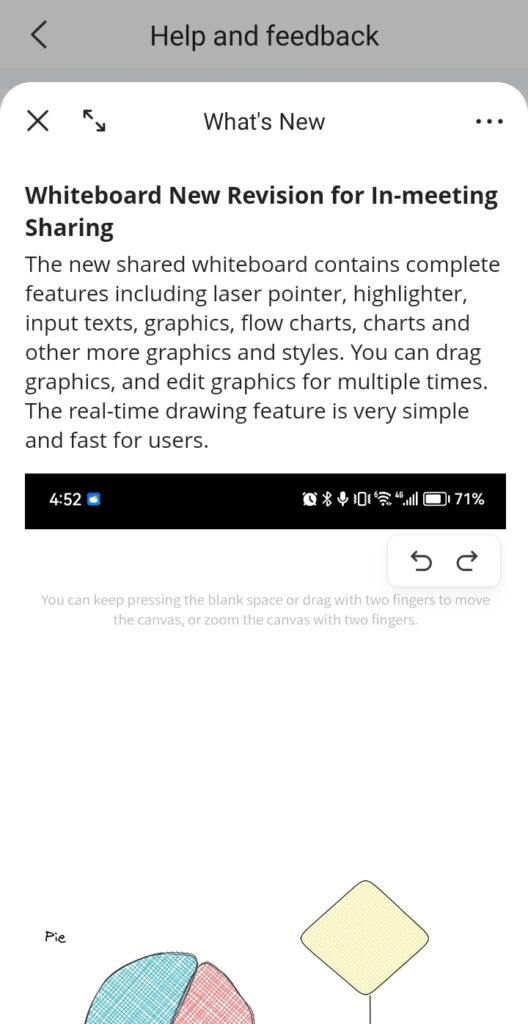
The new shared whiteboard contains complete features, including a laser pointer, highlighter, input texts, graphics, flow charts, charts, and other graphics and styles. You can drag graphics and edit graphics multiple times. The real-time drawing feature is very simple and fast for users.
Share Whiteboard
: The drawing toolbar will appear after clicking this icon.
: Click to view more options (only the sharer has the permission), including: Enable/Disable Collaboration function (After enabling this function, other participants can draw at the same time), change the Canvas Color, Empty Canvas, Open File (the whiteboard data picture which was previously saved), Save as Picture, etc.
: This is the laser pointer option, and only the sharer has this option. It displays the drawn track and will disappear in 3 seconds.
: This is the graphics option. It only supports basic graphics. You can double-click the graphic to add text.
: This is the brush option. There are two types of brushes: “Common Brush” and “Highlighter”.
: This is the text option.
: Pictures can be inserted. After inserting a picture, you can drag the edge to change the size of the picture.
: This is the eraser option.
: This is the undo option.
: This is the recovery option.
Share Document
Share Document is supported in meetings only.
The user can click on the “Share” icon and select “Share Document”.
Share Document
Note:
Supports PDF file only, with up to 20 MB
Shared Document
The users can click button to use annotations on the shared document.
: This option to change the brush thickness and color.
: This is the paintbrush option. It supports different modes: Free, Line, Rectangle/square, Circle, and Arrow.
: This is the eraser option.
: This is the empty option to clear all the annotations.
: This option prevents the other participants from drawing annotations at the same time.
Stop Sharing
To end the screen-sharing, please click on .
Stop Sharing
Video Meeting Participants
During a video meeting, click on the button to view the participant list. Participants can view the meeting participant list, click on “Moderate meeting” at the bottom, and enter the moderator code to become the meeting moderator. The moderator can tap on a participant’s name to mute/unmute the participant, transfer moderator privilege to the participant, remove a participant from the meeting, chat with participants, lock the meeting, and mute/unmute all participants. During the meeting, the user can also tap on his/her name to mute/unmute or edit their display name in the meeting. The host can invite members by clicking on the button in the upper-right corner. The video conference supports inviting participants, sharing a link invitation, and scanning a QR code to join the meeting with the Wave app.
The moderator can tap on a participant’s name to mute/unmute the participant, transfer moderator privilege to the participant, remove the participant from the meeting, chat with participants, lock the meeting, and mute/unmute all participants.
During the meeting, the user can also tap on his/her name to mute/unmute or edit their display name in the meeting.
The host can invite members by clicking on the button in the upper-right corner. The video conference supports inviting participants, sharing a link invitation, and scanning a QR code to join the meeting with the Wave app.
For the Audio/Video Wave meetings, the host can see the invitee’s absent list:
Only the meeting host can see the invitee’s list and can invite them directly from there. For non-host participants, only the participant list is available.
Applicable to scheduled meetings, instant meetings, and group meetings.
Definition of absent invitees:
The invitee list contains those invited by email or extension before the meeting.
When a meeting room is available, which is 10 minutes before the meeting schedule, after the host joins the meeting, the host can see the invitee list and participant list. Now the status of invitees will be determined.
The invitee list will display based on attended status and unattended status. An invite button will be available for unattended invitees for the host to click to invite directly.
After the absent invitee joins the meeting, this invitee cannot be invited again (the invite button for this invitee will be in grey, meaning unavailable).
On the invitee list, the invitee’s status (whether available or busy) needs to be shown.
If there is no invitee before the meeting, the invitee list will not show.
After the host transfers host privilege, the new host can see the invitee list and invite as needed.
The participant list’s status cannot change in real time. The invitee list is based on whether the invitee joins the meeting before, not based on the current participating status. For example, if invitee A joins the meeting and exits after he/she is done with the meeting while the rest are still in the meeting, the invitee list should display he/she as an attended invitee.
Record an Ongoing Meeting
The meeting host can start recording the meeting after it has started. When the meeting has ended, the meeting host can view the recording files on the Meeting Details interface.
Note
If the meeting does not support video, only audio will be recorded.
Speaker Layout
Enabling speaker layout will allow only the speaker’s video feed to show on the screen during a meeting. To enable this, please see the screenshot below:
End Meeting
Virtual Meeting
If the moderator clicks , during the meeting, the moderator will be prompted to select whether to end the meeting or leave the meeting.
Leave meeting: Leave the meeting without ending it. The other participants will remain in the meeting room.
End meeting: End the meeting. All participants will be disconnected from the meeting room.
On the meeting list, the meeting creator can click button to end the meeting that is currently in progress. Then, the meeting will end directly.
Onsite Meeting
To end an on-site meeting, please navigate to the “Meetings” tab and select the meeting that you want to end. You can either end an ongoing meeting or a scheduled meeting that has not started yet.
Step 1: Tap on the meeting that you would like to end.
Step 2: Click on “End Meeting”.
Step 3: Confirm that you want to end the meeting.
Note
If there is only one participant in the meeting, and the total duration of the meeting reaches 30 minutes, the specific participant will be prompted whether to continue the meeting, or create a group chat after successfully scheduling the meeting. Messages created during the meeting will be automatically synced to the group after the meeting.
When the meeting duration is about to reach 12 hours, and the meeting host is still in the meeting, the meeting interface of the host will prompt whether to extend the meeting. The meeting host can click to extend the meeting for another 12 hours. The meeting can only be extended once. After another 12 hours, the meeting will end. If the meeting host is not in the meeting, the meeting will end when the meeting duration reaches 12 hours.
Restart Meeting
The meeting creator can reopen a previously hosted meeting directly via the Wave application. Upon reopening, all original participants are automatically invited, and the creator is immediately redirected to the meeting interface.
This differs from the Reschedule option, which opens the schedule meeting interface to create a new meeting instance.
Navigate to the “Meetings” tab, and click on “History” to access the meeting history list.
Wave Meetings Tab
Locate the ended meeting, open it, and click “Restart“.
Restart Ended Meeting
Confirm the action by clicking the “Meet Now” button.
Confirm Meeting Restart
After reopening, the creator is directed to the instant meeting interface.
Meeting Started
The participants from the original meeting will be automatically invited once the meeting is reopened.
Create a Chat Group After The Meetings
After the meeting has ended, only the meeting organizer can create a chat group from the Meeting Details interface. The chat group will include the members who participated in the meeting. The meeting’s host can click the “More” button to choose “Forward Chat History” or “Create Chat Group and Forward Chat History”. Please see the screenshot below:
Join Meeting via Link
Users who do not have UCM extensions to log in to the Wave app can join a meeting via a link.
There are two methods to join a meeting via a link:
Scan the QR code from the meeting invitation email or provided by the meeting host to join the meeting.
Tap on the Join meeting button and enter the required information. By default, meeting invitation emails also provide a link to join the meeting. Opening the link with the Wave app will automatically fill in the Meeting URL field.
If you have not installed it on your phone, then you can join the meeting through your phone’s browser. Please make sure that you possess the following prerequisites to join the meeting.
Requirements:
Operating System: Android™ 4.2+, iOS™ 14.4+
Mobile Browser: Google Chrome, Firefox, Safari, Microsoft Edge, and embedded browsers supporting WebRTC in mainstream applications.
Meeting Related Details
Share Meeting Link
Instruct the invitee to use Remote Link to join the meeting if they are located in a remote network.
Note
Please note that for the remote link to function properly, the UCM6300 Series device should have RemoteConnect configured correctly.
Important
While using Wave on your mobile phone, please be advised of the following limitations:
In case the host has video enabled, you will be able to see the host’s camera feed only, not other participants.
If there is a screen-sharing session ongoing, you will only be able to see the screen share. You can zoom in and zoom out the screen share as desired. If a whiteboard/document is being shared, you will not be able to see it.
You can mute and unmute the microphone as desired.
You can leave the meeting at any point you wish using the “Leave Meeting button”.
You can turn on/off your phone camera, and you can switch between the front and the rear camera.
You cannot use other functions like viewing the participants list, chat, or other functions that have not previously been mentioned.
Schedule an Onsite Meeting
Wave users can schedule an on-site meeting. The UCM6300 administrator should add a meeting room first so the Wave users can be able to schedule an onsite meeting.
Schedule Onsite Meeting
Background Mode
When the background mode is enabled, the user can still receive incoming calls, messages, and notifications when the application is running at background It is recommend to enable this if issues are experienced with message notifications and receiving incoming calls.
Disable Battery Usage Optimization
This allows Wave to use the battery in the background. If this option is disabled, issues like not receiving notifications and incoming calls might not be received.
Enable Background Data
Enable this option to allow Wave to use data in the background. Disabling this will prevent any messages or calls to be delivered when Wave is on the background.
Once the meeting has been scheduled, it will appear in the list of pending meetings as shown in the screenshot below:
Scheduled Meetings
Meeting List
All the meetings that have been created in the UCM can be viewed in the Meeting List (This includes the virtual and onsite meetings).
All Meetings Wave Mobile Client
Meeting Room
All the rooms that have been created in the UCM (this includes the virtual and onsite meeting rooms) can be viewed by going to the Meeting tab, then tapping the Meeting Room tab.
Onsite Meeting Room
VOICEMAIL
In the “Voicemail” module, users can check all voicemail received by the account, including common voicemail and urgent voicemail.
Users can view and play all voicemail in the Voicemail menu, and users can also batch delete voicemail messages. As the screenshot shows on the right side:
Voicemail
If you are viewing a voicemail from a voicemail group, you will be able to see the name of the voicemail group from which the voicemail has been received, as shown in the screenshot below.
Voicemail Group Name
In the Voicemail menu, the user can select 1 voicemail message and click the button to select to make an audio/video call or send a chat message to the voicemail sender. As the screenshot shows on the right side:
Voicemail Context Menu
To access the extension’s voicemail:
Step 1: Bring up the dial pad to enter the voicemail access feature code for the registered user’s personal voicemail box (*97 by default) or another extension’s voicemail box (*98 by default).
Step 2: Tap on the icon and select the “DTMF” option.
Step 3: Enter the DTMF keys to access the voicemail and listen to the messages.
Wave Mobile Dial Pad
Note
Please contact the UCM admin or service provider to obtain the voicemail password if needed.
CONTACTS
There are two types of contacts that Wave can display. Enterprise Contacts: These contacts are the extensions that are registered on the UCM. Personal Contacts: These are the contacts that the user has added to Wave. Phone Contacts: These are the contacts that are registered on the phone.
In the Wave app, click onto display contacts as the screenshot shows on the right side: In the Wave app, users can click the “Contacts” menu to view all contacts, favorites, LDAP contacts, local UCM contacts, and CloudIM contacts.
Note
The contacts displayed in the Grandstream Wave web portal contain UCM extensions (based on contact privilege settings), meeting room extensions, and LDAP contacts (based on the UCM’s LDAP phonebook settings). (Refer to the UCM User Manual for more details)
Enterprise Contact
Search Contacts
Users can search for contacts in the Contacts tab. Tap on the search bar near the top of the app and enter keywords to search. Clicking on a result will bring up the contact details.
Search Contact
Note
Wave mobile application support T9 contact matching.
View Contacts
After searching contacts, users can click on the search result to view the details of the selected contact. The following options will be available in the Contact Details page:
: Initiate audio call : Initiate video call
: Open the dial pad to edit the contact’s number before dialing
: Chat with the contact
View Contact
Favorites
Favorite contacts are displayed at the top of the contact list. There are two ways to add a contact as a favorite:
Method 1: Enter the contact details and follow the steps below: Click on a contact in the contact list as shown on the right. Click on the button at the top right of the interface, and when the button changes to , the contact will be set as a favorite contact. Click again on the button to remove the contact from favorites.
Favorite Contact
Method 2: Enter the favorites list and follow the steps below to add a contact as a favorite:
Click on the Favorites menu at the top of the contact list to enter the favorites management interface, as shown on the right.
Click on the button at the bottom right corner of the interface to enter the contact selection page.
After checking the contacts that need to be set as favorite contacts, confirm by clicking OK to complete the setting.
Note: You can set up to 20 Favorite contacts. Favorite contacts can monitor their BLF status.
Call History
In the Wave app, users can click the “Call” menu to view all call history of the current Wave account. Two tabs are available: Call History and Voicemail.
The following icons will be displayed on the left of each entry.
Incoming audio call
Outgoing audio call
Missed audio/video calls and rejected calls
Incoming video call
Outgoing video call
Users can tap on the call history entry to call the number. Users can click any specific call record to view the detailed information of this call, as the screenshot on the right side:
Contact Local Time
When the contact is in a different time zone, the Wave mobile application will display the local time of the contact. Wave can retrieve the contact’s time settings from the user’s mobile phone to show the correct time zone. If no local time is displayed for the user, then that means that you and the other user are in the same time zone.
To see the local time for a specific contact, please navigate to Contacts and tap on the contact to open his/her profile, then the local time will be displayed under the contact’s name.
Contact Local Time
Personal Contacts
Wave allows importing the mobile phone contacts to Personal Contacts within Wave, which makes it easier for the user to call other parties using Wave instead of the phone’s telephony service itself.
The user can either add contacts manually by clicking on then add the contact’s information in the form, which can be seen in the figure below.
Personal Contact Form
To import your phone’s local contacts to Personal Contacts on Wave, please navigate to the Contact tab in Wave and click on the import button .
Import Personal Contacts
Select the contacts to import, then tap the “Import” button.
Select Contacts to Import
Note
The user can add up to 200 personal contacts.
SETTINGS MENU
Tapping on the user account under the Messages window will bring up:
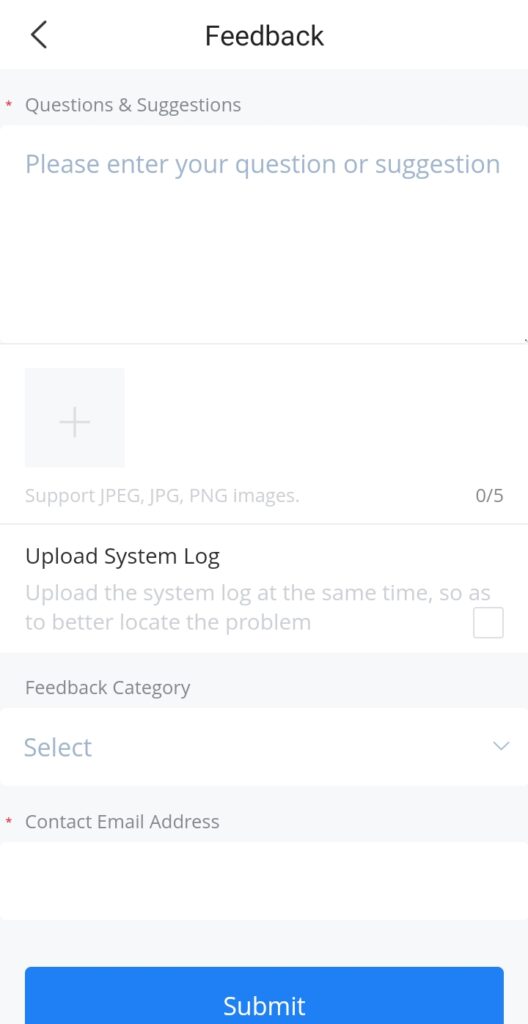
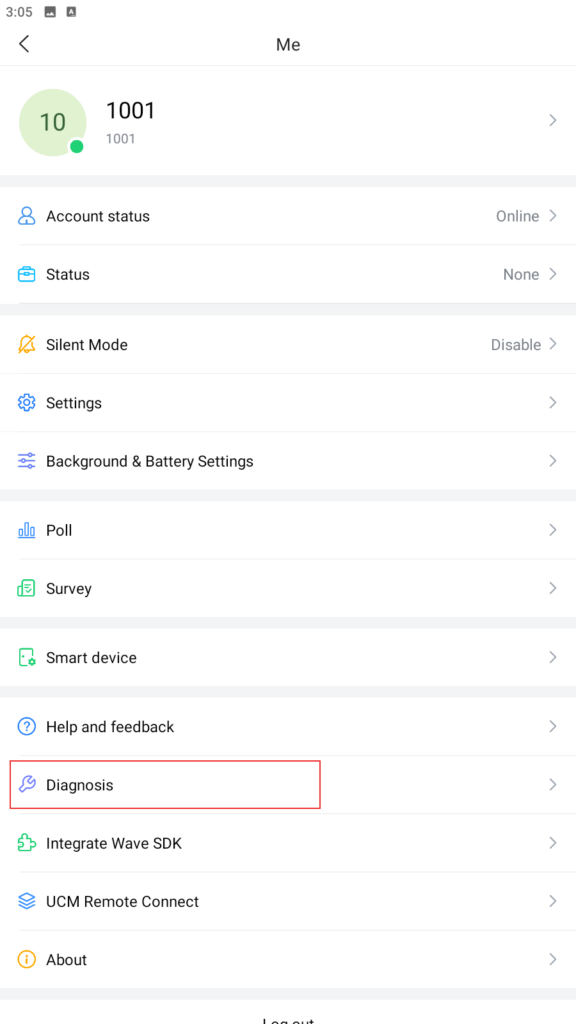
Help and Feedback, Integrate Wave SDK, UCM RemoteConnect, and About pages. Tapping on the About option will allow users to bring up details about the Wave app, check for app updates, privacy agreement, help, and export logs for troubleshooting purposes.
Account Info
Change Avatar
The Account Info page will display a custom avatar, the currently registered account’s name/number, and the SIP server the account is registered to.
Account Info
The user can select to take a photo or upload a photo from an album as the custom avatar. For the uploaded custom avatar, the user can select to view the details or restore to the default image, as the screenshot shows on the right side:
Note: Custom avatar uploading only supports PNG, JPG, and JPEG files.
Change Avatar
Note
Custom avatar uploading only supports PNG, JPG, and JPEG files.
Account Status
It displays the login status of the Wave account. When the account status is set, it will be displayed in the contacts module and chat module.
The Account Status can be set to Online, Busy, Do not disturb, Away, and Offline:
Online: This is the default account status. The new calls and messages will prompt users.
Busy: The user is busy now, and the user can send and receive new calls and messages normally.
Do Not Disturb: The new incoming calls and messages will be prompted without any sounds, and there is no push notification. The new incoming calls will be ignored, and the new missed call history will be generated.
Offline: The account status will be displayed as offline, but the user can still send/receive calls and messages normally.
Away: The account status will be displayed as away, but the user can still send/receive calls and messages normally.
Account Status
Account Security Center
Change Password
To change the password of your account, please follow the steps below.
On the profile options of the user, tap “Account Security Center”.
Profile Options
Tap on “Change Password”
Account Security Password Change Password
Then enter your old password, then set and confirm the new password by entering it twice in the respective fields.
Set New Password
Login Device Management
If the user needs to review the sessions that are open on their Wave account. Please follow the steps below.
Tap on your profile avatar to open the options related to your profile. Then tap “Account Security Center”.
Profile Options
Then tap “Login Device Management”.
Open Sessions
The open sessions will be displayed as follows. If you wish to terminate a session, you can tap the button “Log out” and confirm the logout by tapping “Log Out” on the confirmation message.
Log Out
All the sessions, including Wave web, Wave desktop, and Wave mobile sessions, will be displayed under the Login Device Management section.
Multi-clients Simultaneous Login
This setting allows users to log into multiple Wave clients of the same type at the same time, for example, being signed in on two different desktop apps or on multiple mobile devices.
If disabled, logging into a second client of the same type will automatically log out the first.
Note:
This setting is only available if the UCM administrator has assigned the permission to the extension. If the option does not appear, please contact the system administrator.
Multi clients Simultaneous Login
Personal Chat Link
Wave users can share the personal chat link via email/other platforms with others for communication. External users can open this link through a browser or send a meeting request to the Wave user.
Personal Chat Link
The link is valid only when this function is enabled. After it is turned off, the link will be invalid immediately.
You can download the QR code and share it with external users
You can copy the link to external users.
Users can click change the displayed avatar and name, and support resetting the link or customizing the link address (after resetting, the original link will be invalid). External users can open this link through a browser:
Private Chat
External users can open this link using a computer or a mobile browser to chat.
External users can send text messages, emoticons, and attachments.
Clicking the icon will send a call request to the Wave user, and the Wave user will receive the request as follows:
Meeting Request
When the user clicks “Accept”, an instant meeting is initiated, and the meeting link is sent to external users.
Meeting Initiated
When an external user clicks “Join”, they will join the meeting using their current browser.
Personal chats appear as independent chat modules within the Wave interface, separate from other chats.
Personal Chat Module
Working Status
It displays the working status of the Wave account. When the working status is set, it will be displayed in the contacts module and chat module.
The working status can be set to:
Meeting Now
On Business Trip
Telecommuting
Sick Leave
On holiday
None
Add Custom
Note: The custom working status allows users to enter up to 64 characters, and emojis are not allowed.
Working Status
Silent Mode
Silent mode allows silencing all the sounds and vibrations prompted by Wave, which includes the vibrations and sounds produced when a call or a message is received. To enable silent mode, please follow the steps below:
Step 1: Tap on your profile picture on the Wave mobile application
Step 2: Tap on “Silent Mode” then click “Opened” to enable Silent Mode.
Silent Mode
Enable Silent Mode
Settings
Display
Appearance
Use this page to customize the app’s theme. The user can choose from:
Follow System: Matches the theme of the device’s operating system.
Light: Uses a light color scheme for the interface.
Dark: Uses a dark color scheme for the interface.
Appearance Setting
Language Settings
Select the language to use on the Wave Mobile App.
Multi Languages
The languages supported are: English, Simplified Chinese, French, Spanish (Latin America), Spanish (Spain), Italian, Greek, Arabic, Russian, German, Polish, Portuguese and Vietnamese, Thai, Czech, Turkish, Hebrew, Dutch, and Slovenian.
Time and Date Format
The users can select the Time/Date format as shown in the screenshot below:
Time Date Format
Contact Name Display
This setting controls how contact names are displayed and sorted in the contacts list. The options include:
Automatic: Contacts are sorted by First Name and Last Name. However, if a contact’s name contains Chinese, Japanese, or Korean characters, the sorting automatically switches to Last Name, First Name to better suit those languages.
Last Name, First Name: Contacts are always displayed and sorted by Last Name, First Name, regardless of language.
First Name, Last Name: Contacts are always displayed and sorted by First Name, Last Name, regardless of language.
Contact Name Display Order
Direct to Chat Location
The user can determine where the chat window opens when they enter a chat session:
Top: Opens the chat at the first unread message, allowing you to read from the beginning of new content.
Bottom: Opens the chat at the most recent message, showing the latest conversation immediately.
Direct to Chat Location
Notification and Ringtone
Enable or disable notifications by using the toggle “Allow Notification“. If you slide the toggle to the left, all the notifications will be suppressed.
To customize the notifications settings, please tap on Message Notification Settings and then tailor the notification behavior based on your needs, then choose to play a sound or vibrate when a notification is received.
Tap on Vibration to customize which notifications will trigger vibration.
Notifications Ringtone Settings
Wave mobile offers 6 ringtones to choose from when receiving calls. When Wave is running in the background, and a call has been received, Wave will use the system’s default ringtone.
Ringtone
“Block Notification When Active on Desktop“: If the Wave Desktop device is inactive for more than 5 minutes, push notifications to Wave Mobile will resume. Default is disabled.
Calls and Meetings
Call Waiting: If enabled, new incoming calls can be received during calls. Default is enabled.
Call Waiting Tone: If enabled, play a tone for call waiting. Default is enabled.
Echo Cancellation: If enabled, improve the audio quality using echo cancellation. Default is enabled.
Noise Suppression: If enabled, suppress the noise during calls. Default is disabled.
Automatic Noise Reduction (AI): When enabled, the application uses AI-powered algorithms to detect and reduce background noise in real time during calls.
Auto Turn on Camera While Joining Meeting: When enabled, the mobile device’s camera will automatically turn on as soon as the user joins a meeting, without requiring manual activation. This allows participants to appear on video immediately upon joining.
Safe Driving Mode: If enabled, the camera and microphone will not be turned on automatically during Wave meetings. Users may enable them manually. Default is enabled.
Car/Bluetooth Support: Answer and end calls with your Bluetooth headset or from your car. Not all devices support this feature. If unsupported, or if the current device is in an active call, Wave calls may not be able to be controlled by the Bluetooth device. Default is enabled.
Audio Subsystem API: Using different audio APIs, the sound effects will be different.
OpenSL (the older and most widely used API)
AAudio (Widely used API started from Android 8.0+)
Dial Settings
Dial Plan Rules
Wave mobile support dial plan, which can be configured and taken into consideration when numbers are dialed through Wave.
Dial Plan Rules
Toggle “Dial Plans Rules” so Wave starts taking the dial plan settings into consideration.
If “Ignore Dial Plan” is toggled on, Wave will ignore the dial plan settings.
Set the dial plan rules grammar for the number dialed. You can either enable the dial plan to have Wave take it into consideration or ignore it completely when dialing numbers.
Here are the valid values: 1, 2, 3, 4, 5, 6, 7, 8, 9, 0, *, #, T,+, A-Z, a-z
Dial Plan rules:
xx – Any 2-digit number
xx+ – At least 2-digit number
xx. – At least 1-digit number
xx? – 1-digit or 2-digit number
^ – Reject
T – Delay call after matching
| – Or
+ – Add + to the number
[3-5] – Dial the number 3, 4, or 5
[147] – Dial the number 1, 4, or 7
<2=011> – When the dial number is 2, it is replaced with 011
Set \{x+\} – All digital numbers to make outgoing calls
“+character” – It indicates a fixed character. Note: it does not need to be added in front of * and #, and it cannot be added in front of T^,; and |
Set \{X+\} Allow all 0-9, A-Z, a-z inputs with at least one character
Examples:
Example 1: {[369]11 | 1617xxxxxx} – Allow 311, 611, 911, any 10-digit call that starts with 1617 to make the outgoing calls.
Example 2: {^1900x+ | <=1617>xxxxxxx} – It will refuse to dial numbers starting with 1900, and add the prefix 1617 when dialing any 7-digit number
Example 3: \{ax+\} – It will dial a number starting with a and followed by at least 1-digit
Dial Tone
Choose to enable or disable Dial Tone. Default is enabled.
This will affect the dial pad on the calls page.
Dial Tone
Use System Default Dialler for Emergency Calls
If enabled, emergency calls will use the default dialer to initiate the call even if the number is dialed on Wave. Default is enabled.
Use System Default Dialler for Emergency Calls
Contacts Sort Order
Select the sorting order for the contacts: “Last Name, First Name” or “First Name, Last Name”.
Contacts Sort Order
E2EE Chat Settings
In an end-to-end encrypted (E2EE) chat, only the two involved parties can read the messages.
E2EE Chat Settings
Export a Secret Key
Wave allows exporting the privacy key. To do that, go to E2EE Chat Settings under Settings
Then tap on the three dots on the top right corner of the screen, then select Export secret key.
Export Secret Key
Then you can select to send it to yourself or to another contact on Wave, or to an email address.
Sync Secret Key
To synchronize a previous end-to-end encryption key, the user can either upload it to the application or scan the QR code generated by the Wave mobile application. To do that, please tap on the profile picture of your Wave account, then go to Settings, then tap E2EE Chat Settings.
Then tap the Sync Secret Key button
Sync Secret Key
Choose to add the previous key secret either by Scanning QR code or ByUploading file.
Scan QR Code
Reset the Secret Key
The user can choose to reset to a new secret key by choosing Reset secret key from the E2EE settings page
Reset Secret Key
Background and Battery Settings
Background and Battery Settings allow you to control the behavior of the Wave application in the background. This affects notifying the user when a call or a new message is received.
Background Battery Settings
Background Battery Settings options
Background Mode
When the background mode is enabled, the user can still receive incoming calls, messages, and notifications when the application is running at background It is recommend to enable this if issues are experienced with message notifications and receiving incoming calls.
Disable Battery Usage Optimization
This allows Wave to use the battery in the background. If this option is disabled, issues like not receiving notifications and incoming calls might not be received.
Enable Background Data
Enable this option to allow Wave to use data in the background. Disabling this will prevent any messages or calls to be delivered when Wave is on the background.
Note
If the background mode is disabled, the user may miss some calls/messages/notifications when the application is running at background. If the “Ignore power-saving optimization” option is selected, it may shorten the battery life.
Poll
This page allows you to view the ongoing polls, add a new poll, or stop a poll.
Poll
Survey
This page allows you to view the ongoing surveys, add a new survey, or stop a survey.
Survey
Virtual Programmable Keys
Virtual Programmable Keys on the Wave mobile application allow creating different virtual keys which offer shortcuts to certain functionalities such as Speed Dial, Busy Lamp Field, Intercom, Call Park, or Feature Codes.
To configure a certain VPK, please follow the steps in the figures below.
On your profile, please tap VPK, then enable the VPK Panel. Once enabled, a VPK tab will appear at the bottom right of the UI of Wave. Tap the VPK tab to access the VPK configuration page.
Choose the VPK, then configure the settings for the specific VPK. Once configured correctly, as shown in the third screenshot.
VPK Type
Add VPK
VPK Panel
To edit virtual programmable keys, tap the button.
Edit Virtual Programmable Keys
You can edit, delete, pin to top, add, or rearrange the order of the VPKs.
The following table outlines all the types of virtual programmable keys that can be created with their different state.
VPK Mode
Description
Icon
State
Speed Dial
Speed Dial mode allows to set a key for one touch dialing; configured number will be dialed once VPK is pressed.
No state changes
Busy Lamp Field (BLF)
Busy Lamp Field (BLF) mode allows to monitor status (available, ringing, busy) of an extension.
Online
Icon flashing, ringing
Busy
Offline
Call Park
This feature allows to park/pick up the call, and can be
also used to monitor parking lots via VPK button’s LED.
If the Value field is set with a parking lot (e.g. 701, 702, …), the VPK will be used to monitor call parking; the phone will send a SUBSCRIBE to monitor the configured parking lot and park/retrieve calls.
If the Value field is set with a parking lot (e.g. 700, 600, …), the VPK will not monitor call parking; and can only park calls, not retrieve them.Note: Please go to UCM first to enable the configuration “Use Parking Slot as Extension”.
Available
Icon flashing, Busy
Offline
Not monitored status
Intercom
Allows to set a VPK as intercom button to a specific destination with auto-answer instruction.
No state changes
Eventlist BLF
Eventlist BLF allows to monitor a list of extension similar
to BLF, administrator needs to configure Eventlist BLF on UCM
server side and provide Eventlist BLF URI on the Wave.
Online
Icon flashing, ringing
Busy
Offline
Enable Feature Codes
Allows you to select a Feature Code. The administrator needs to enable the corresponding Feature Codes on the UCM server.
No state changes
Smart Device
This page allows adding/viewing GDS Door Systems and monitoring Grandstream Surveillance cameras.
Smart Device
Door System
The user can click the “+” button to add a door system to the Wave application and configure the relevant parameters, as the screenshot shows on the right side: The user can add multiple door systems in the Wave application. The user can also call the door system and view the door system details.
Note
The user can add up to 10 door systems in each Wave account.
This function is only supported by Grandstream GDS Door System products.
When the door system has been configured, the Wave user will receive an incoming call once someone rings the door system, as the screenshot shows on the right side:
Incoming Call from Door System
Help and Feedback
Users can go to the settings menu and click “Help and Feedback” to display the, What’s New, help, feedback, and exporting logs menu.
Help and Feedback
What’s New
A pop-up window will display the new features introduced in the current version.
Whats New
User Guide
If the user has any questions while using the Wave application, the user can click the “User Guide” option to go to the official website of Grandstream and view the user guide for the Wave application.
Feedback
If the user encounters any problems with the Wave application or the user wants to share any suggestions about the Wave application, the user can click the “Feedback” option to connect to the Grandstream Feedback System. It allows users to share feedback, and we can collect questions/suggestions from users, so that we can provide better user experiences.
Feedback Interface
Collect and Export Logs
Users can enable “Collect Logs” to attach them when submitting feedback.
Users can go to the settings interface and click the “Export Logs” option to export the application logs. If the user encounters any issues with the Wave application, the user can export the logs and save them. The exported logs can help users to troubleshoot issues so that we can offer users better user experiences.
Diagnosis
When you encounter an issue using the Wave mobile application, it is highly recommended to run the diagnosis tools built into Wave to identify the cause of the issue. The diagnosis tools offered in Wave include permission verification, notification verification, and network testing.
To perform a diagnosis, please tap on your account profile on the top left corner, then select “Diagnosis” from the list.
Wave Profile
Then click on “Start Diagnosis“
Diagnosis
When the diagnosis ends, the results will be displayed. See the example below.
Diagnosis Results
Integrate Wave
Users can learn about the available Add-in API and SDK for further development to integrate Wave with other platforms. When clicked, the user will be redirected to the corresponding instruction guide.
Add-in Development Instructions
SDK Development Instructions
UCM Remote Connection
Users can learn more about UCM RemoteConnect services by accessing this menu.
Users can go to the settings interface and click “About” to get more details about the Wave application.
Display the current version of the Wave application.
If there is an updated application version, the user can click “Update Version” to upgrade the application.
The user can click on “Privacy Agreement” to view the privacy terms of the Wave application.
The user can click on “Learn more about Wave” to be directed to the Grandstream Official website to view the Wave application user manual.
About
Switch Account
Users can switch between different accounts configured on the Wave mobile application. When clicking on Switch Account, a list of already added accounts will be displayed. The user can then select the account to be accessed.
Log out
Users can click “Log out” to jump to the login interface and log in again.
RESET ACCOUNT PASSWORD
Users can reset their Account password in case it is forgotten by clicking on Forgot Password? On the Sign in page like shown in the figure below:
Forgot Password Option
Once clicking on Forgot Password, the user will need to click on Send Mail button in order to receive an email to reset the password.
Send Mail to reset Password
After clicking on “Send Mail” button, a verification code will be provided.
Note: An email address should be previously configured under the extension on the UCM630x
Verification Code
The user will need to go to the mailbox to open the reset password link, enter the provided Verification code, and the new desired password.
Reset Password Page
Note
Resetting the Account password on the Wave application will result in changing the user portal password; the new user portal password will need to be used afterwards.
FREQUENTLY ASKED QUESTIONS
Q: My account is unable to register. What should I do?
A: Please check the following:
Network connection:
Please check whether the device is connected to a Wi-Fi, 2G, 3G, 4G, or 5G network properly.
Server Address:
Please check whether the server address is entered correctly. Wave uses the web access address, not the SIP server address. The server address should be the web access address, not the SIP server address.
For an internal server address using an IP address (IPv4 or IPv6), a port number is required. For the external server address (domain name), please confirm whether the port number is required. If the external server address contains a port number, the port number must be entered. Otherwise, there is no need to enter the port number.
Extension and Password:
Check whether the extension number and the user password are correct.
Q: Why do I see contacts from my phone in the Wave app?
A: When using Wave for the first time, users will be prompted to allow or deny permission to access contacts. If allowed, the phone’s contacts will be displayed in Wave. To change this, go to your device’s app settings and change the Permissions for the Wave app.
Q: Why does my device not display any notifications from Wave?
A: Please confirm that notifications for the Wave app are enabled on your device. If enabled, the status bar will display account registration status. (This display may vary on different brands or systems of mobile devices.)
CHANGE LOG
This section documents significant changes from previous versions of the user manuals for the Wave mobile app. Only major new features or major document updates are listed here. Minor updates for corrections or editing are not documented here.
Added the following new settings: Call Waiting, Call Waiting Tone, Contacts Sort Order (“Last Name, First Name” or “First Name, Last Name”), etc. [Calls and Messages] [Contacts Sort Order]
Added menu entrances: What’s New, SDK Integration Development Instructions, and Add-in Integration Development Document. [What’s New] [Integrate Wave]
Added support for canceling and editing upcoming scheduled meetings, or ending ongoing meetings. [Onsite Meeting]
Added support for forwarding multiple messages in one message, or separately. [Message Forwarding]
Added support for displaying the local time in the contact’s messaging window. [Contact Local Time]
Added support for rotating, forwarding, and downloading images exchanged in the Wave mobile application. Note: Forwarded images will not retain the rotation. [View an Image]
Added support for blocking Push notifications on the Wave mobile app when the user is logged into the Wave desktop. [Notifications]
Added an indicating tone once the call is ended or when exiting the meeting
Version 1.0.17.6 (AndroidTM) / 1.17.8 (iOSTM)
Made several UI improvements.
The last 10 server addresses logged into will now be remembered. These server addresses can be viewed and selected by tapping on the arrow icon in the Server Address field on the login page.
[Calling]
Users can now have up to 6 simultaneous calls instead of just 2.
Improved attended transfer functionality.
When copying/pasting a number with special characters into the dialpad, the special characters will be automatically filtered out.
[Chat]
Added the Change Group Owner option to the group chat settings to transfer ownership of the group to an existing group member.
Added additional emojis.
[Meetings]
Users can now start and stop video recordings during meetings by swiping up the bottom bar and tapping on the Record option. If the meeting does not support video recordings, audio will be recorded instead. Recordings can be viewed and played directly from Wave.
Users can now change the video feed layout of meetings by swiping up the bottom bar during meetings and toggling the Speaker Layout option. Enabling Speaker Layout will display only the video feed of the designed speaker, and users can swipe left or right to view just the speaker or all video participants, respectively. Disabling the option will just display all video participants instead.
Users can now create a meeting group chat when scheduling a meeting.
When there is only 1 participant in a meeting, and the meeting duration has reached 30 minutes, a prompt will appear asking whether to extend the meeting. If extended, the meeting will last another 30 minutes. Otherwise, the meeting will automatically end after 5 minutes.
If the duration of a meeting is about to reach 12 hours, and the meeting host is in the meeting, they can extend the meeting for another 12 hours once. The meeting will automatically end once another 12 hours have passed. If the meeting host is not in the meeting after the initial 12 hours, the meeting will automatically end.
Users can now invite IP camera devices they have permission to access to meetings. Other meeting participants can view the video feed of the invited IP camera devices.
Added the Allowed to override Host Mute option to the Edit Meeting / Schedule Meeting pages → Advanced Settings page. If enabled, participants muted by the meeting host will be able to unmute themselves.
Version 1.0.15.9(AndroidTM) / 1.15.8(iOSTM)
Added support for creating a meeting group chat for a scheduled meeting. [Schedule Meeting]
The host of a group chat can now allow or prohibit the group members from adding other users. [Group Chat]
Added support for sending and receiving instant voice messages. [Voice Messages]
Added support for viewing all images sent in a discussion in a gallery-style display. [Instant Messages]
Added support to enable or disable dial tone when using the keypad. [Dial Tone]
Added support for sending files and video through the mobile phone system.
Version 1.0.13.8 (AndroidTM) / 1.13.9 (iOSTM)
Made several UI adjustments.
Added the ability to change the date and time format. [Time/Date Format]
Added Portuguese and Vietnamese language support. [Wave Technical Specifications]
Added support to start audio recording during the Wave meetings. [Record an Ongoing Meeting]
Added support to display absent meeting invitees for the host. [Absent Meeting Invitees]
Added support for the Call Flip Function. [Call Flip Function]
Added support to start audio recording during a point-to-point call. [Record an Ongoing Call]
Added support to create a chat group after a meeting with the meeting’s members. [Create Chat Group After Meetings]
Added support for viewing contacts based on UCM contact privilege settings. [CONTACTS]
LDAP phonebook contact visibility is now based on the UCM’s LDAP phonebook settings. [CONTACTS]
Added support for restricting visibility of chat history when inviting contacts to a group chat. [Group Chat]
Added more emojis. [Instant Message]
Added support for quick reply with emojis. [Instant Message]
Added support to view the file list. [Files list]
The Wave app can now be selected as the default phone app. [Default phone app]
Added support for iPad landscape mode.
Version 1.0.11.x (AndroidTM) / 1.11.X (iOSTM)
Added more functions in the Chat module: supported replying with emoji, set the viewable range of chat history for new chat members, supported displaying the other party’s status (XXX is typing…), and supported more emojis. [Instant Message]
Added multiple hierarchical organizational structure contacts in the Contacts module. [Contacts]
Added the voicemail function in Wave mobile applications. [VOICEMAIL]
Added custom avatar function in Wave mobile applications. [Account Info]
Added the Help and Feedback module in Wave mobile applications. [Help and Feedback]
Added support for the GDS door system involved functions on the call interface. [Smart Device]
Added chat bubble function during the meeting. [Conference]
Added to synchronize call history from multiple clients for a single Wave account. [Call History]
Merged audio conference and video conference into the Conference module. [Conference]
Version 1.0.9.15 (AndroidTM) / 1.9.14 (iOSTM)
Added support for the DTMF soft keyboard during the call. [During a Call]
Added the ability to set the account status. [Account Status]
Added the ability to set the working status. [Working Status]
Added support for Background Mode. [Settings]
Version 1.0.7.7 (AndroidTM) 1.7.8 (iOSTM)
Added New features in the chat module: pin chat box, mute message notice, hide chat box, quote to reply message, delete messages, etc. [Group Settings]
Supported multi-lines calls. [Hold/Unhold and Multiple Lines]
Supported to transfer an active call to a video conference. [N-Way Conference]
Added public meeting room list and the list will show the meeting room status in different periods. [MEETING]
Added to create a meeting with a random meeting number. The meeting can be created as an instant meeting or a scheduled meeting. [Meet Now]
Added to display the actual meeting duration and the actual participants list for the previous meetings. [Meeting History]
Supported adding participants from contacts/groups when scheduling a meeting. [Schedule Meeting]
Supported to set the meeting subject and add invitees for instant meetings. [Meet Now]
Added meeting assistant module. When there are new meeting invitations, meeting reminders, and meeting cancellation notifications, the meeting assistant will send messages to the host and participants. [Meeting Invitation]
Version 1.0.5.2 (AndroidTM) / 1.5.1 (iOSTM)
Add a chat feature, including single chat and group chat. [Single chat][Group Chat]
Chat feature is supported in the meeting. [Meeting Chat]
Support call waiting and switch two calls on the Wave Android. [Call Waiting]
Support N-Way audio conference. [N-Way Conference]
Added the history meeting list. [Meeting History]
Wave users support using links to join the meeting. [Link to Join]
Version 1.0.1.9 (AndroidTM) / 1.1.9 (iOSTM)
Added the option Favorites. [Favorites]
Add the option of a scheduled meeting. [Schedule Meeting]
Added the option of listing participants and inviting members to the meeting. [Video Meeting Participants]
Added the option of modifying the display name in the meeting. [Edit Name]
Added the ability to reset the account password. [RESET ACCOUNT PASSWORD]



 to open it.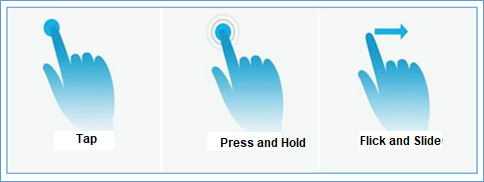
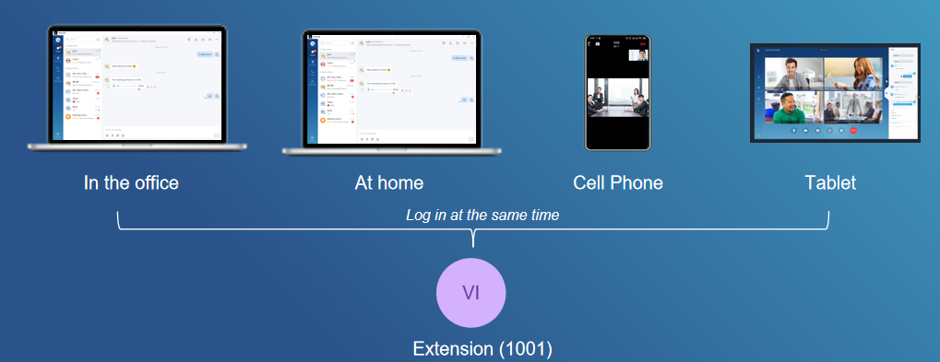
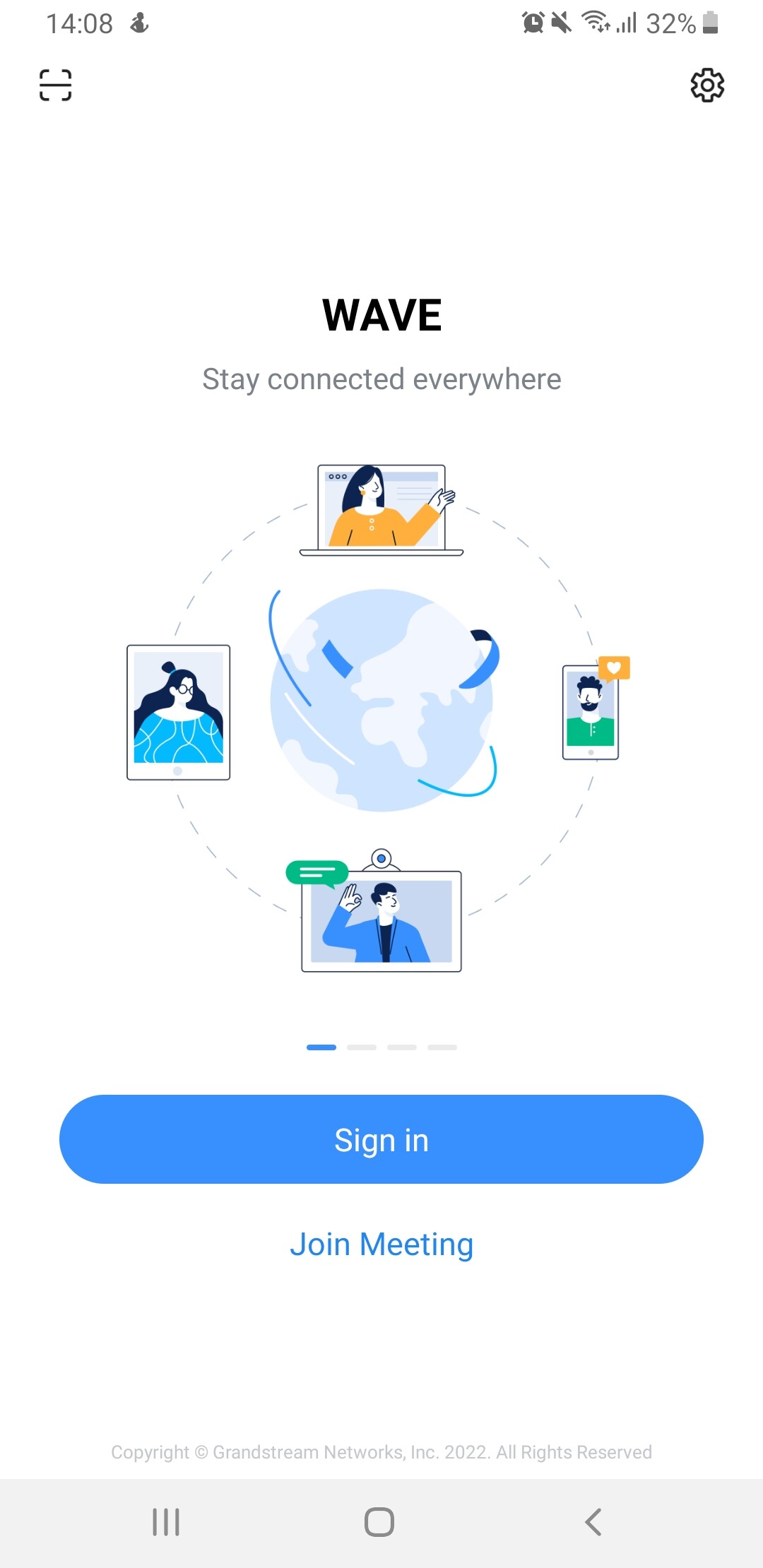
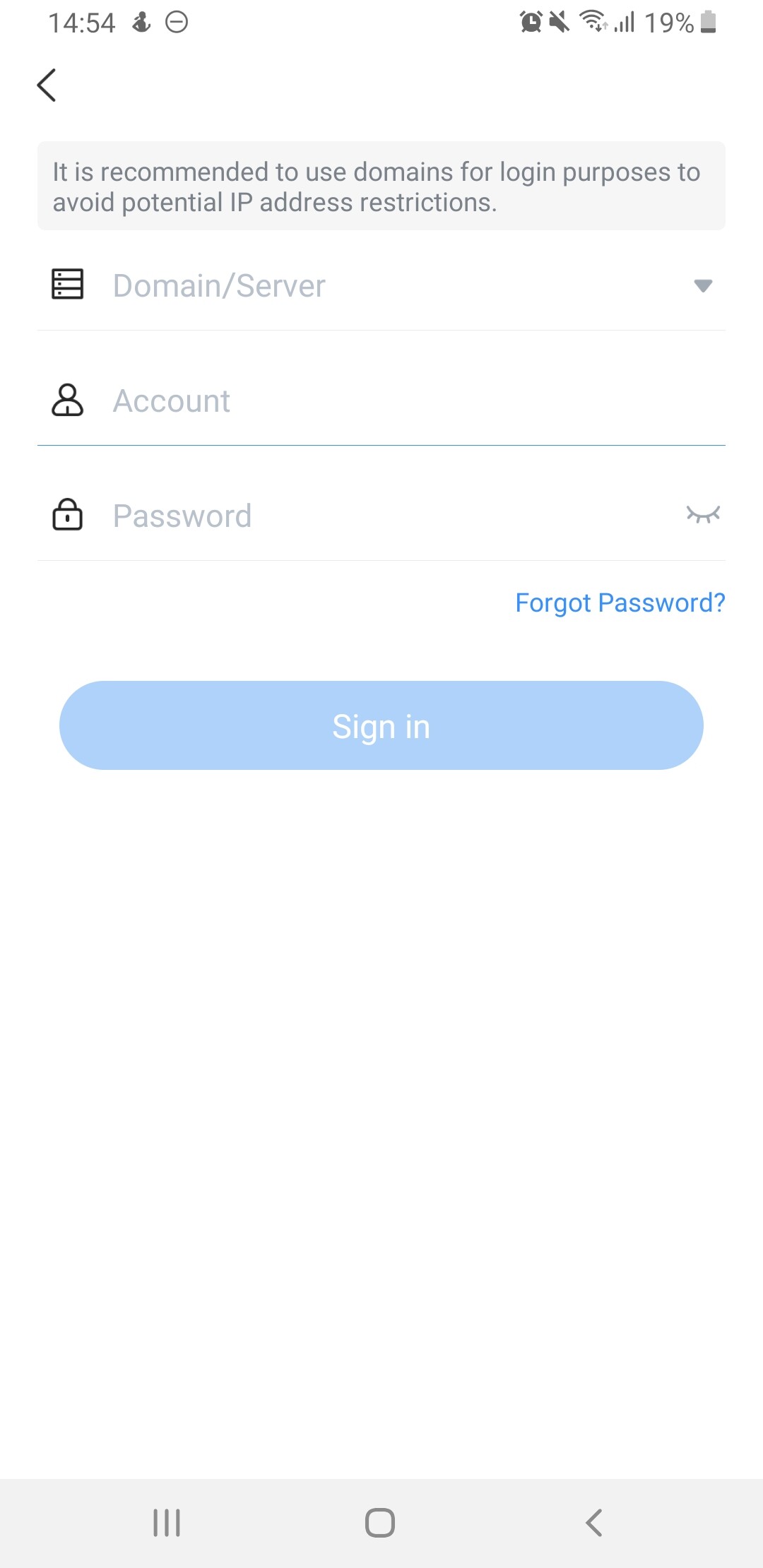
 to log in using the QR code provided in the Wave welcome email, or if the user has already open his/her account on Wave Desktop or Wave Web.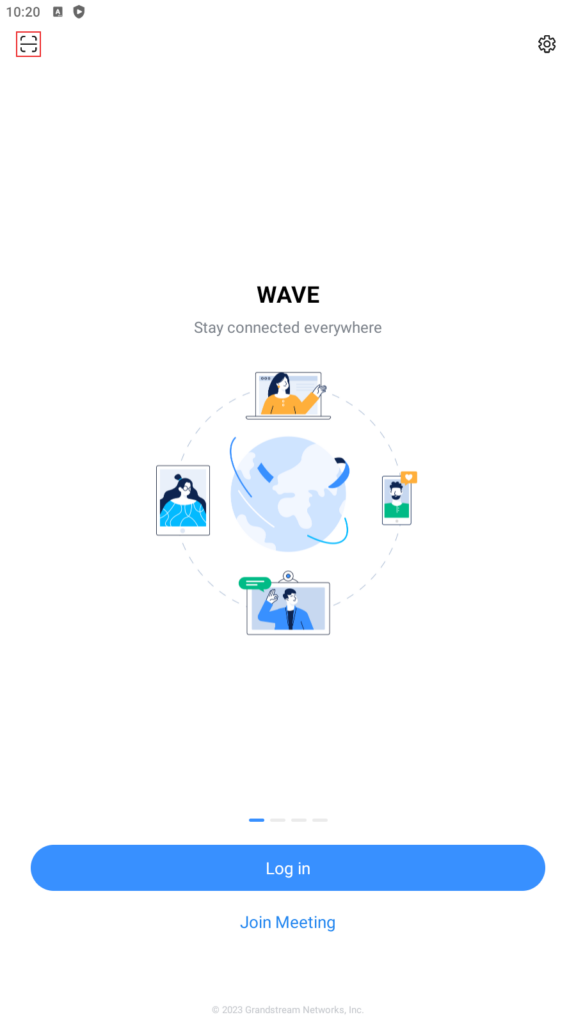
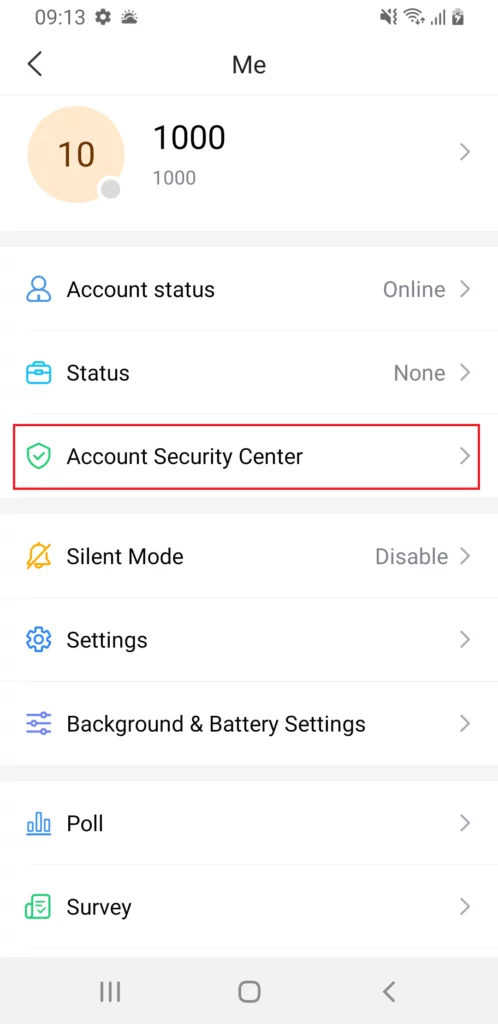
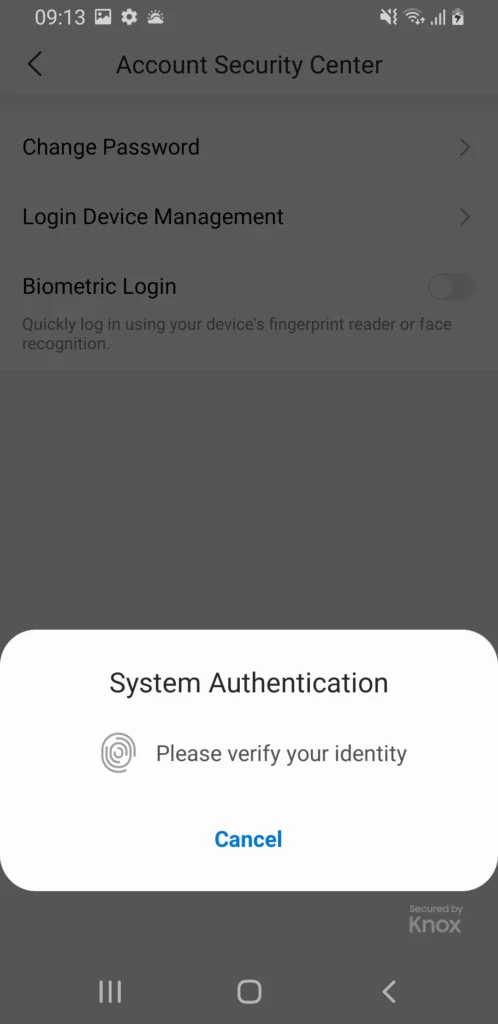
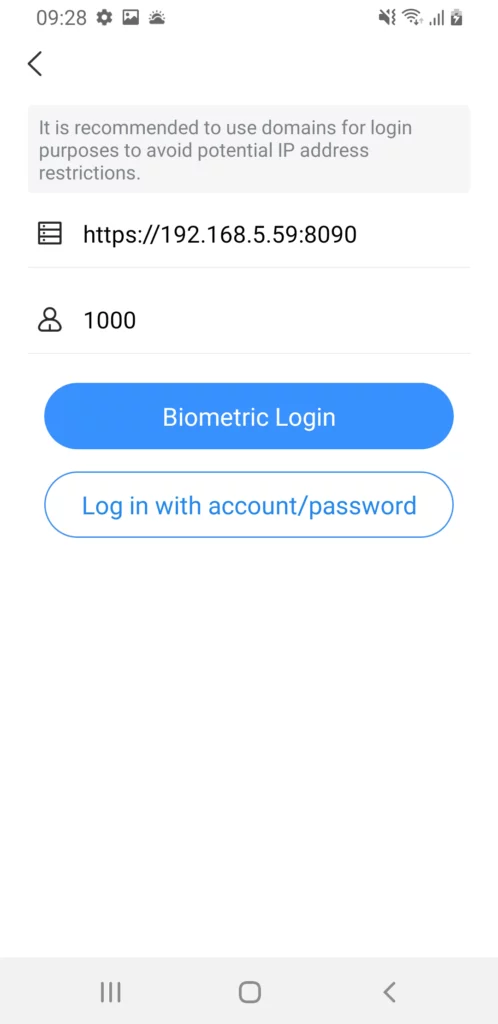
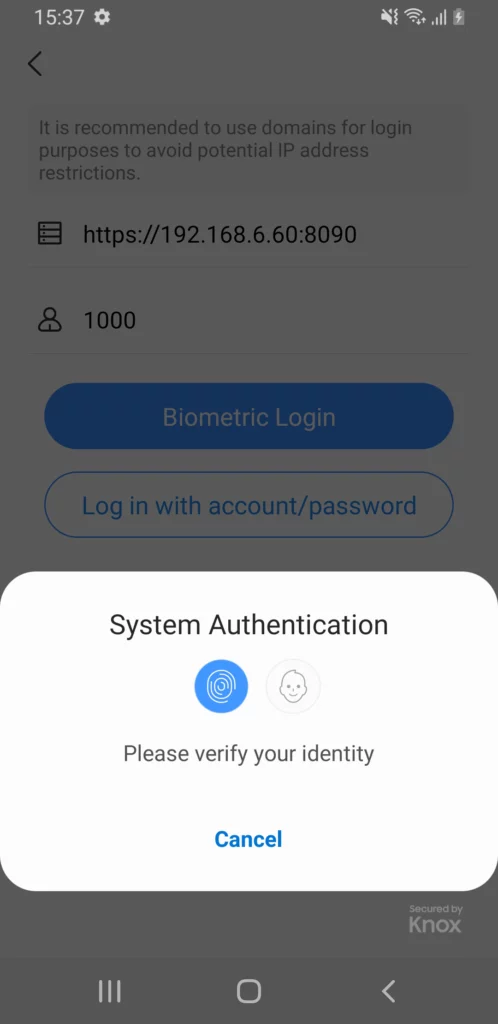
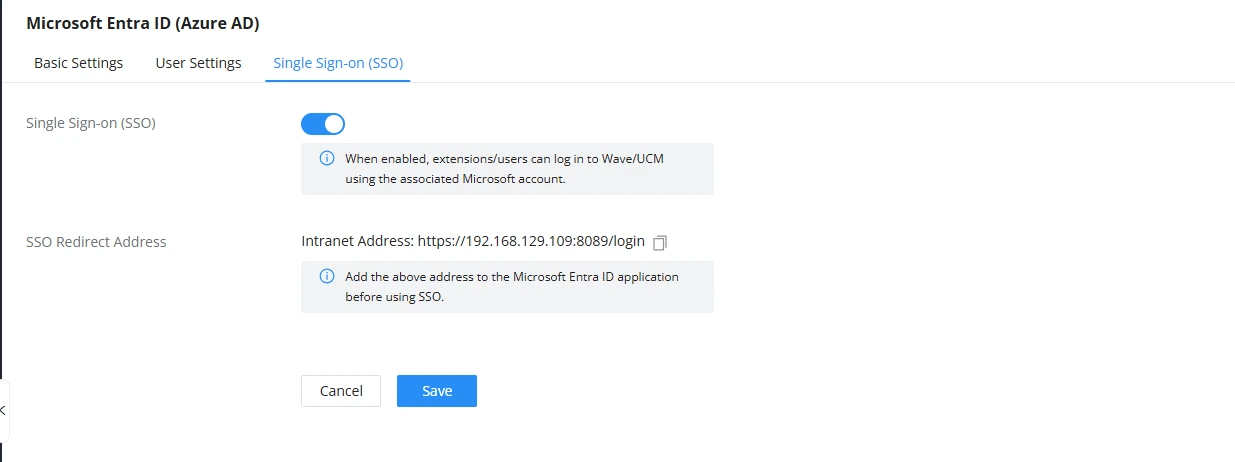

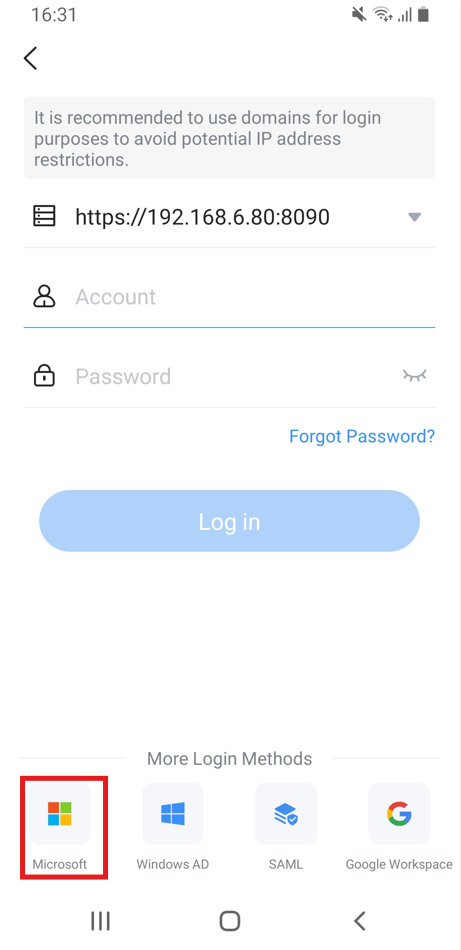
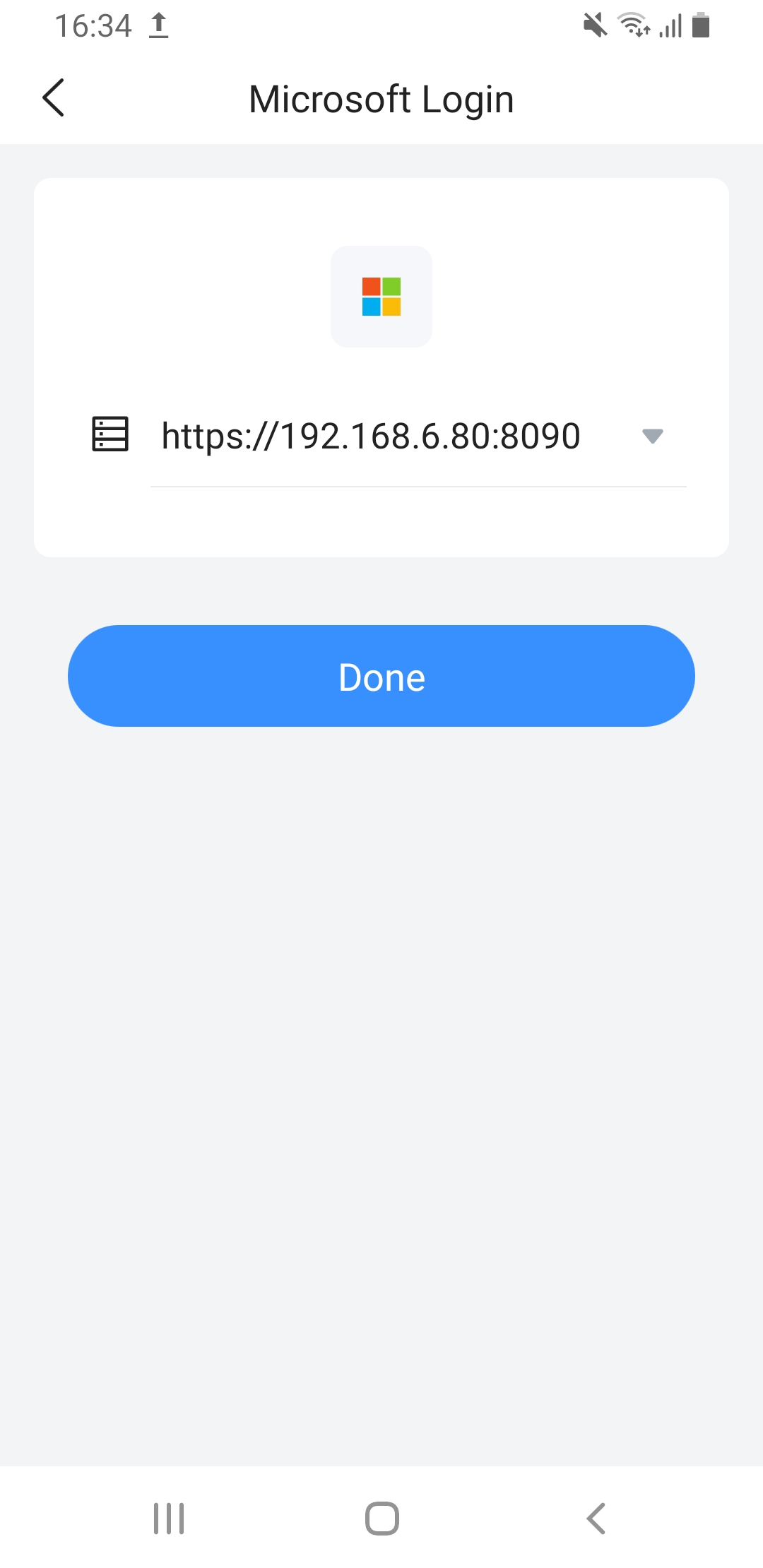
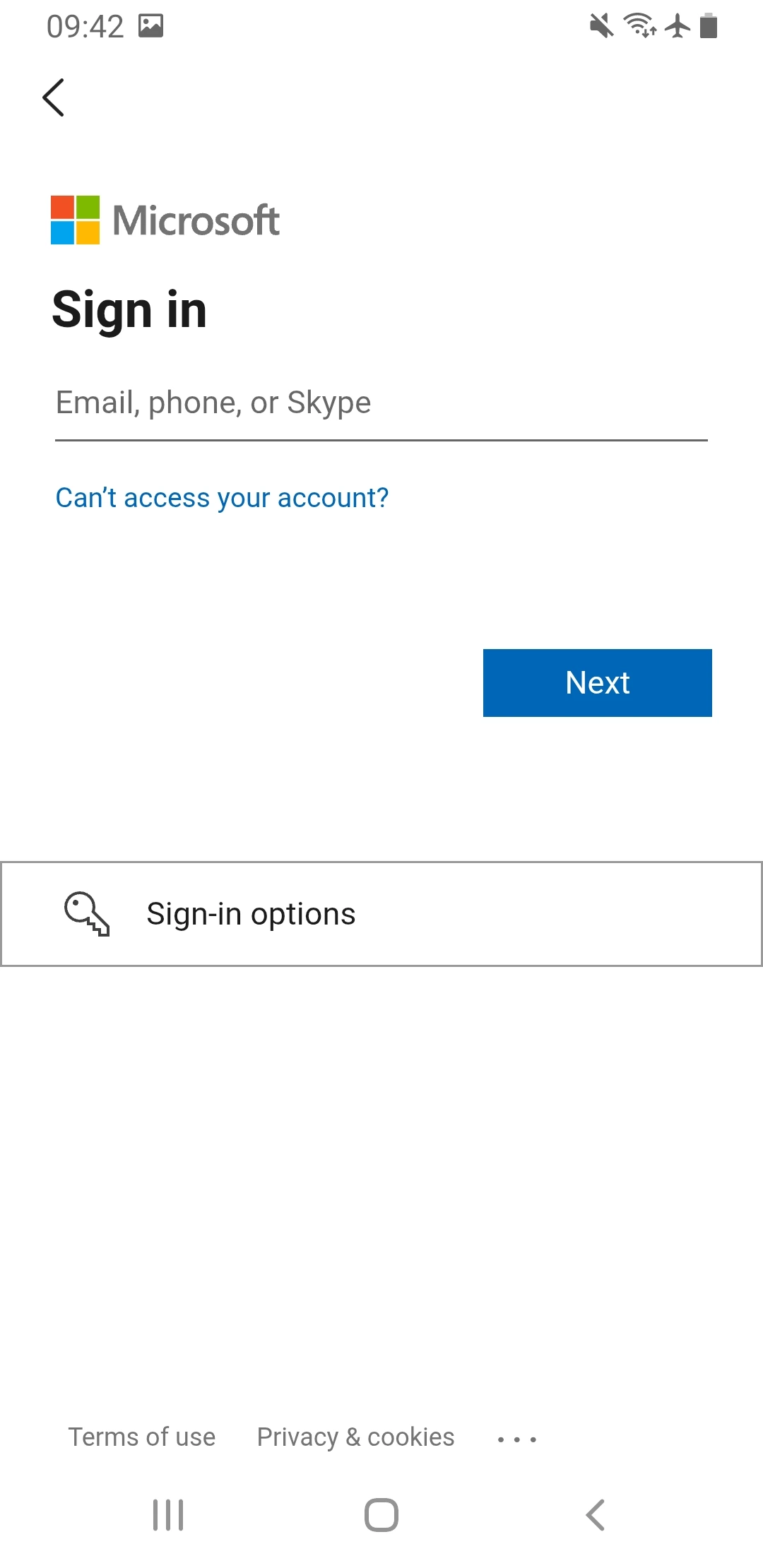
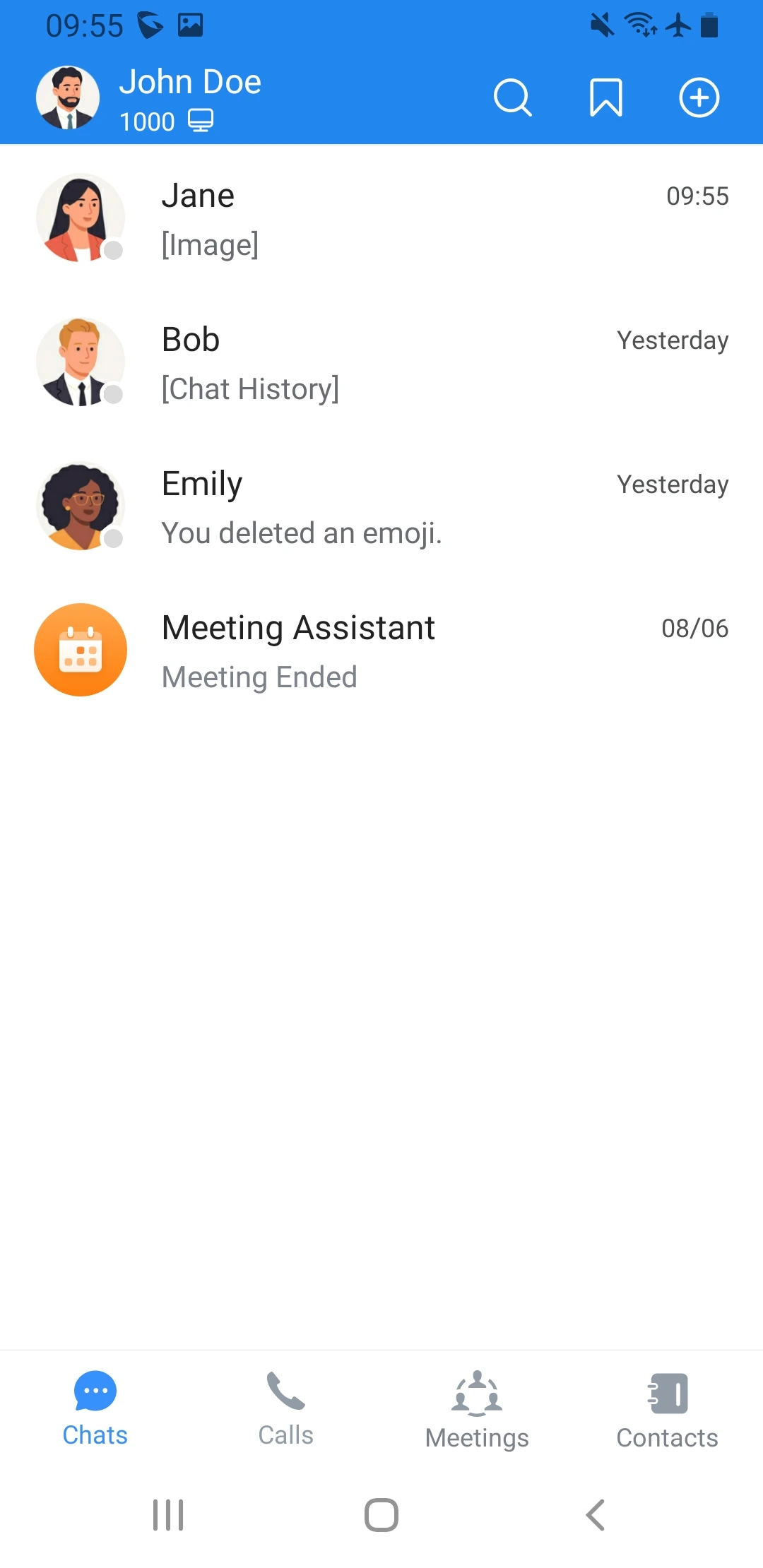

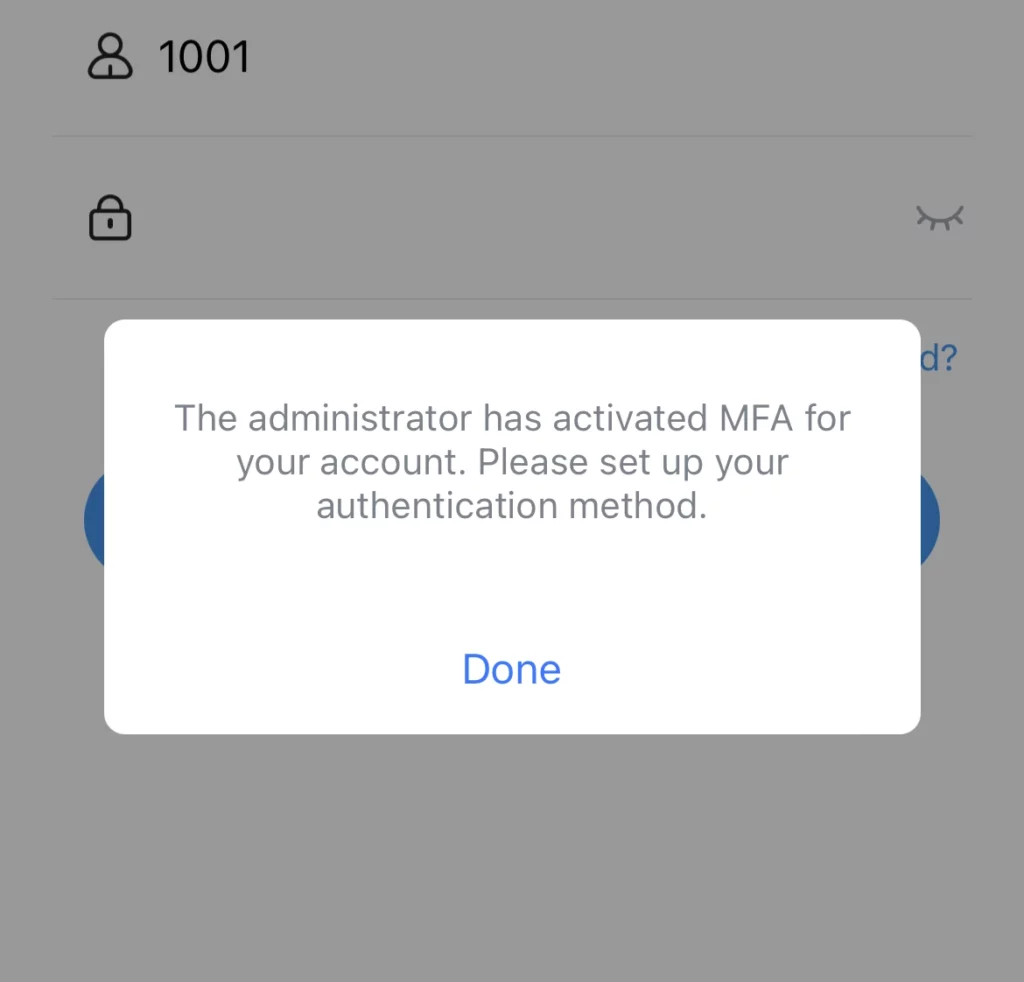

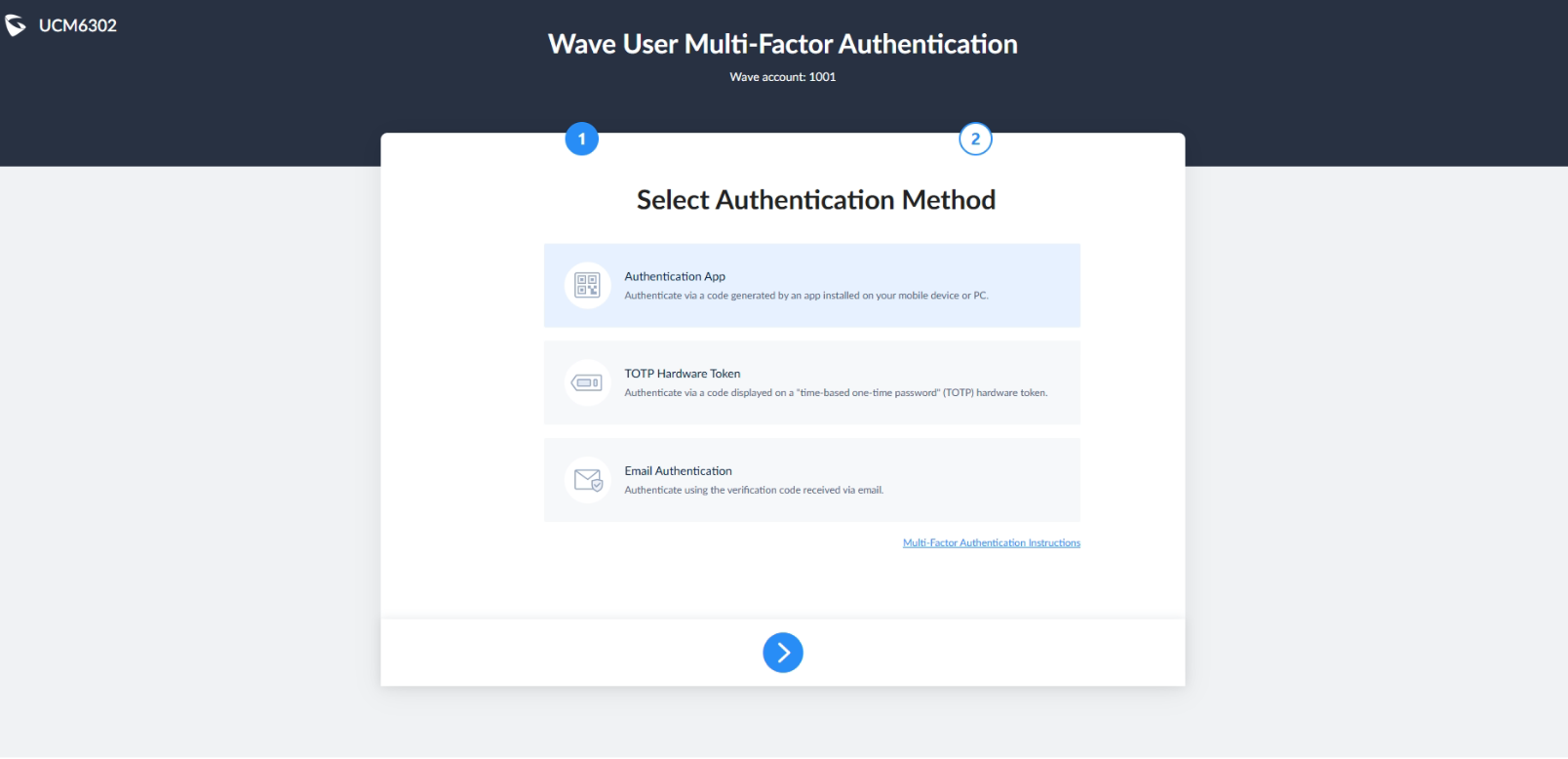
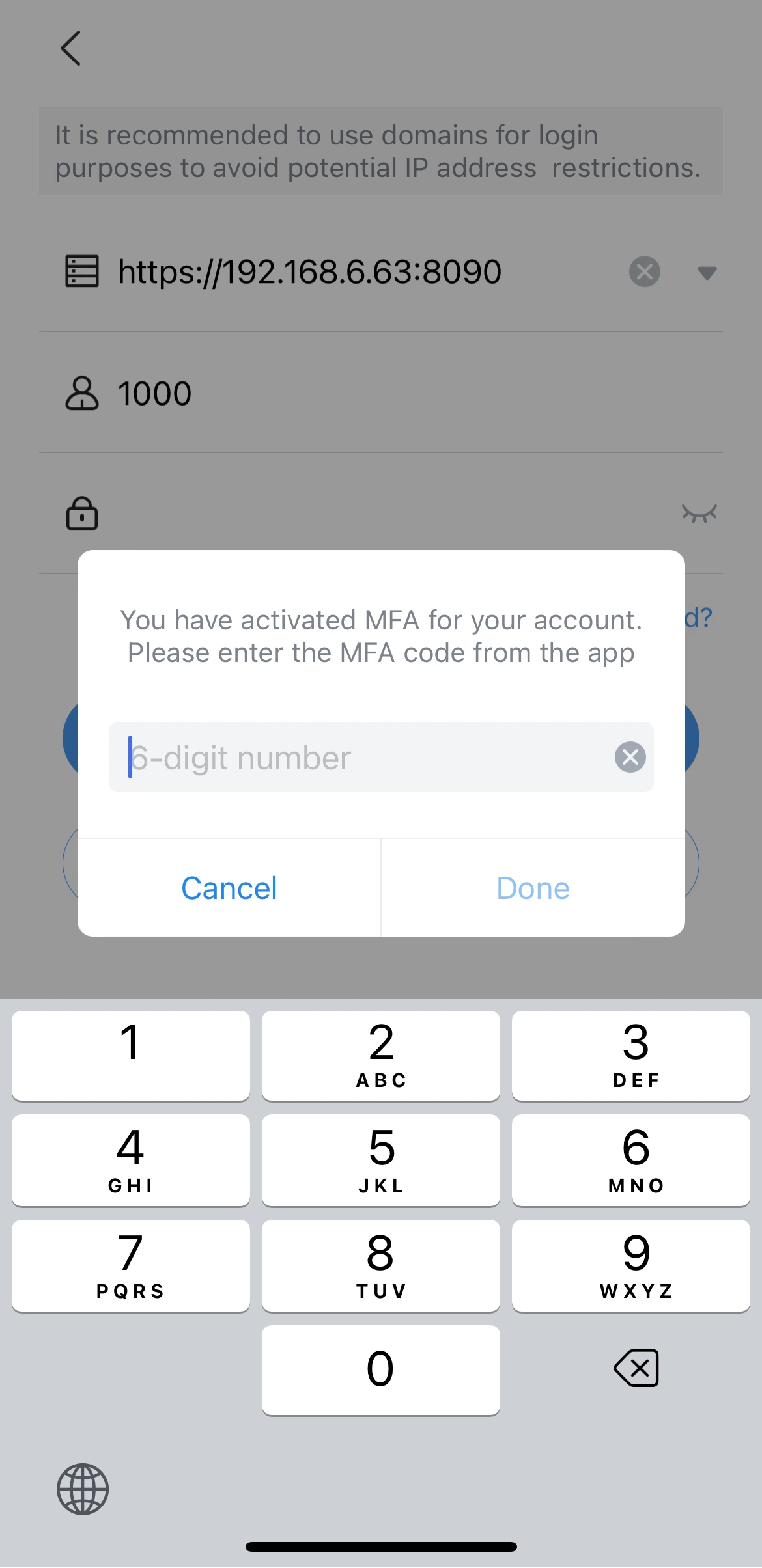
 on the bottom right corner of the app to bring up the dial pad.
 to make a video call or click on
  to make an audio call.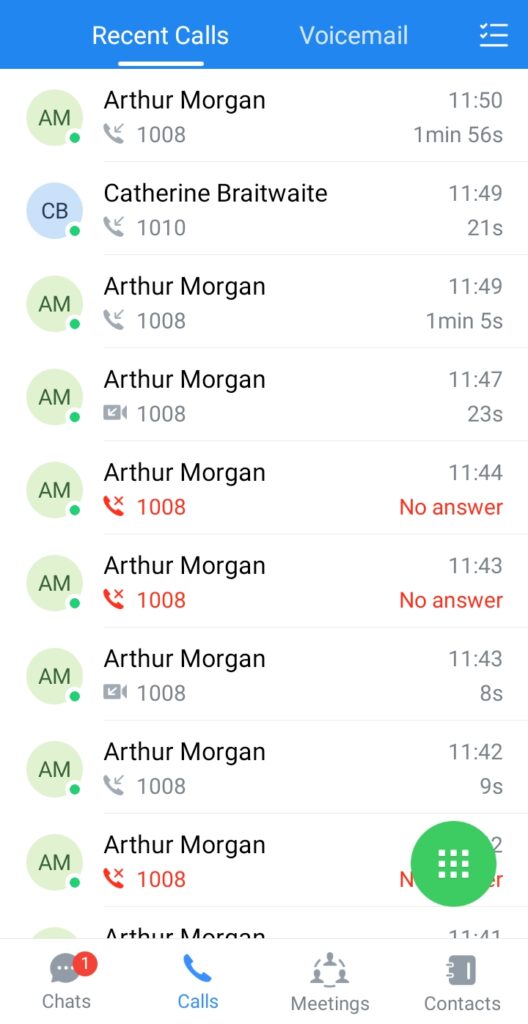
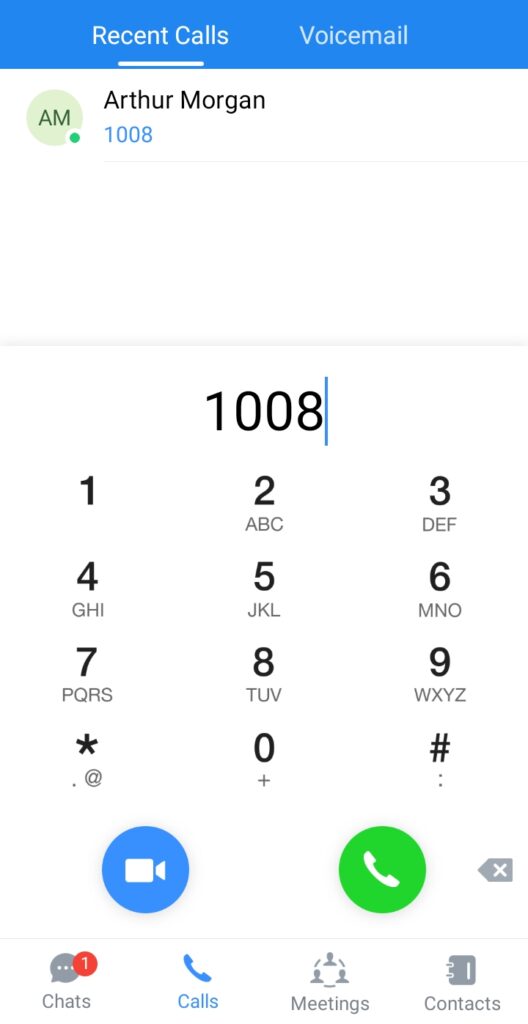
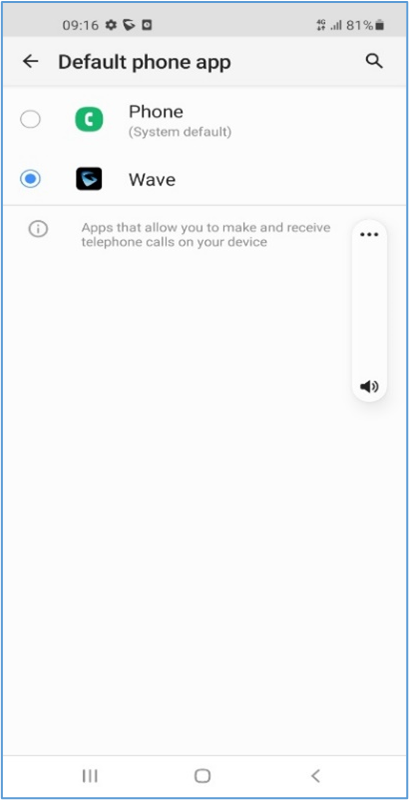
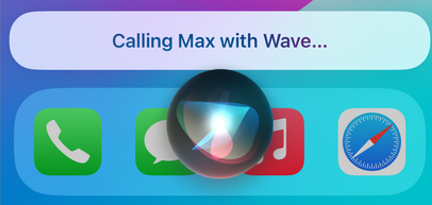
 button on the bottom right corner of the app to bring up the dial pad.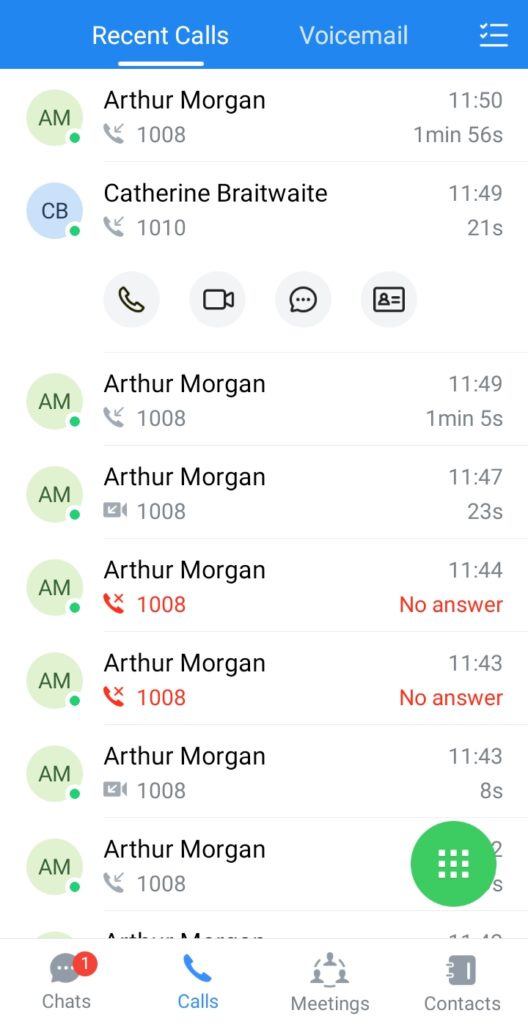
 the user can delete the entries in the call history tab.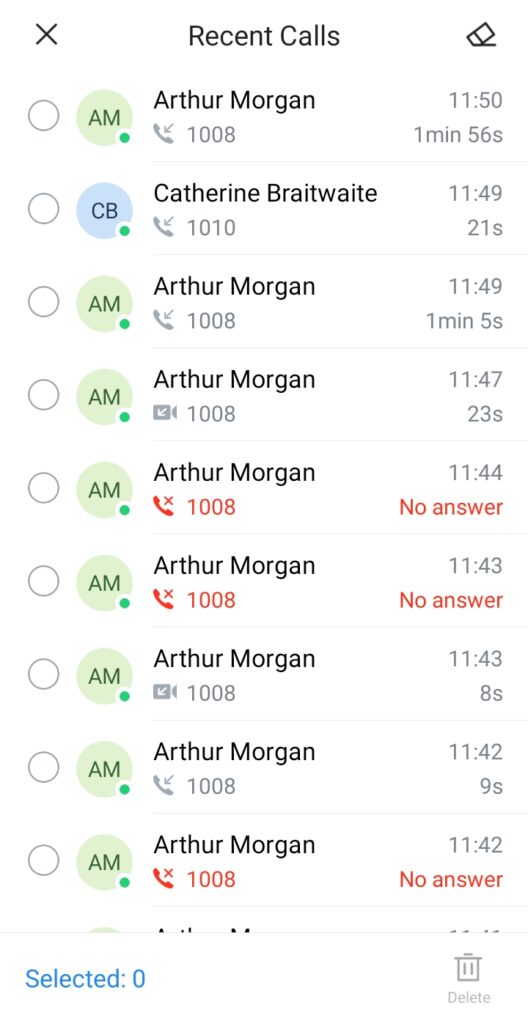
 . To delete all the entries, tap
 to answer the call or tap on
  to reject it.
 to answer the call or tap on
  to reject it.
 is available to answer the call with video on.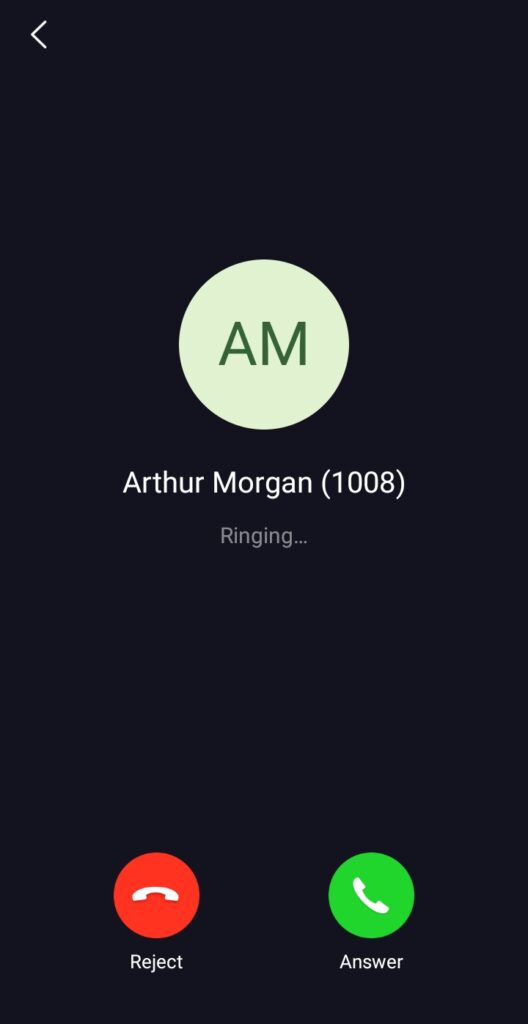
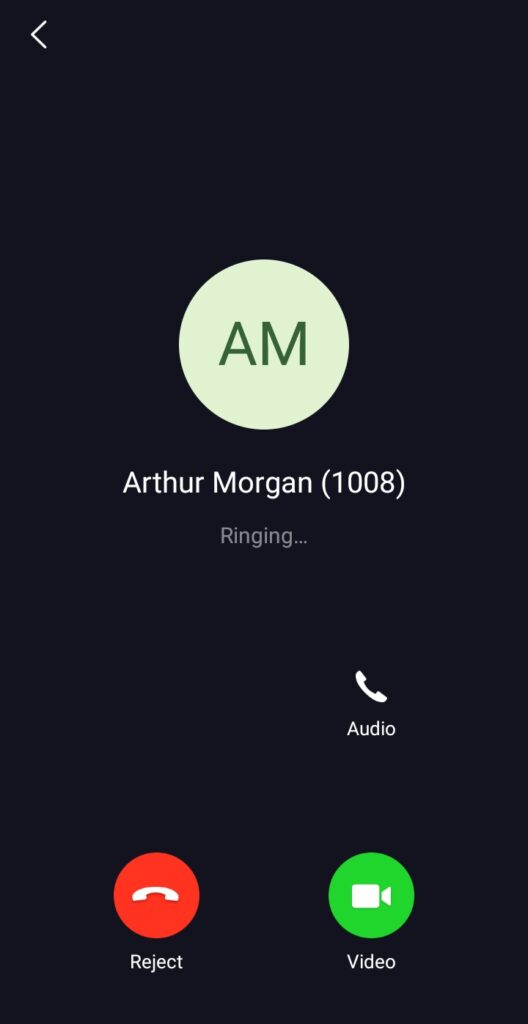
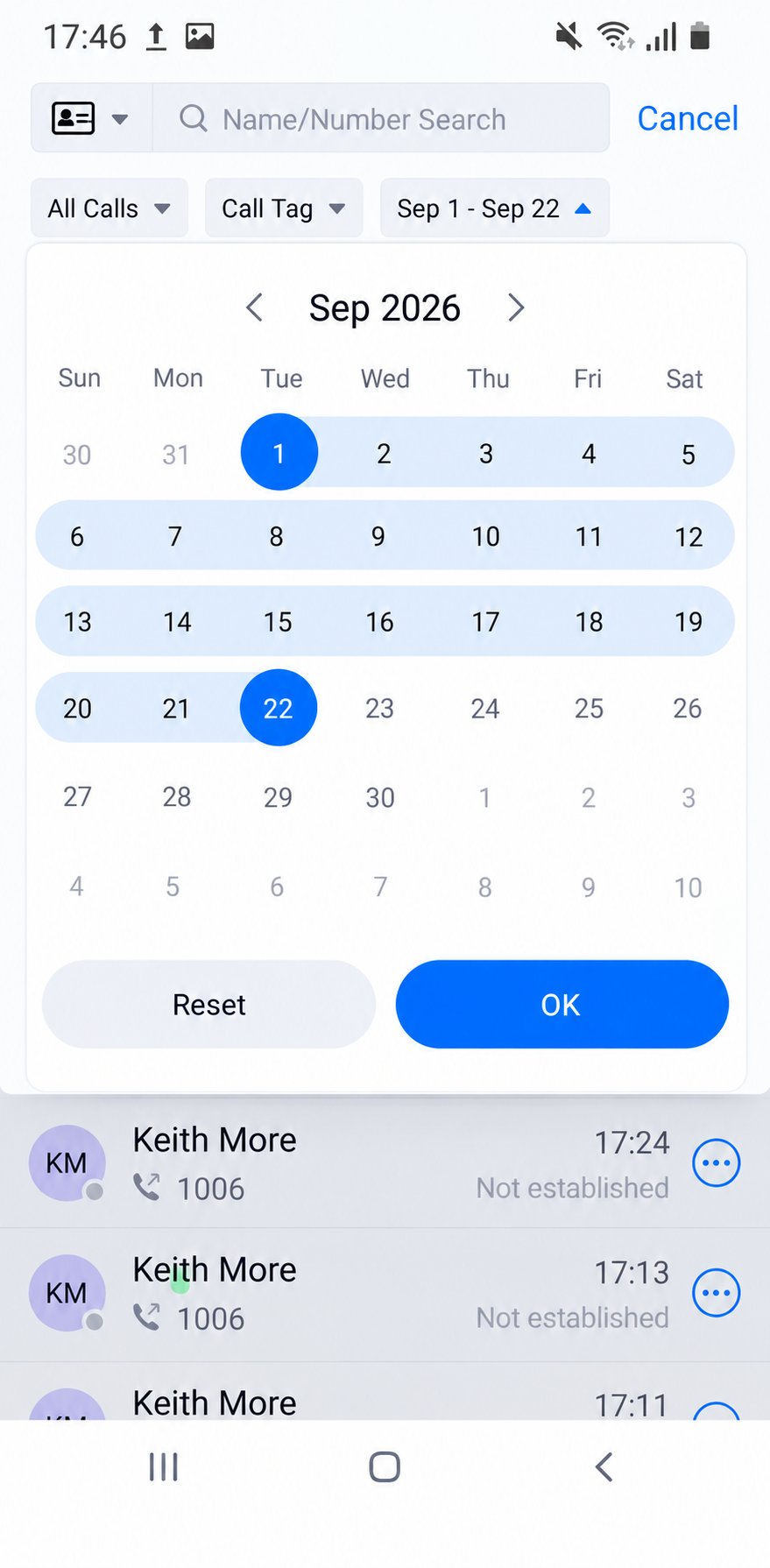
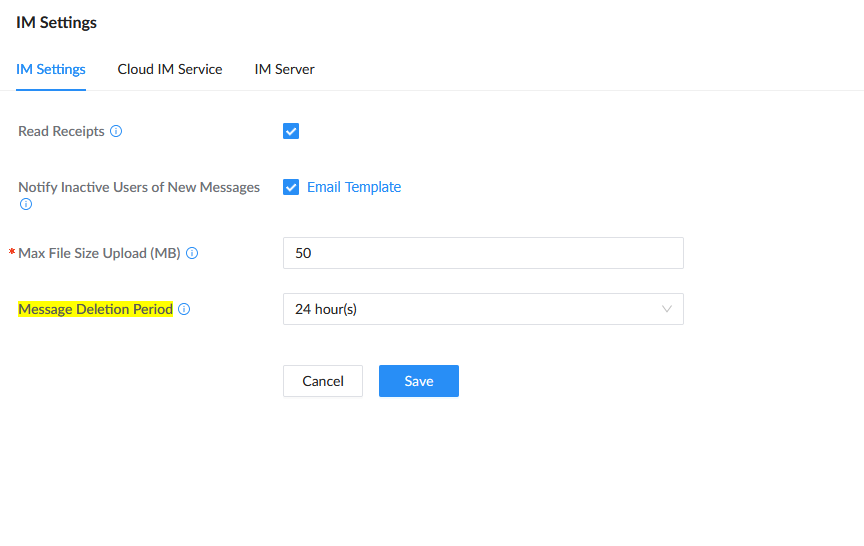
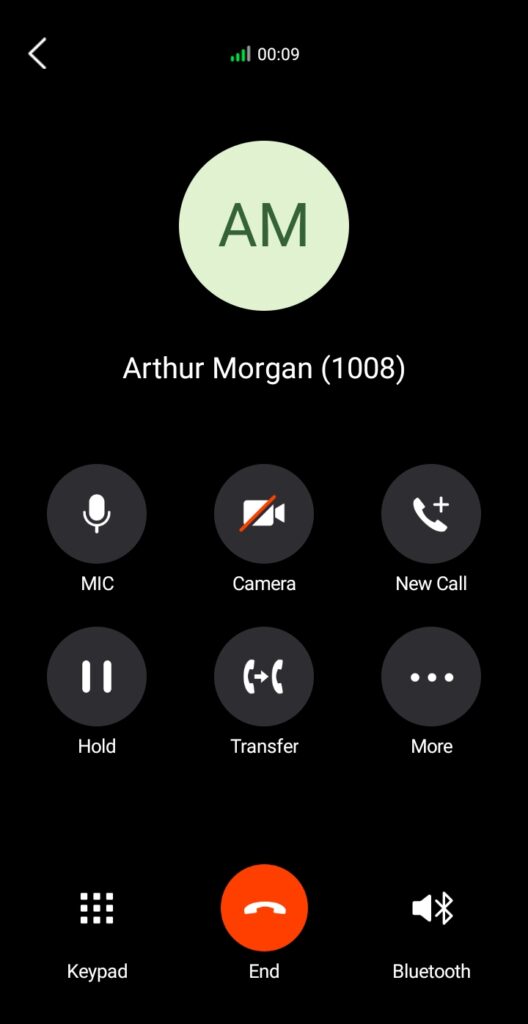
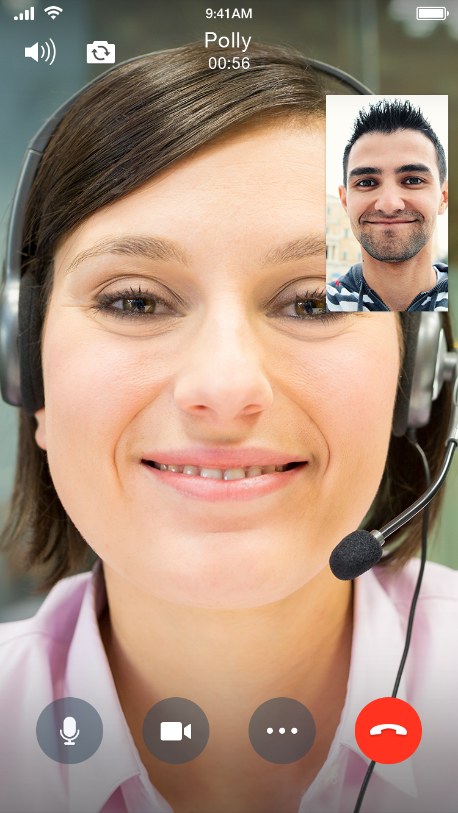


 then the user can select the channel on which the sound will be transmitted.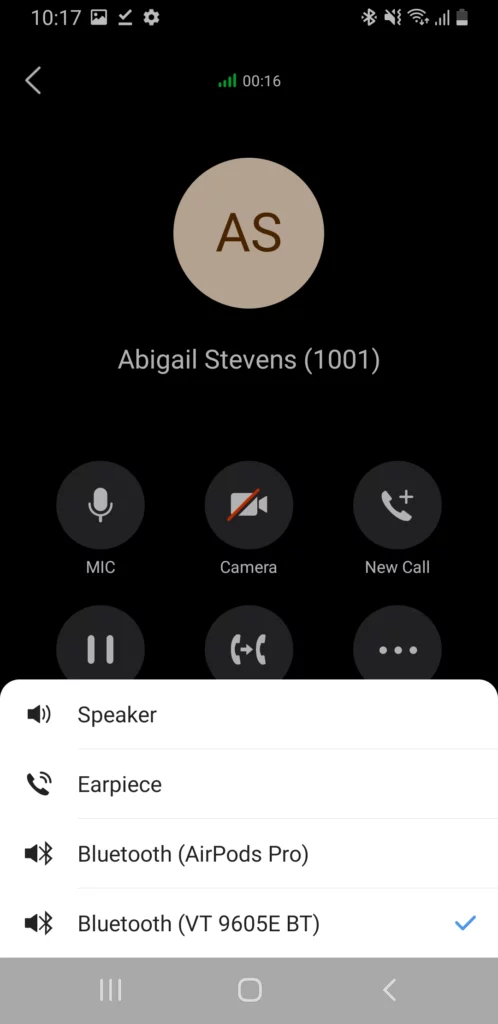
 to switch to the other call.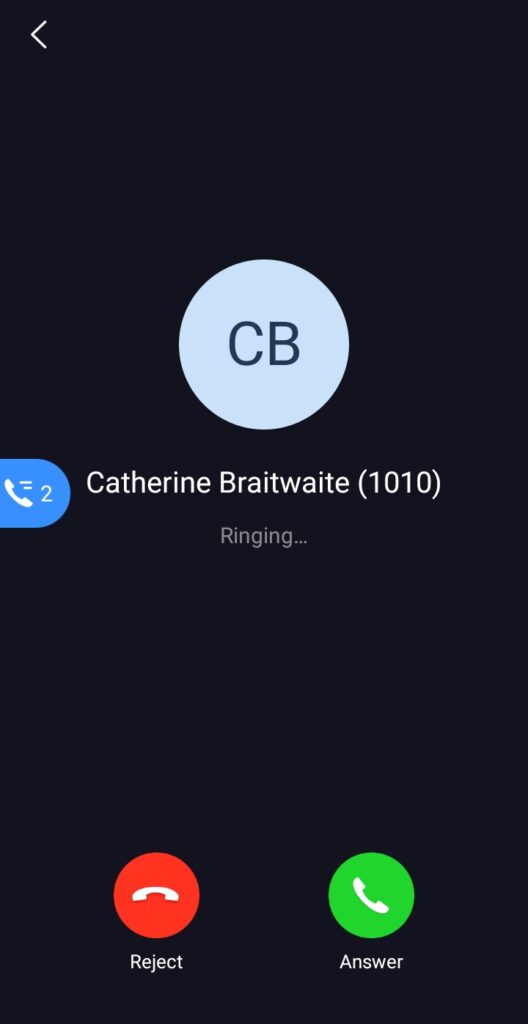
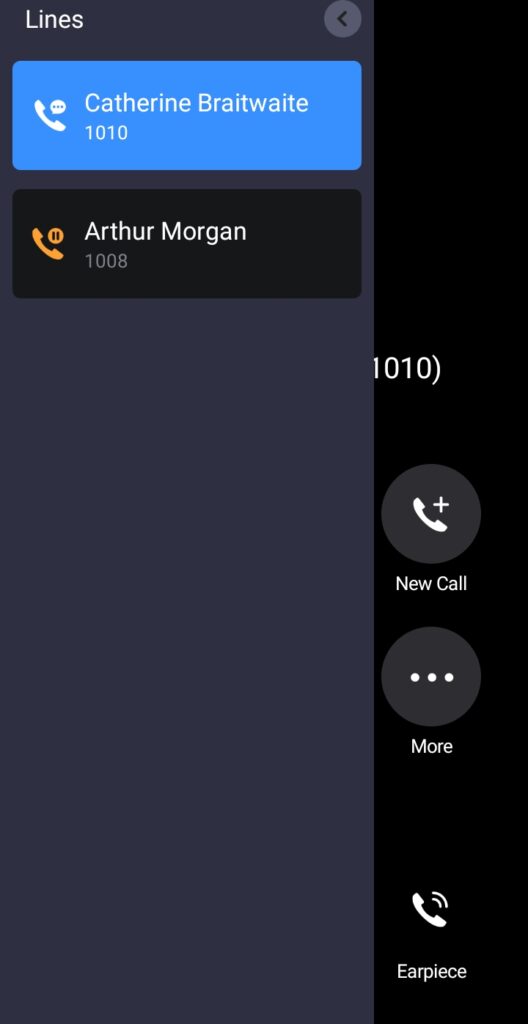
 to put the call on hold.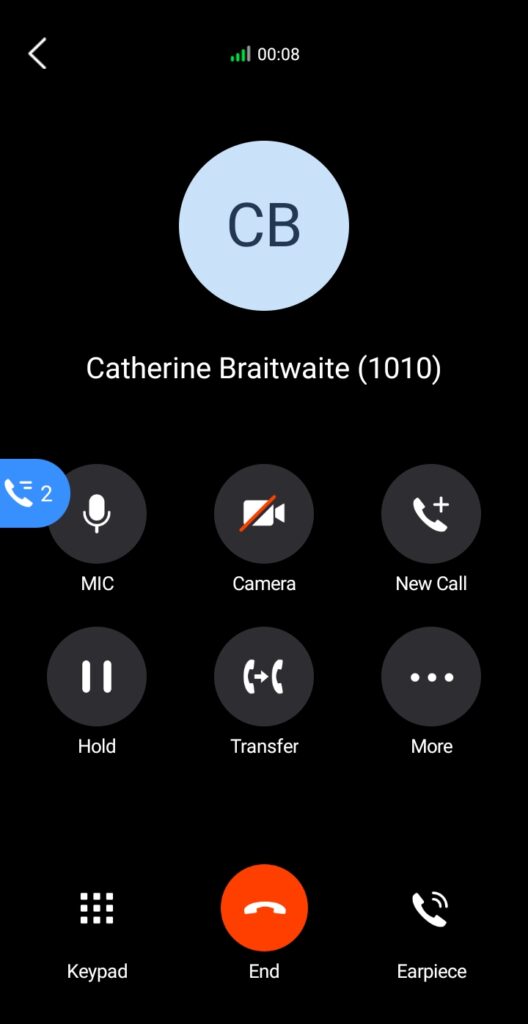
 to mute your microphone. The remote party will no longer be able to hear you.
 to unmute your microphone.
 icon at the top right corner of the application to bring up audio channel selections. The following options will be available:


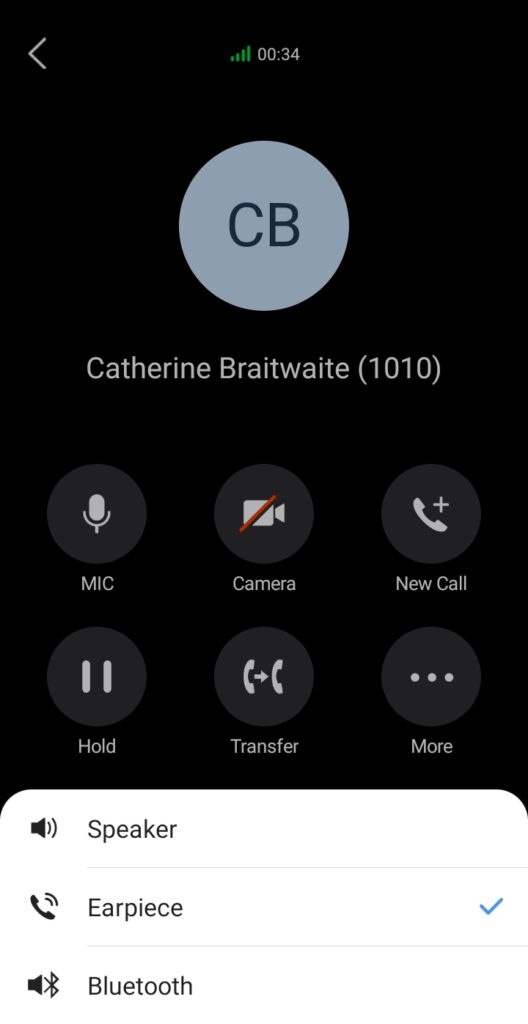

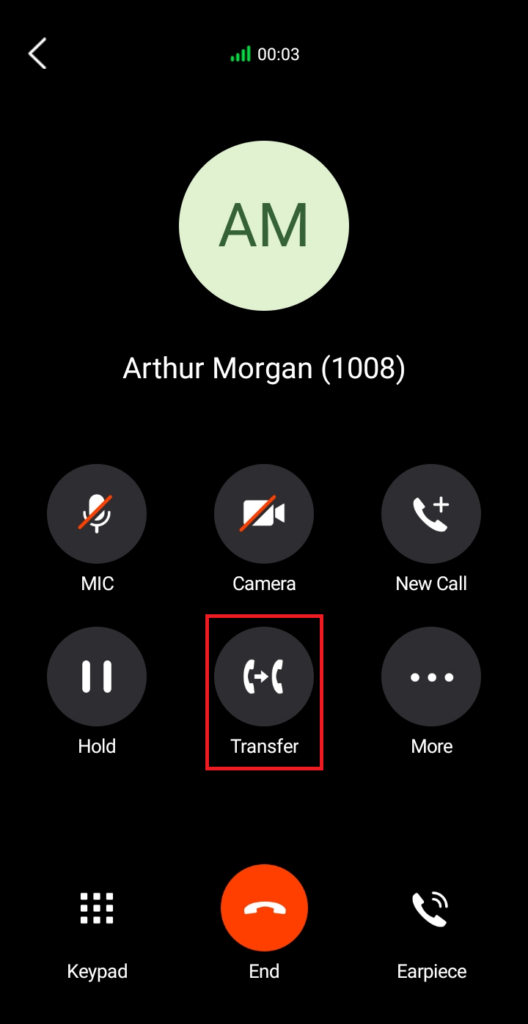
 or
or  To start the transfer.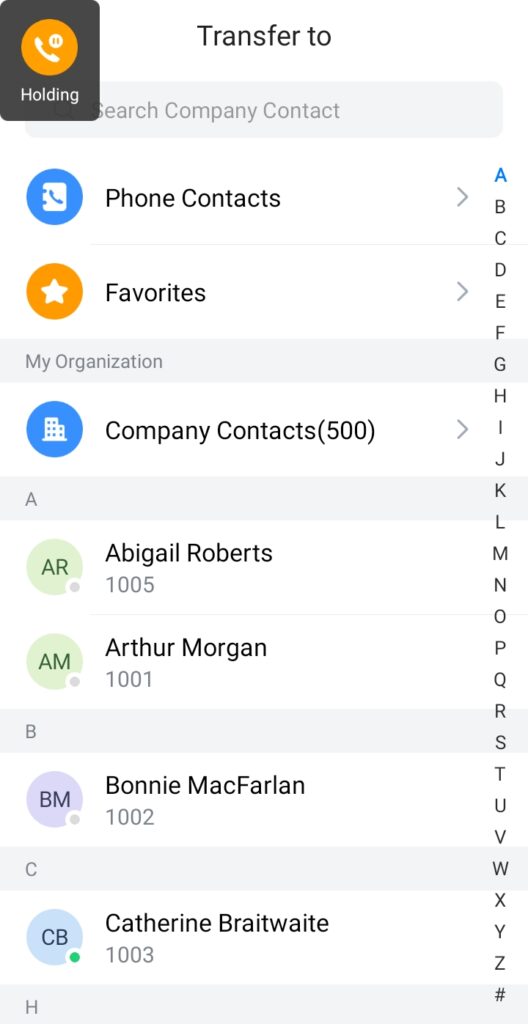
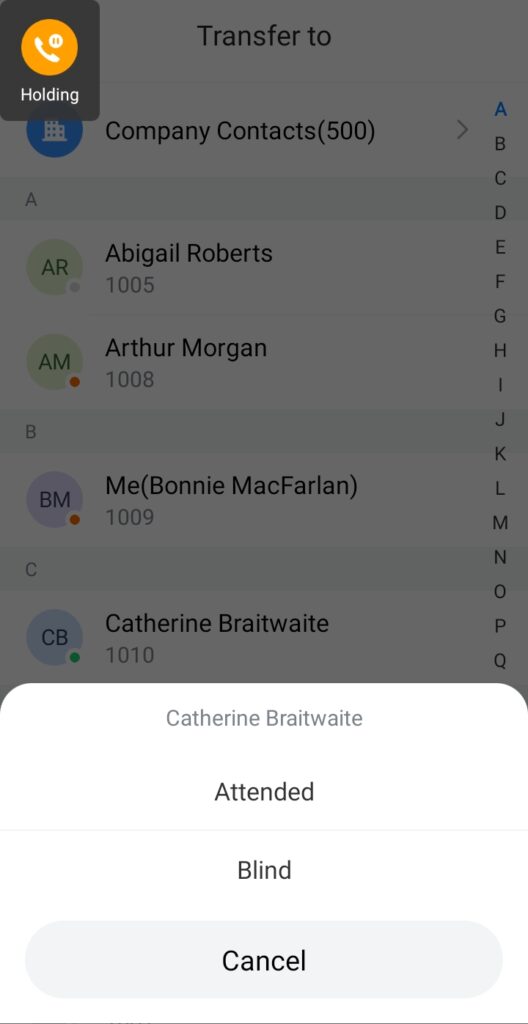
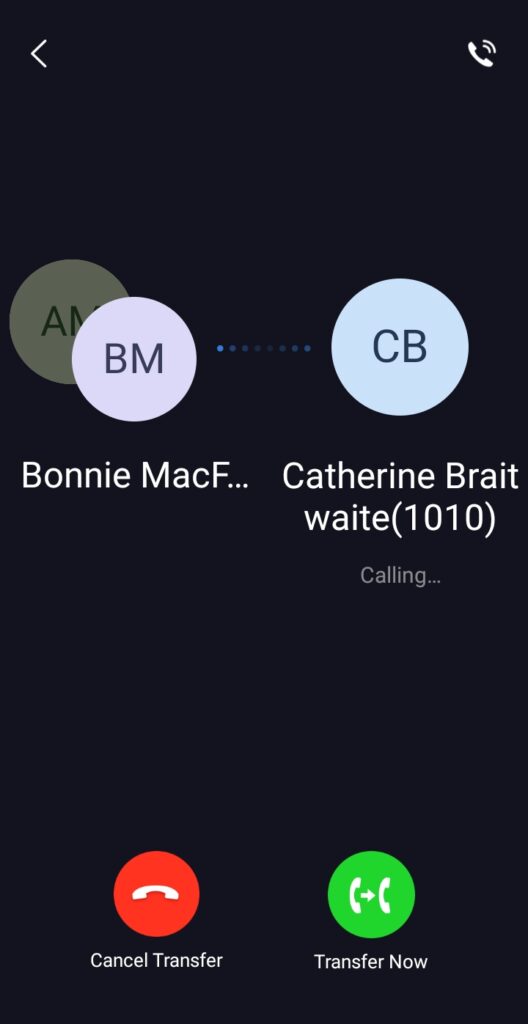
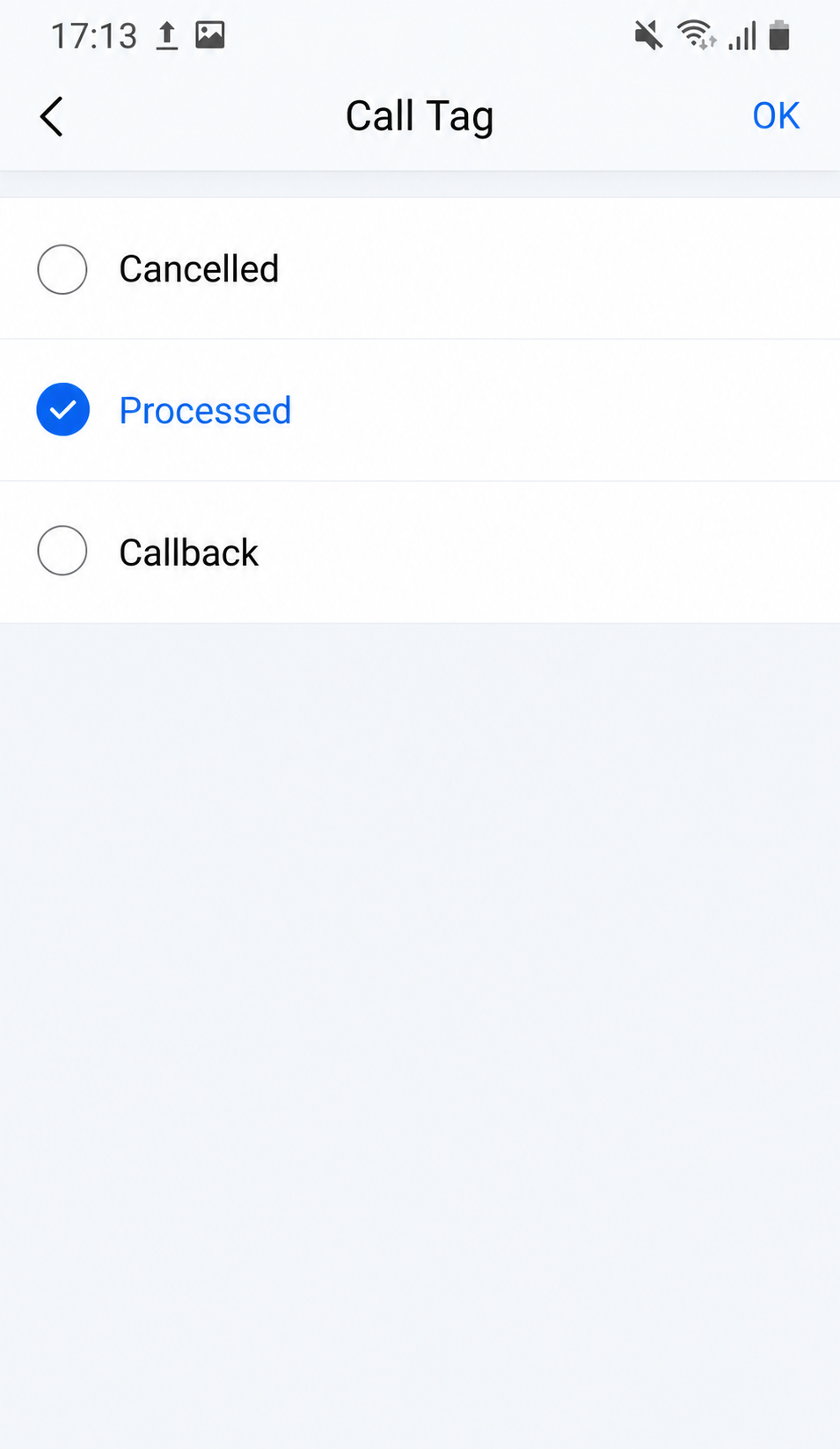
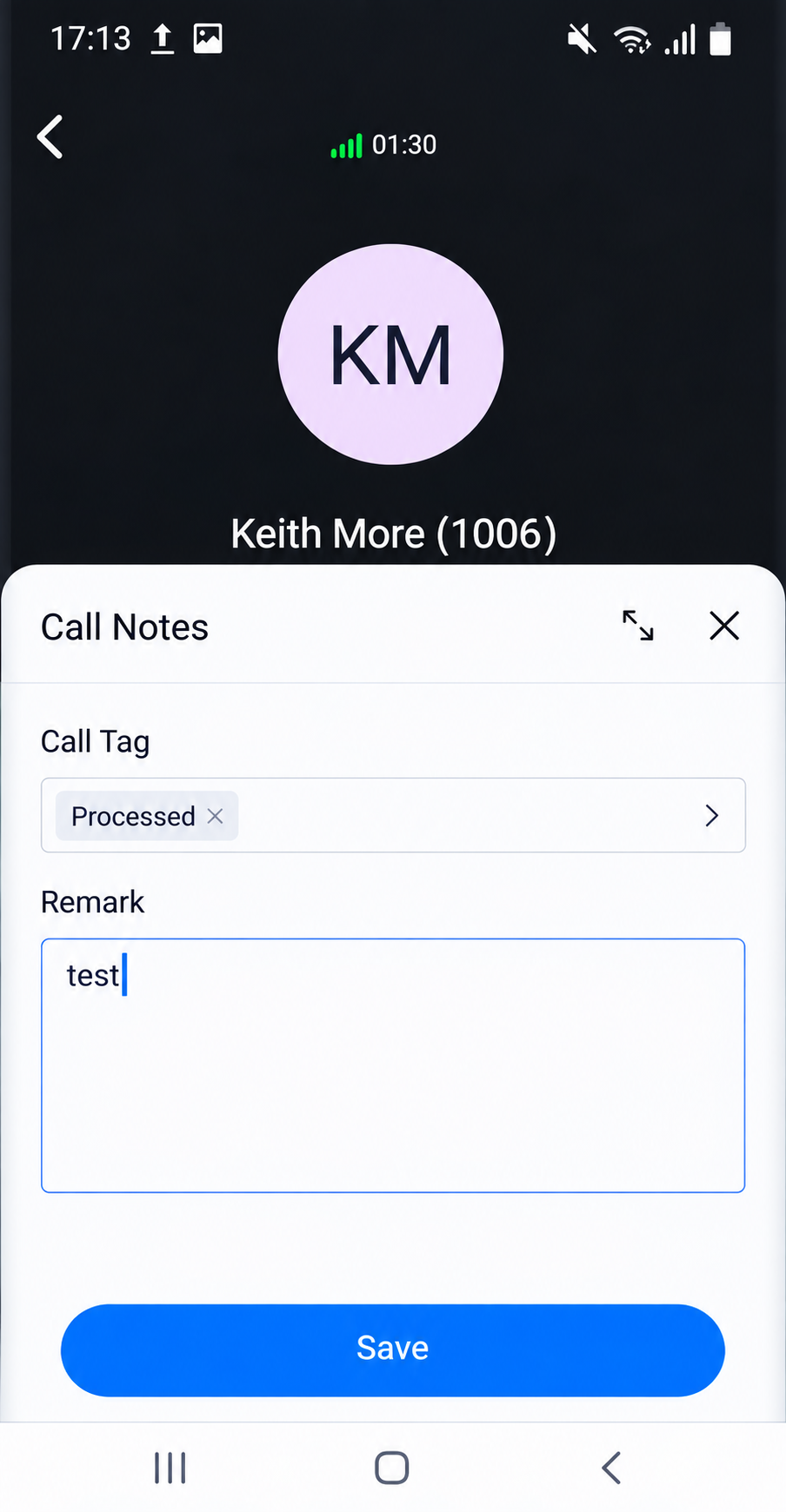
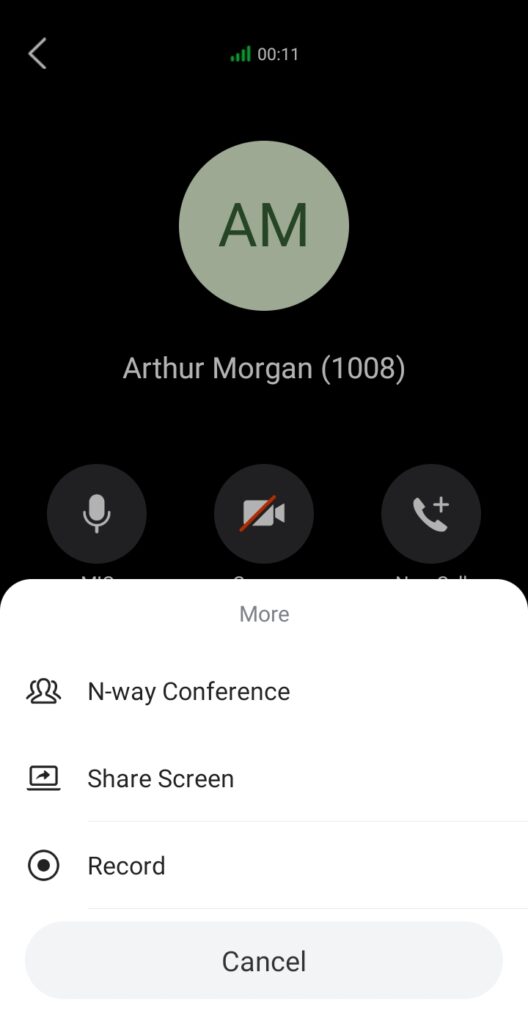
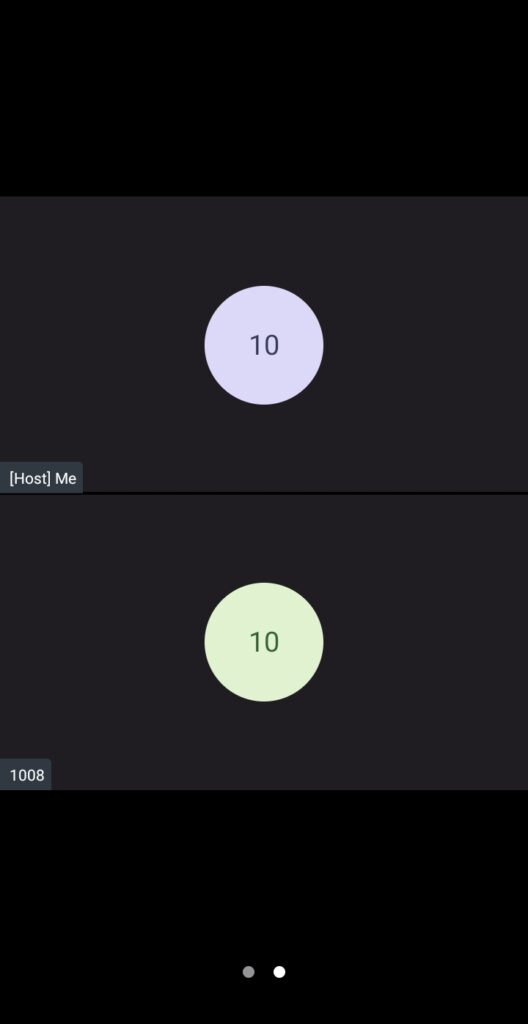
 then on
  to bring more people to the call.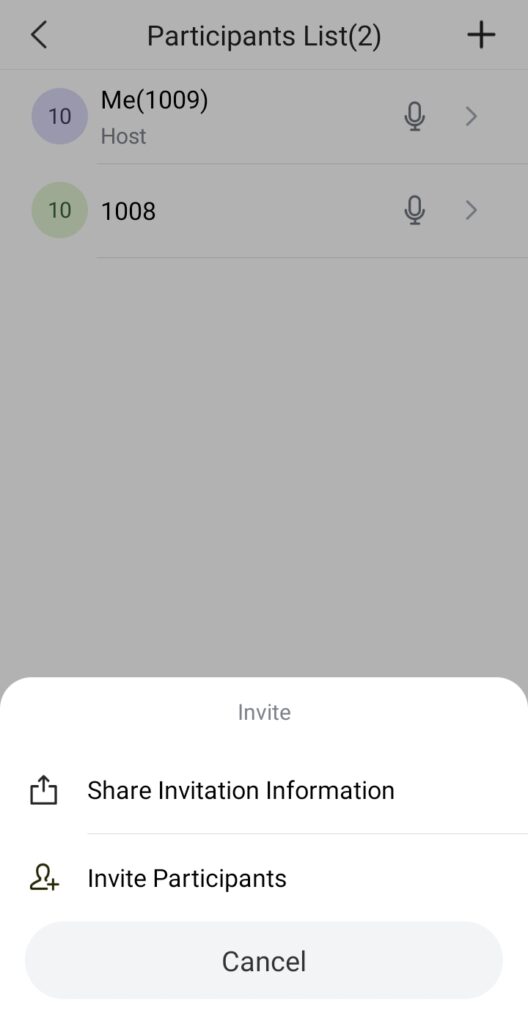
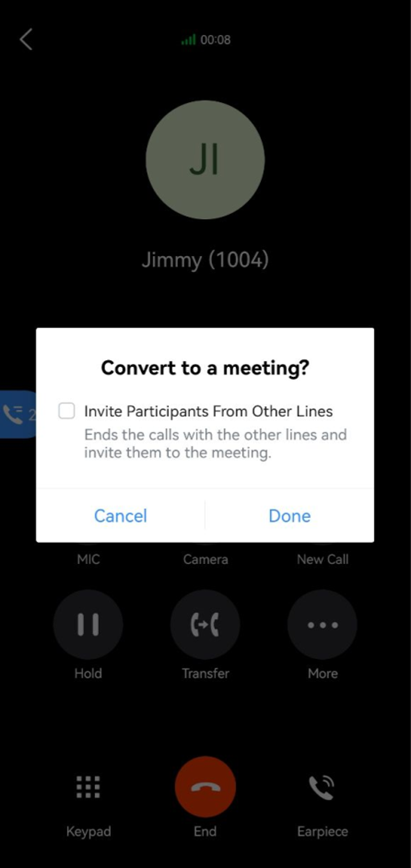
 during the call to start recording the call. Once the call is ended, the user can click the
 button to view the recording files on the call history interface. Please see the screenshots below: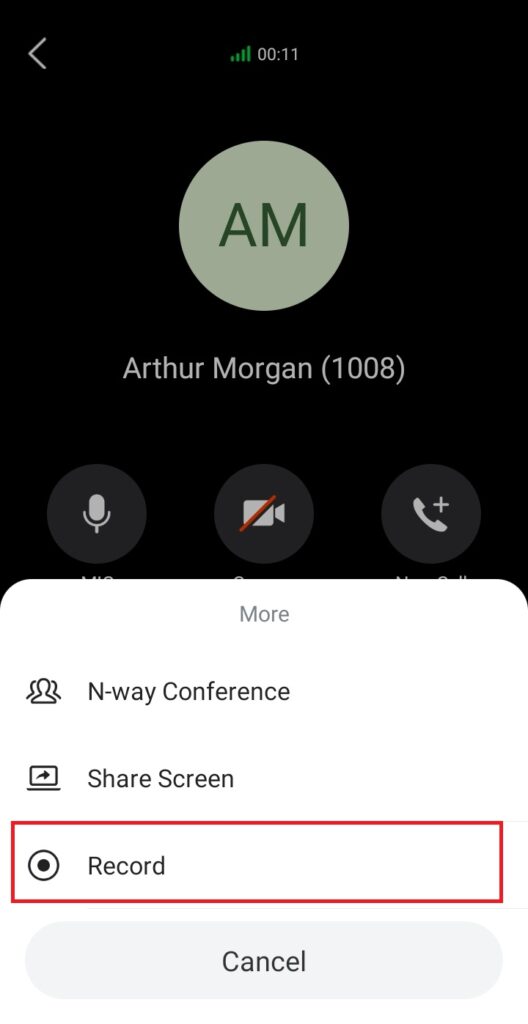
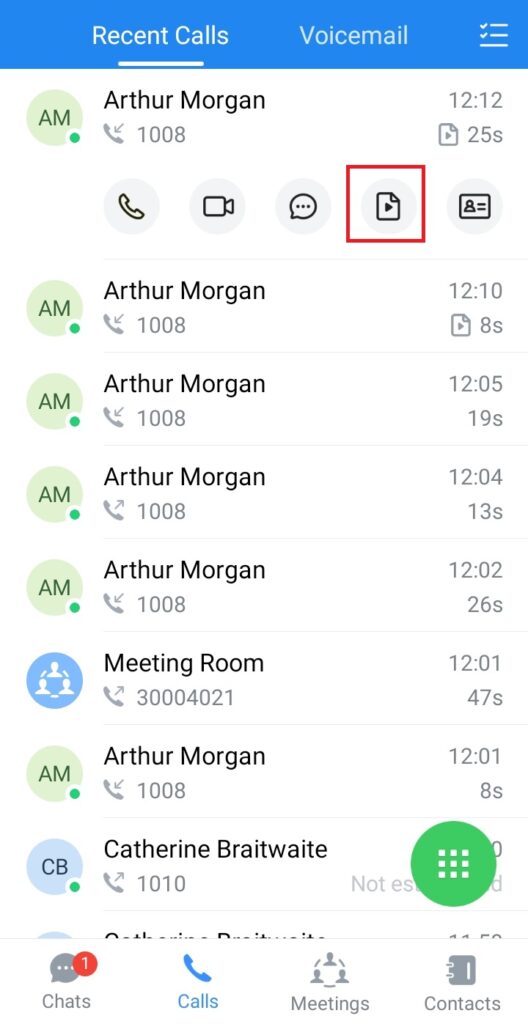
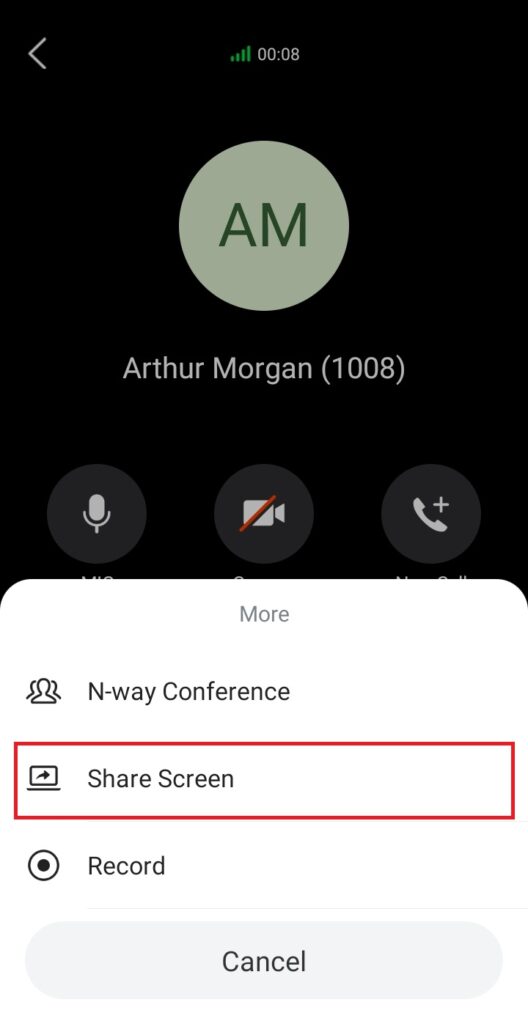
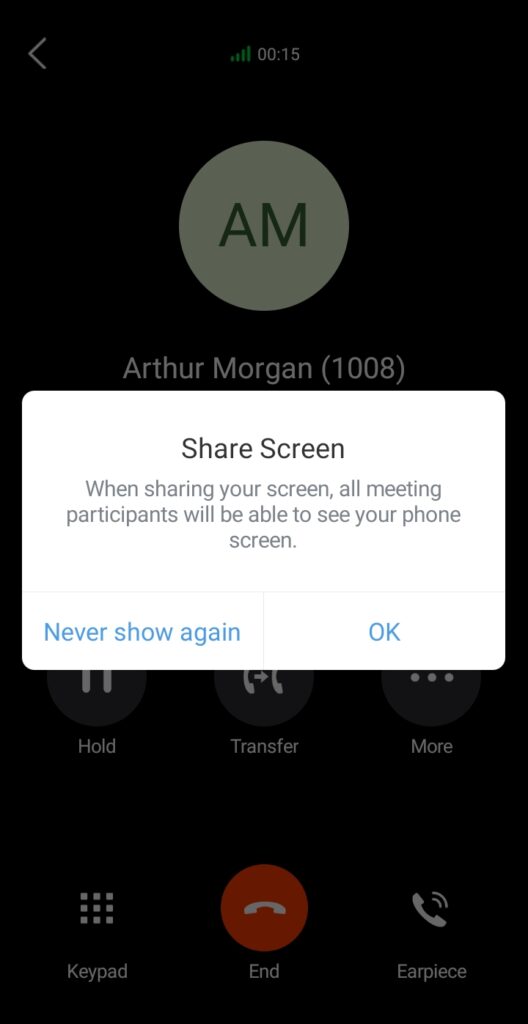
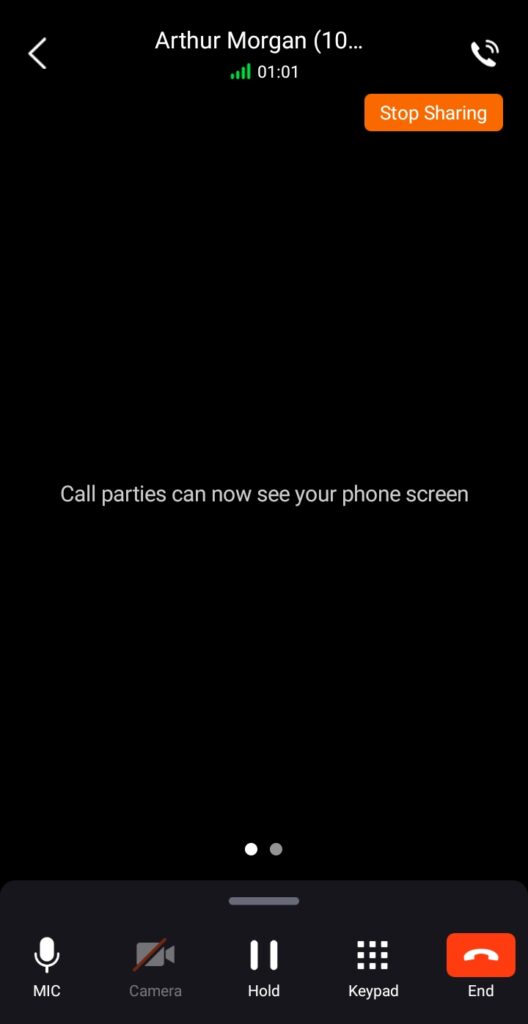
 .
.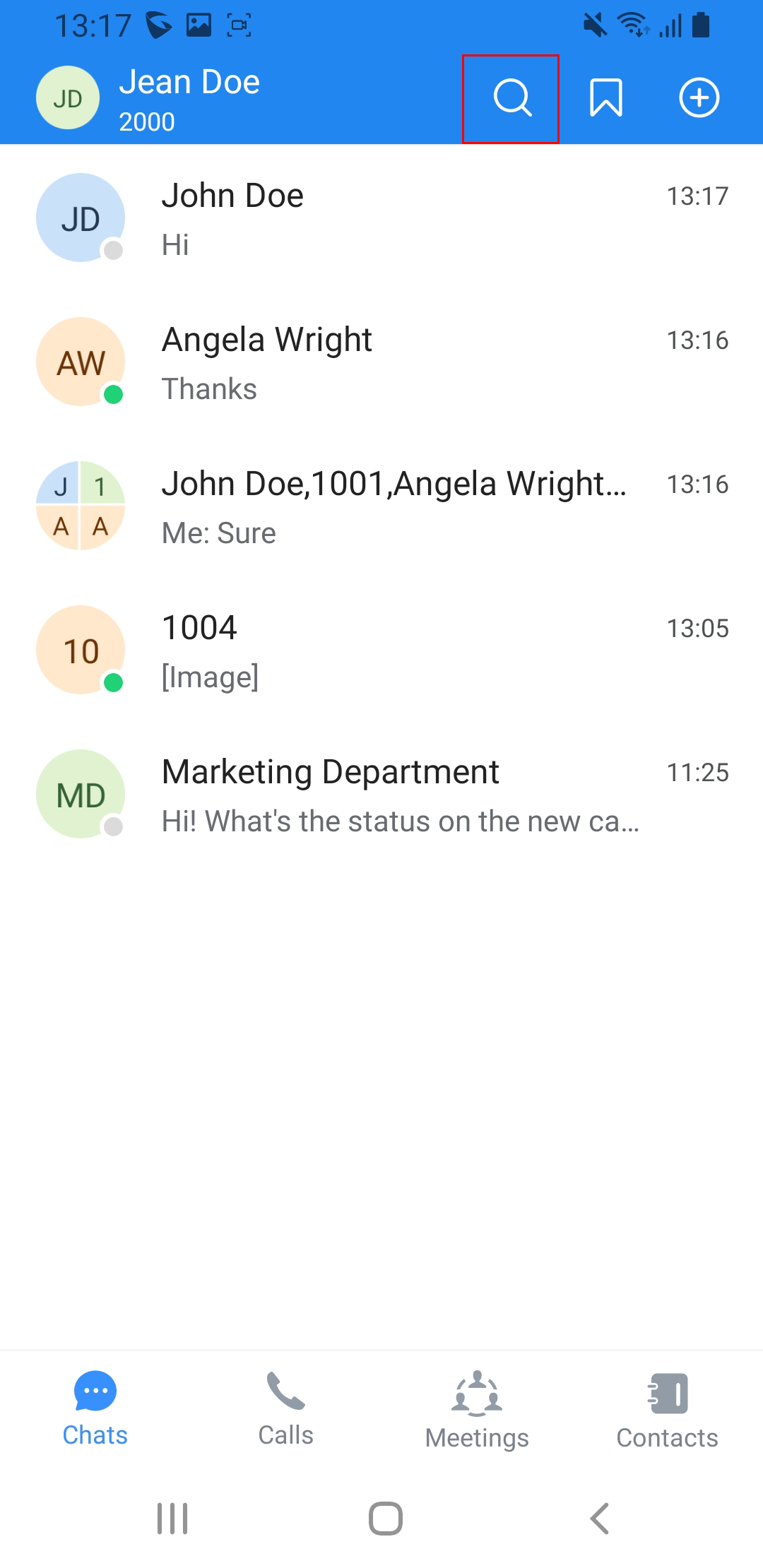
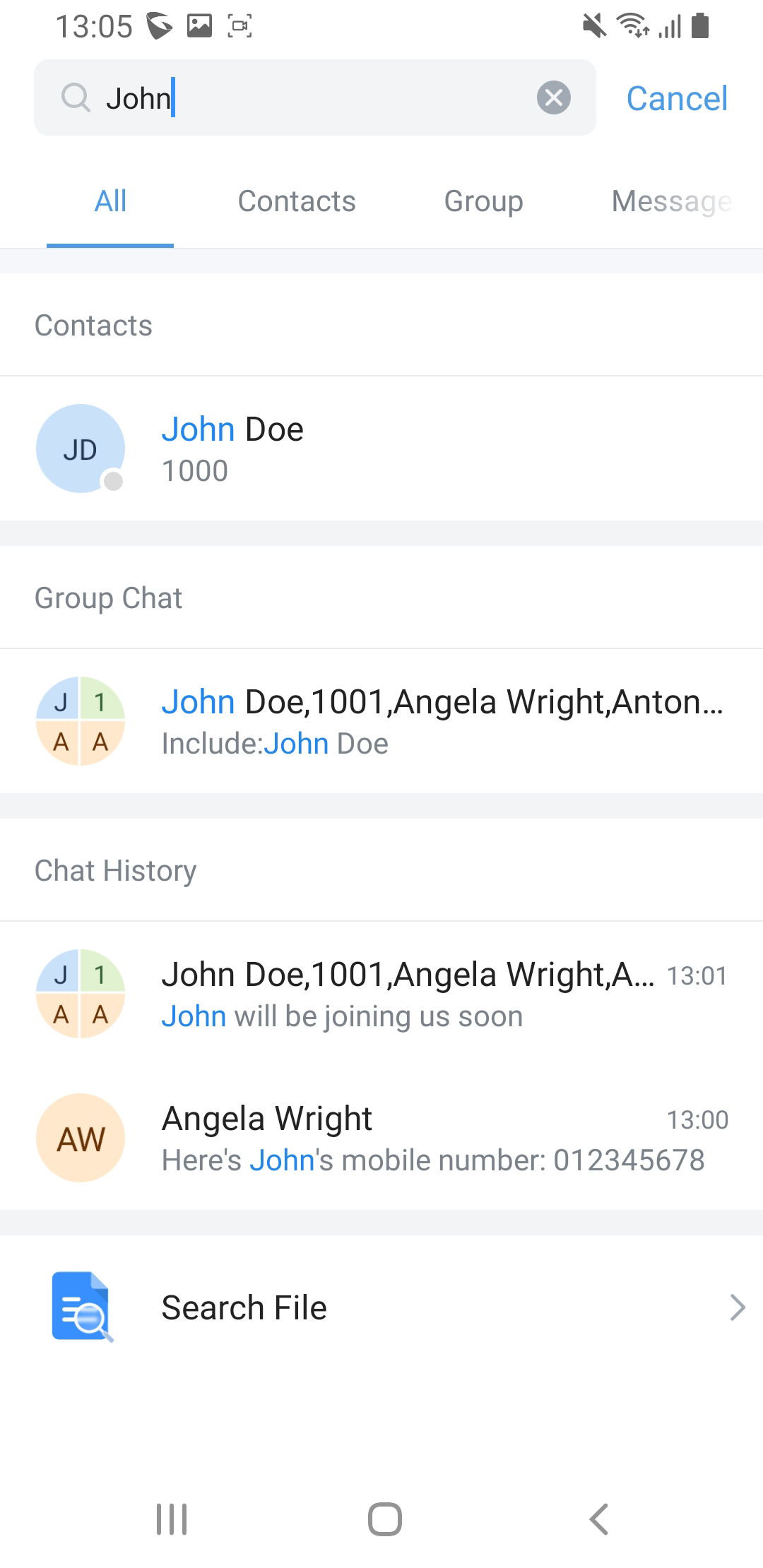
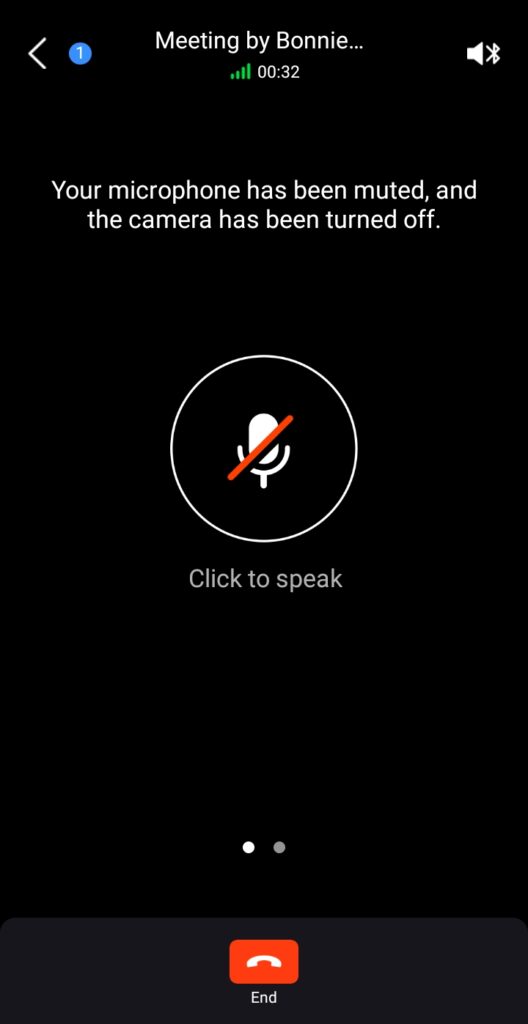
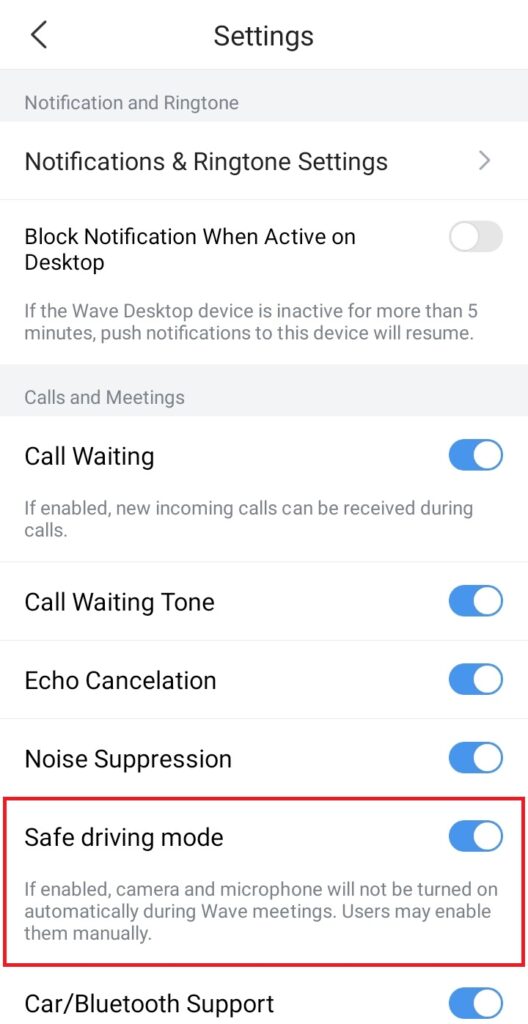
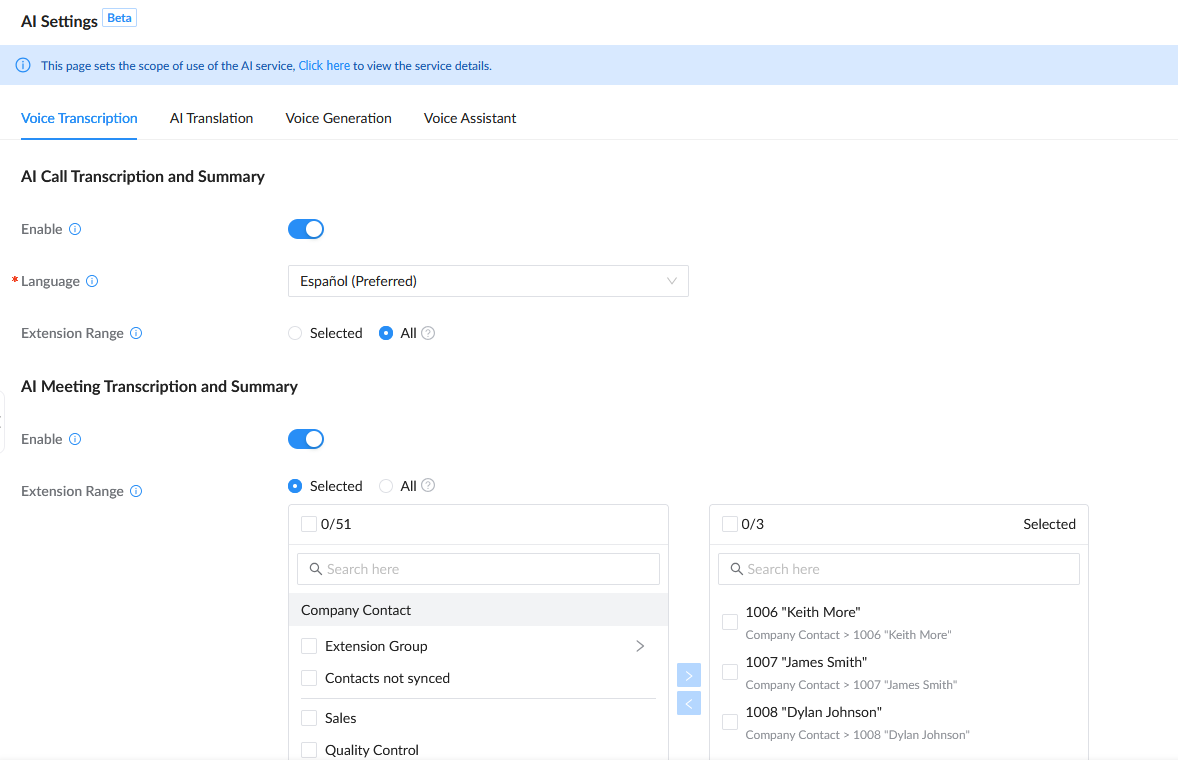
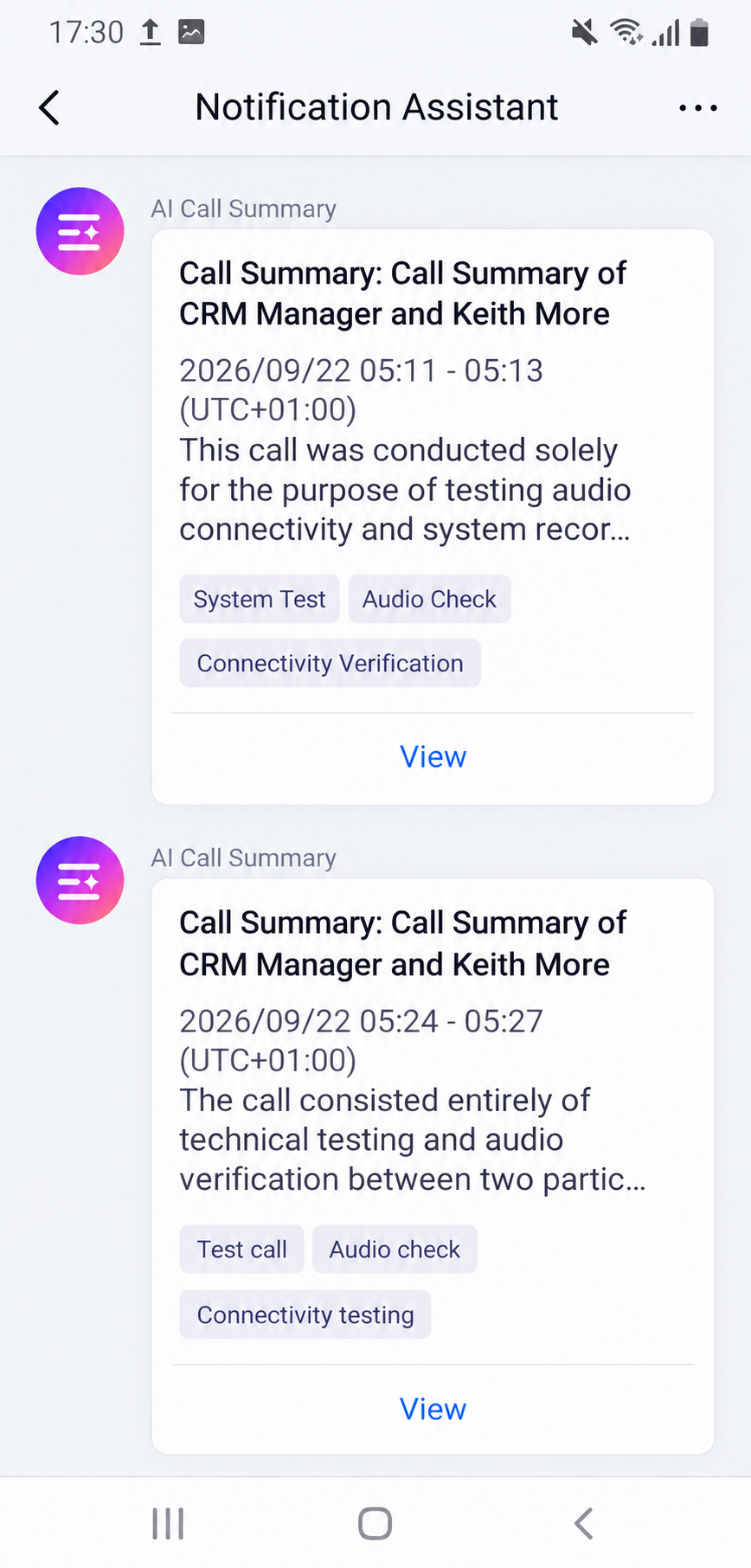
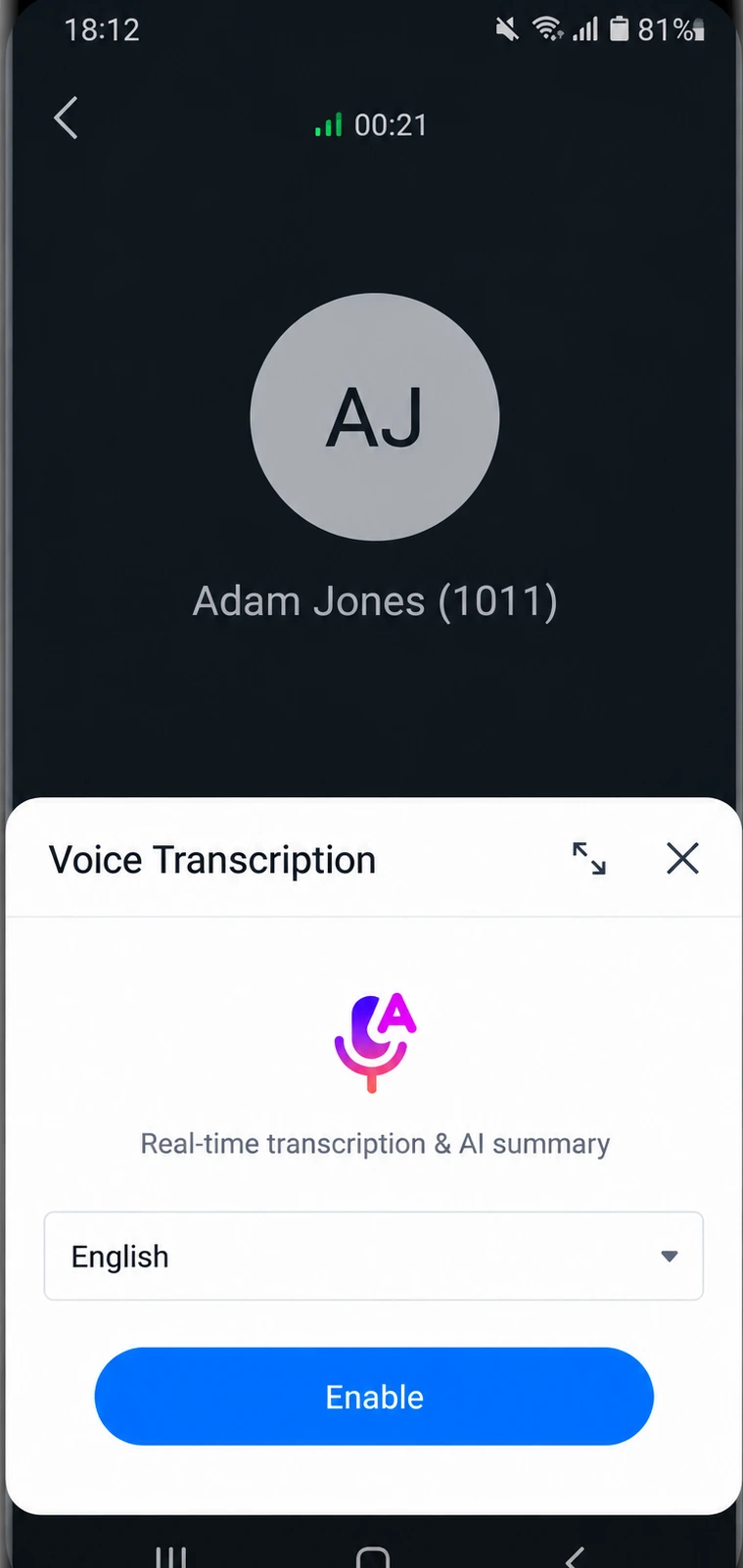
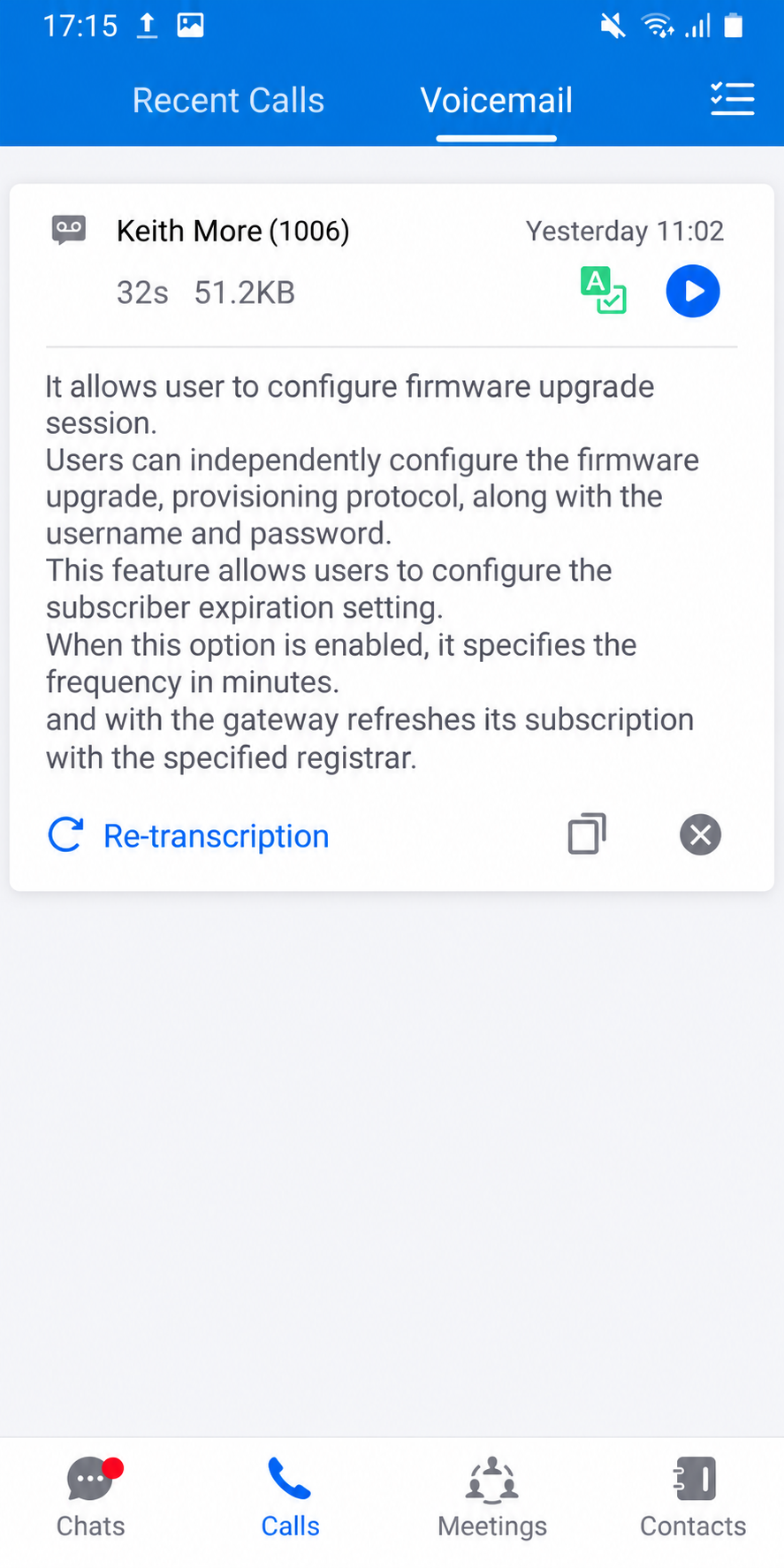
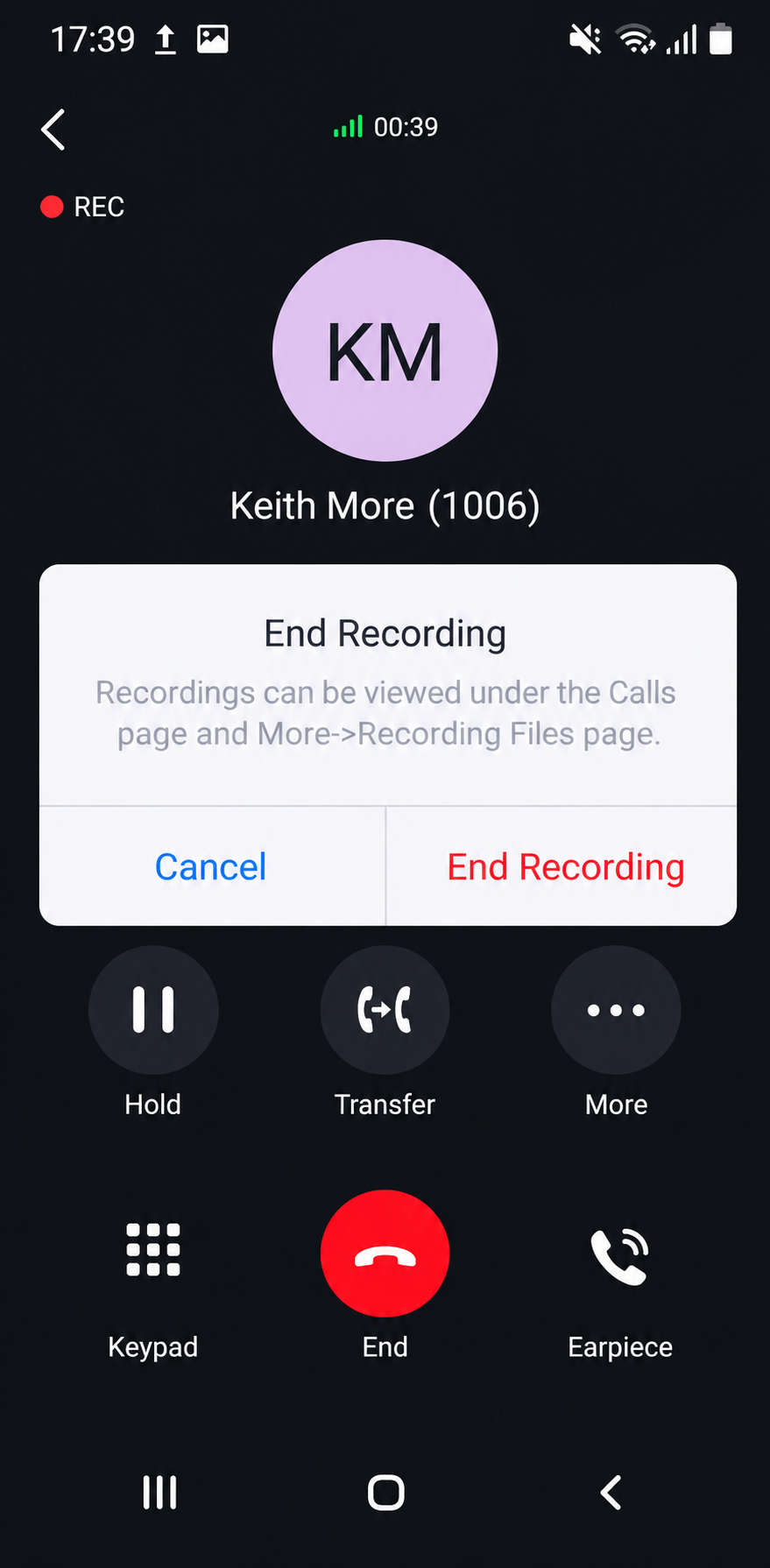
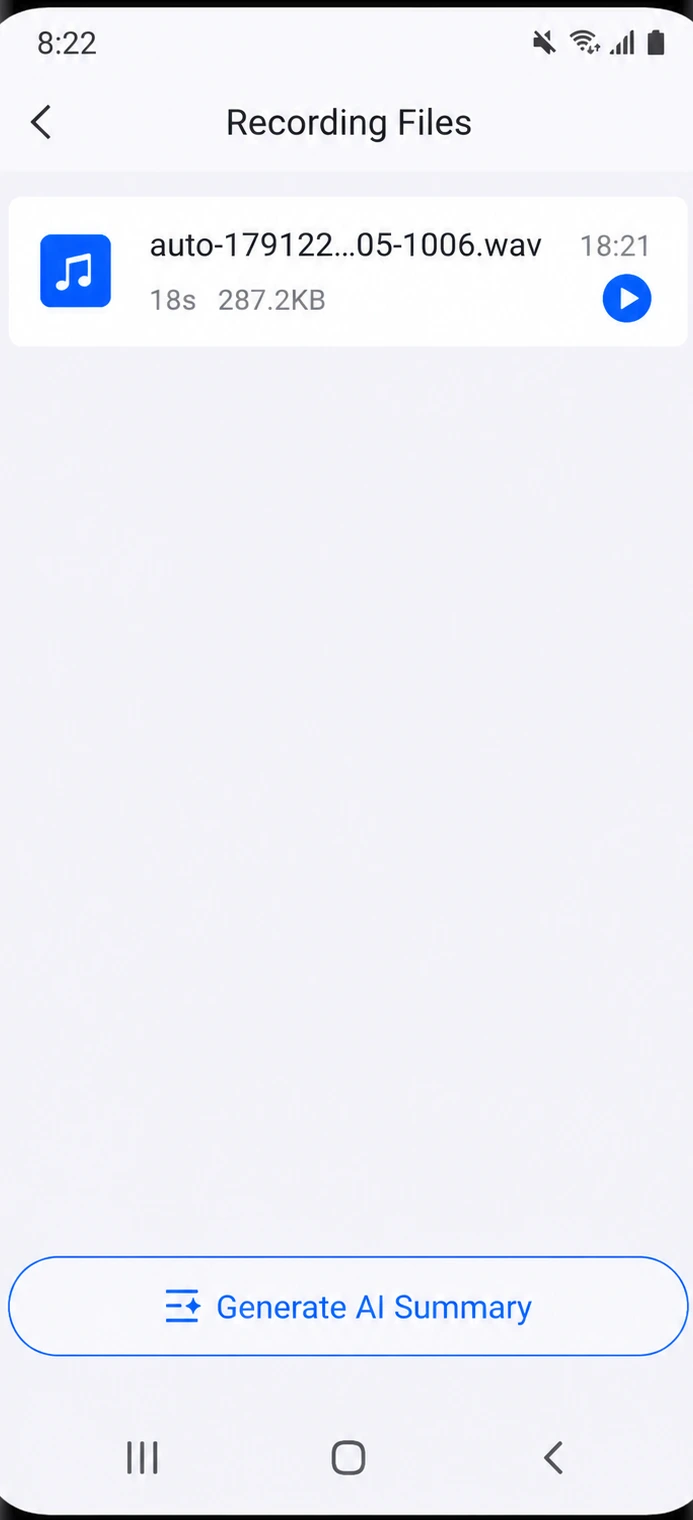
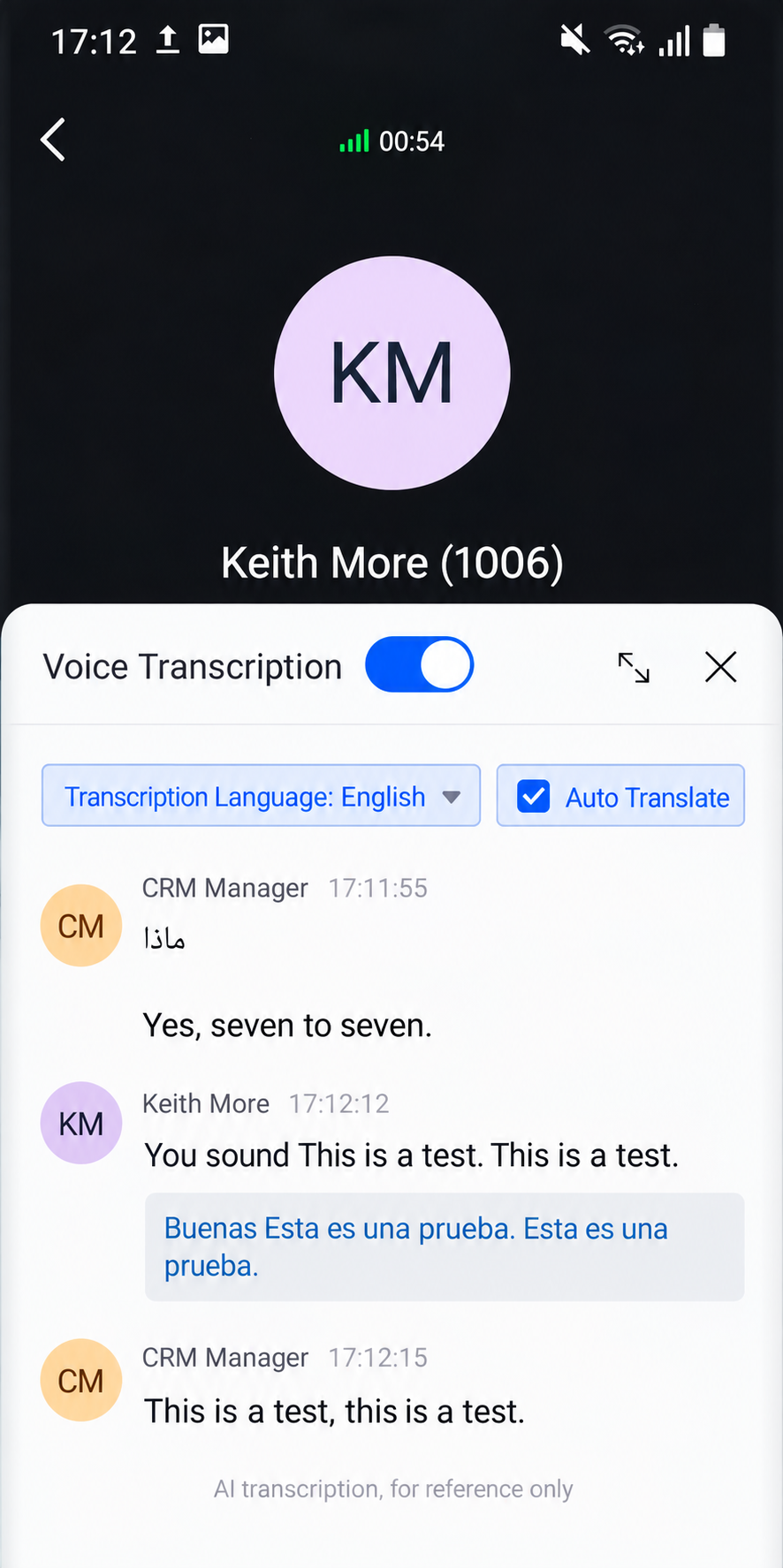

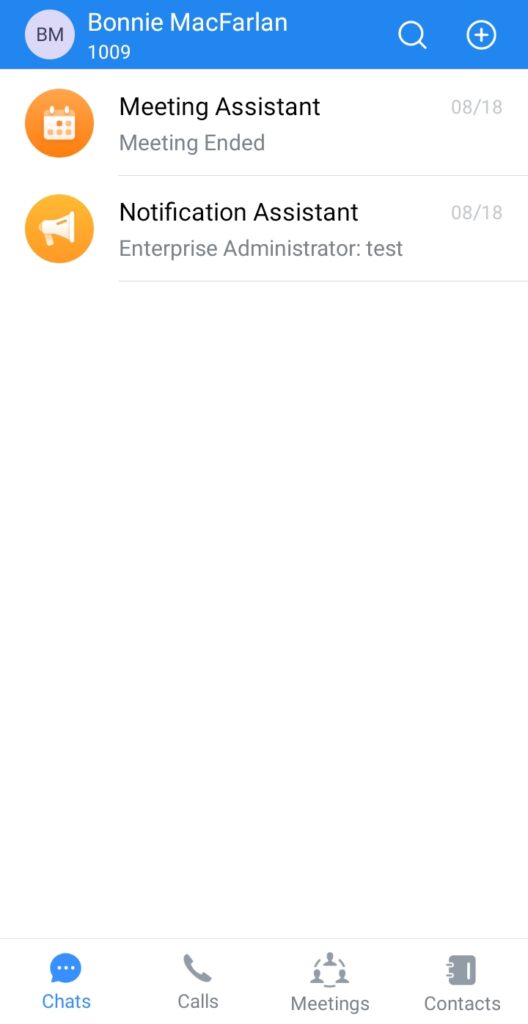
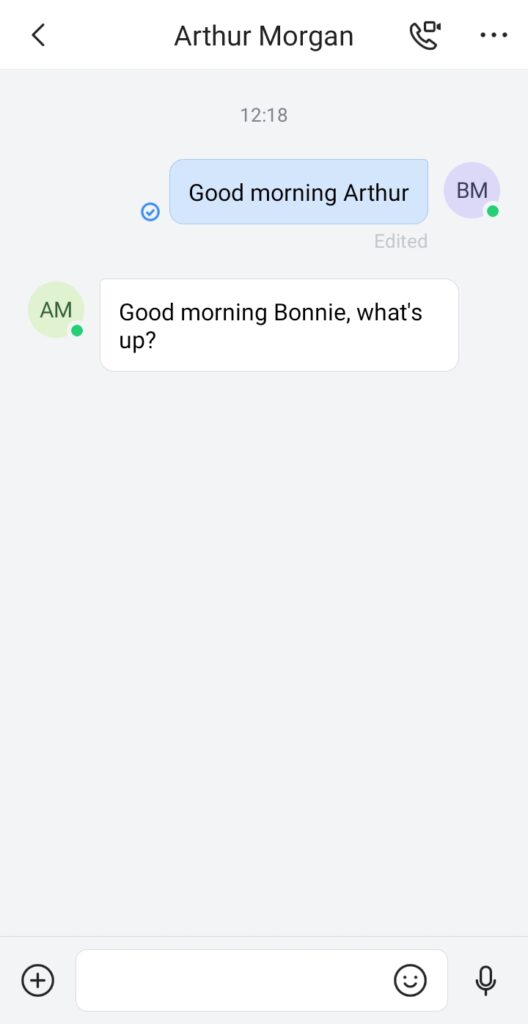
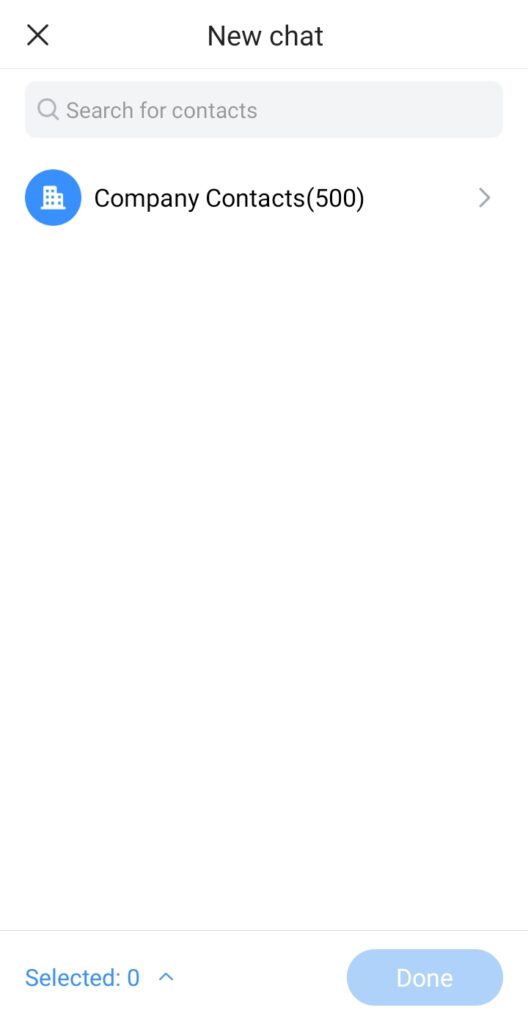
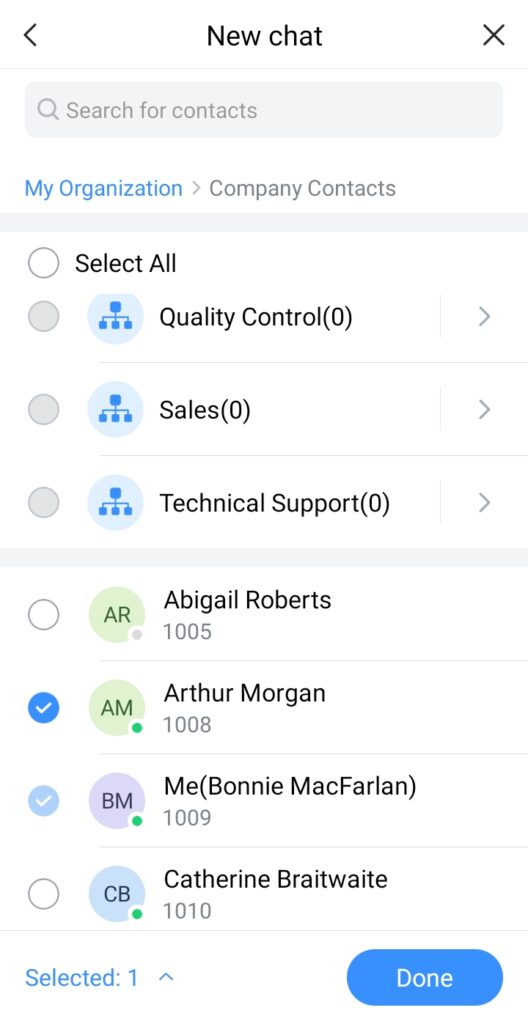
 . When the user reads the message, Wave will indicate that by showing a small icon
  .
.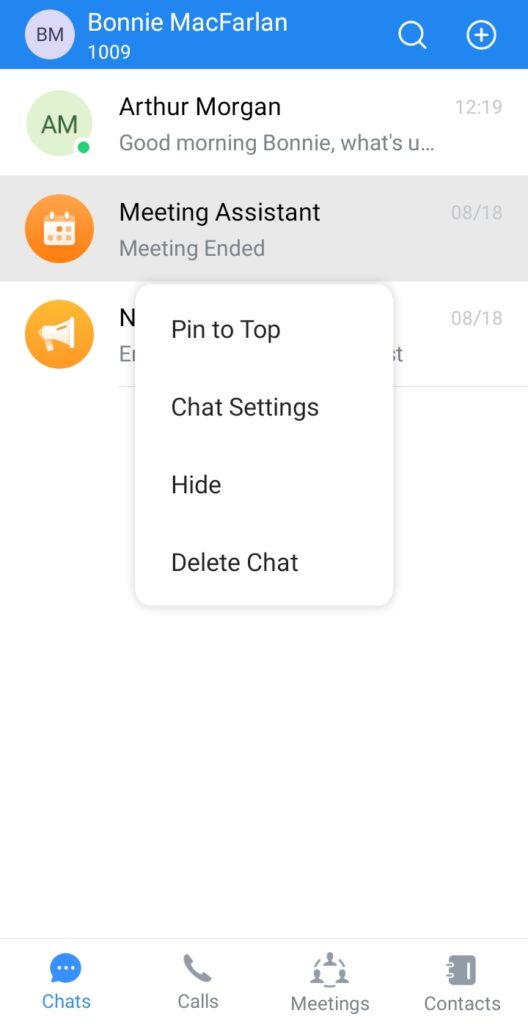
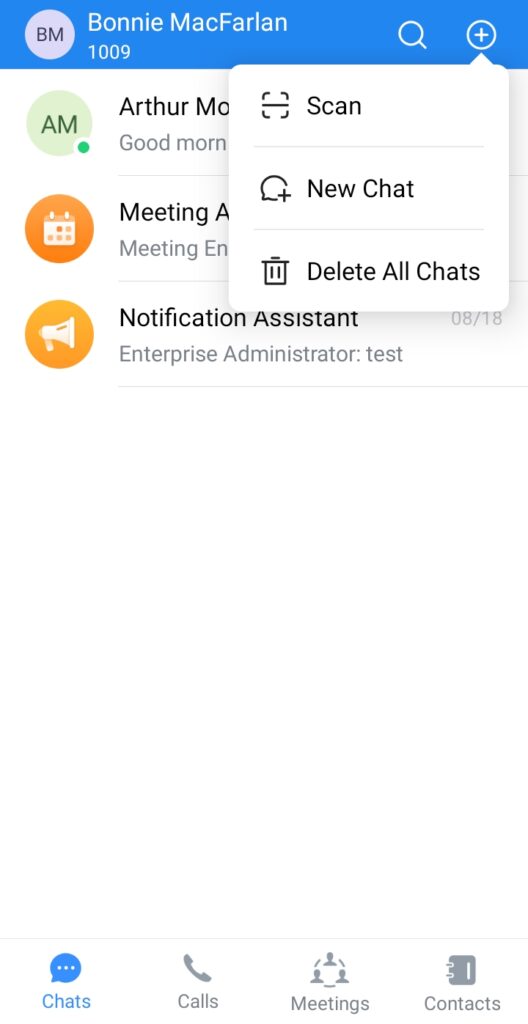
 and select E2EE chat as shown below in the screenshot.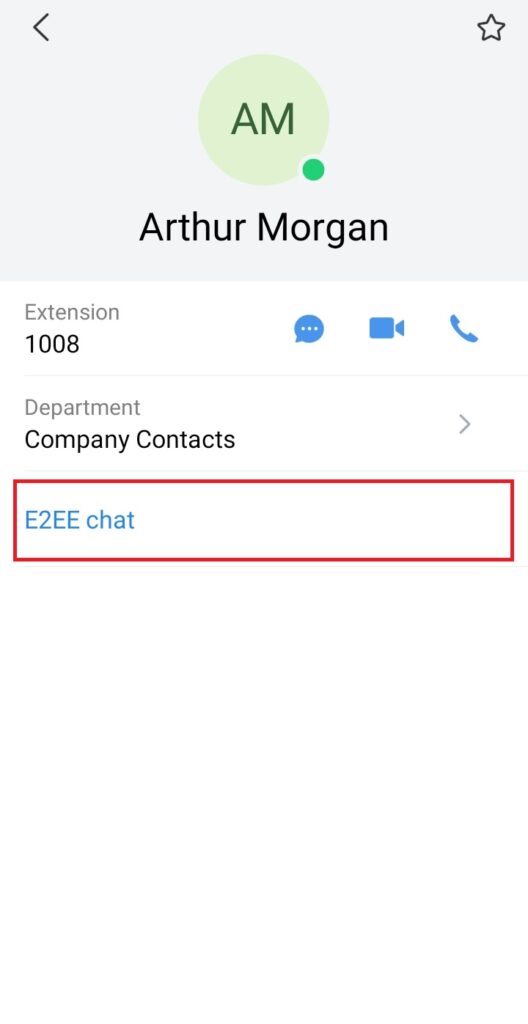
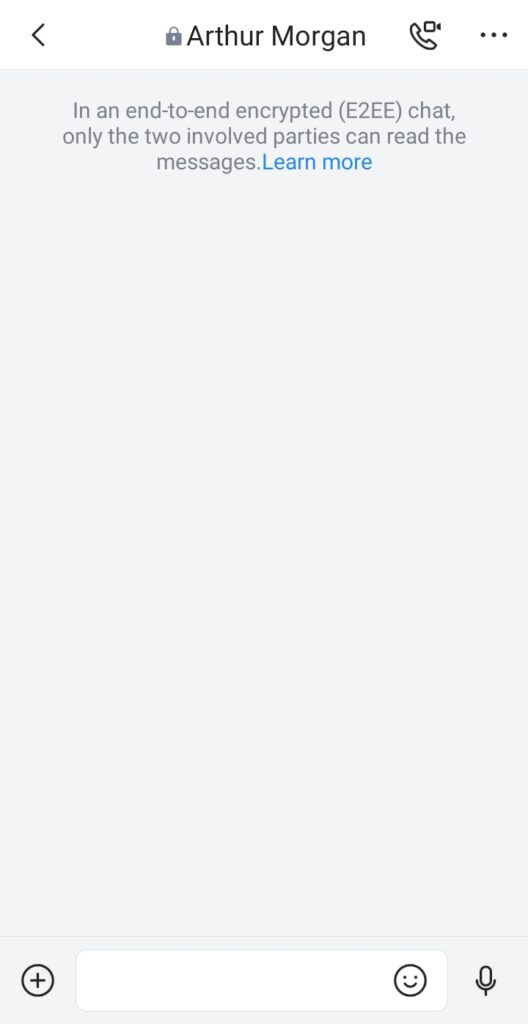
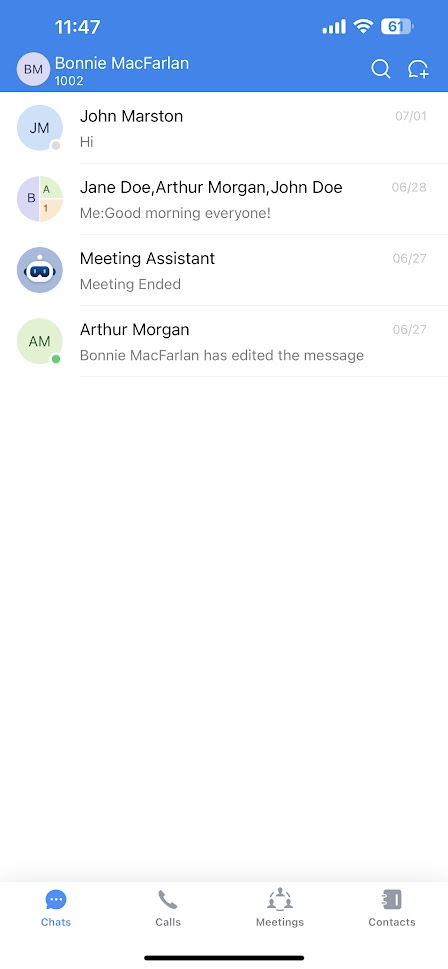
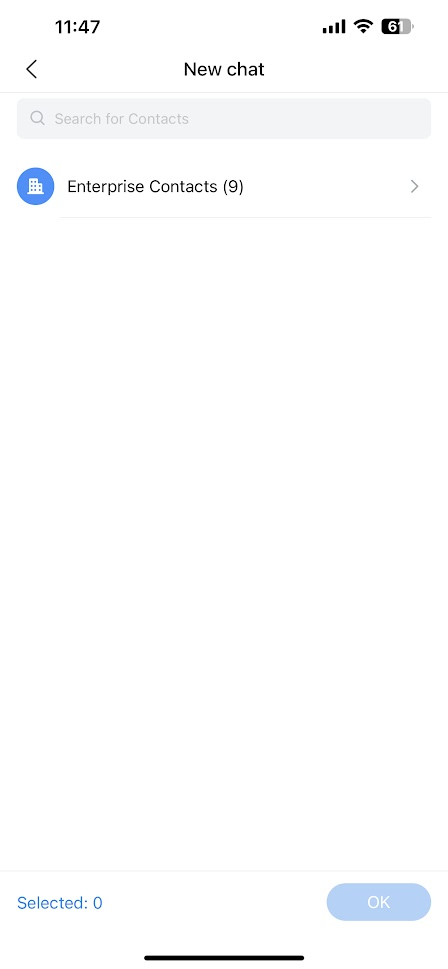
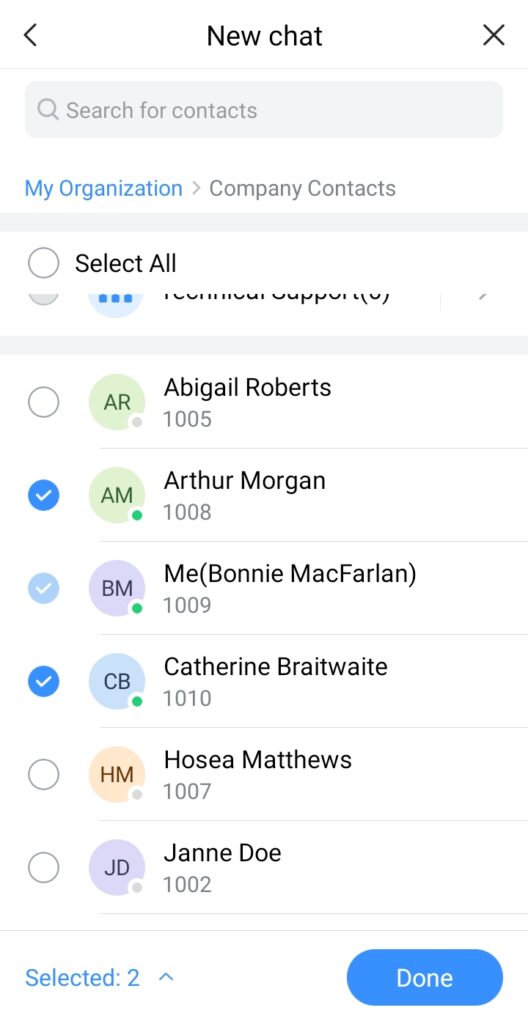
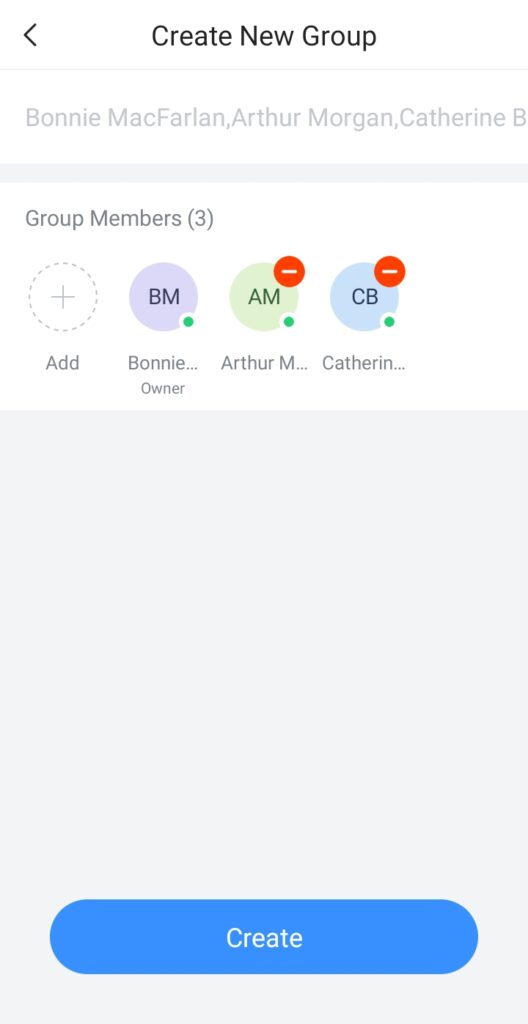
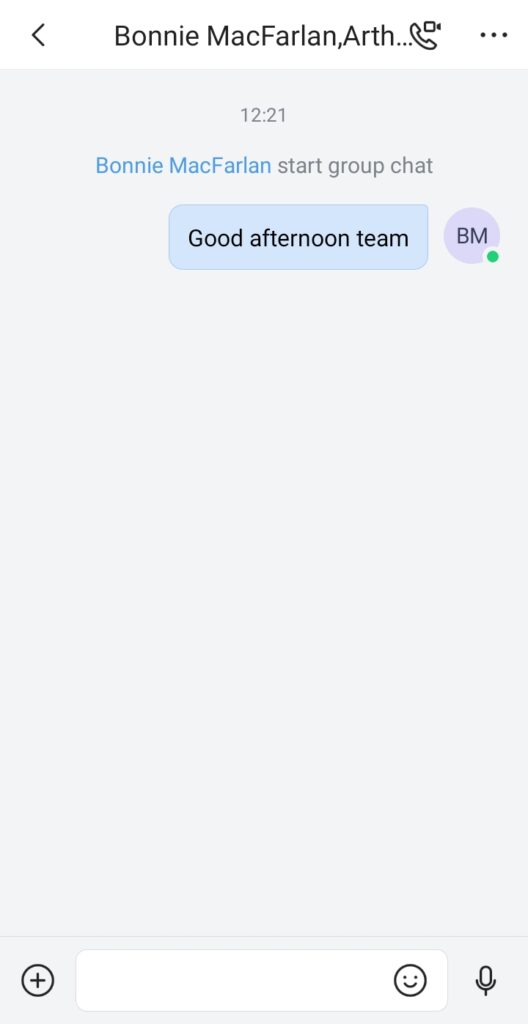
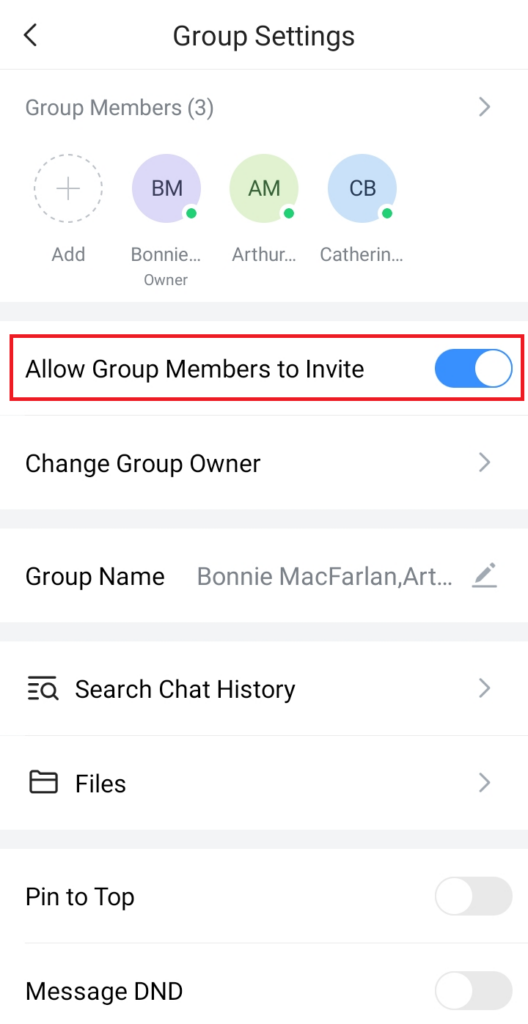
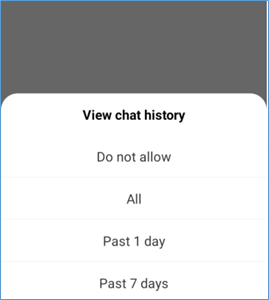
 at the top right upper corner of the interface to access the group settings interface.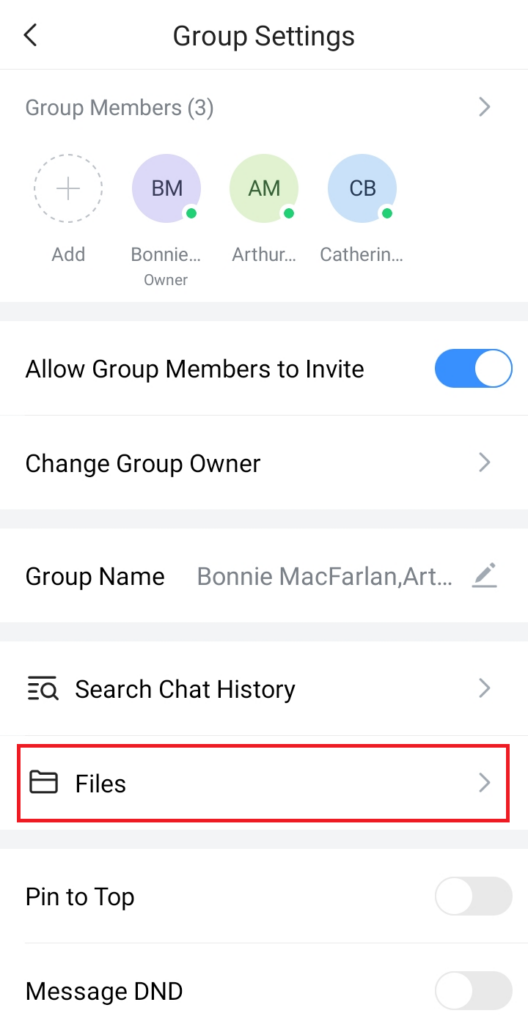
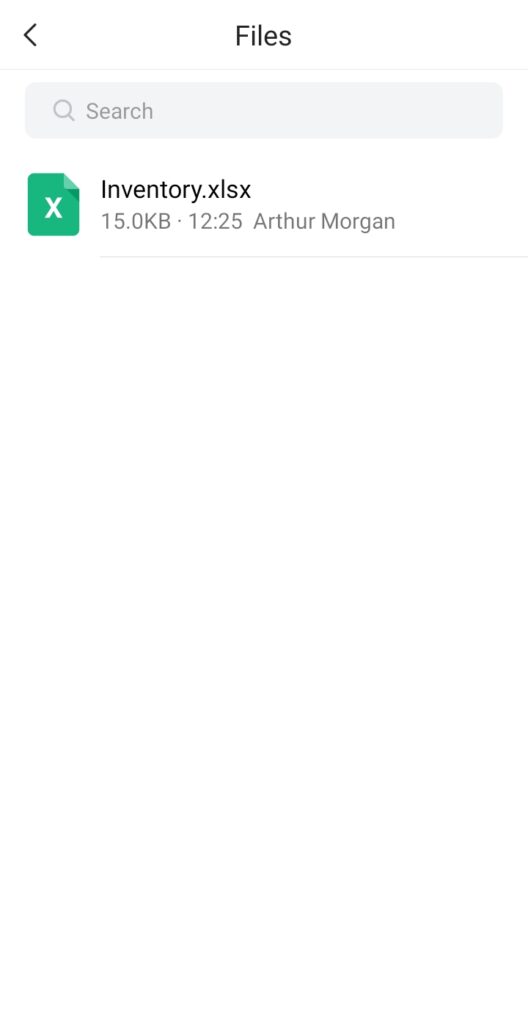
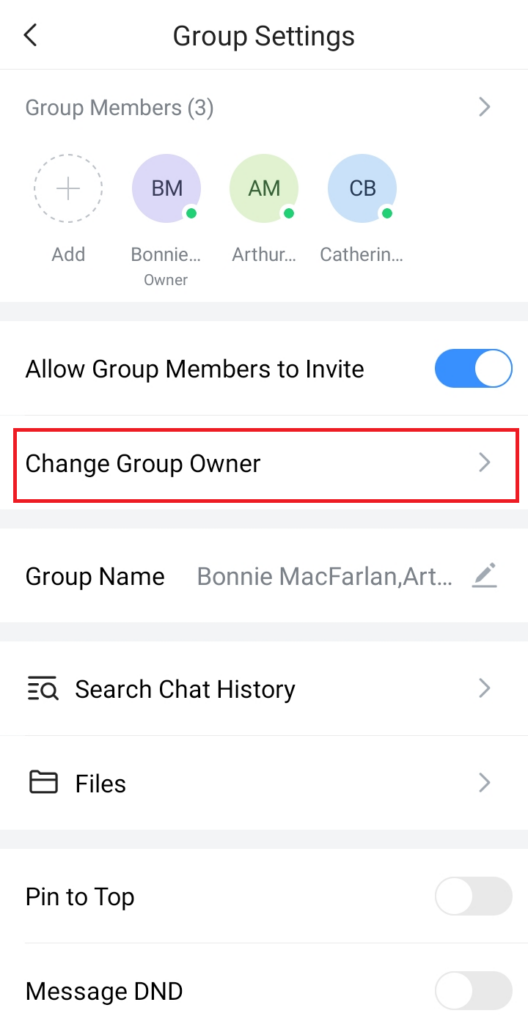
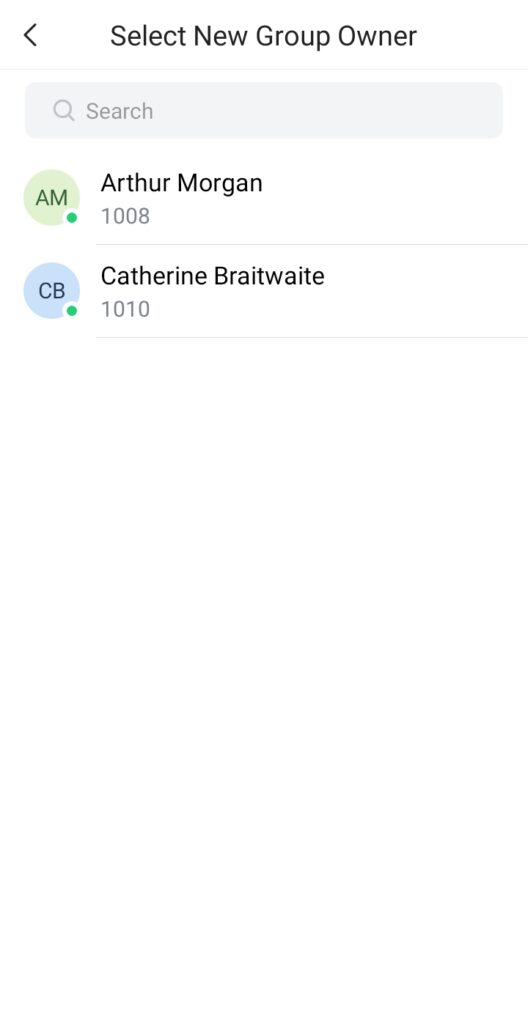
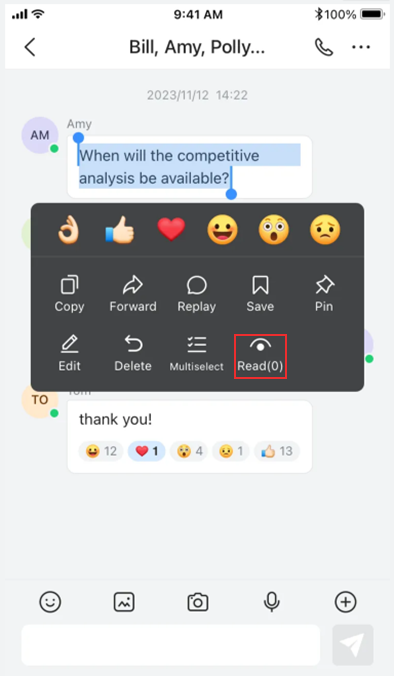
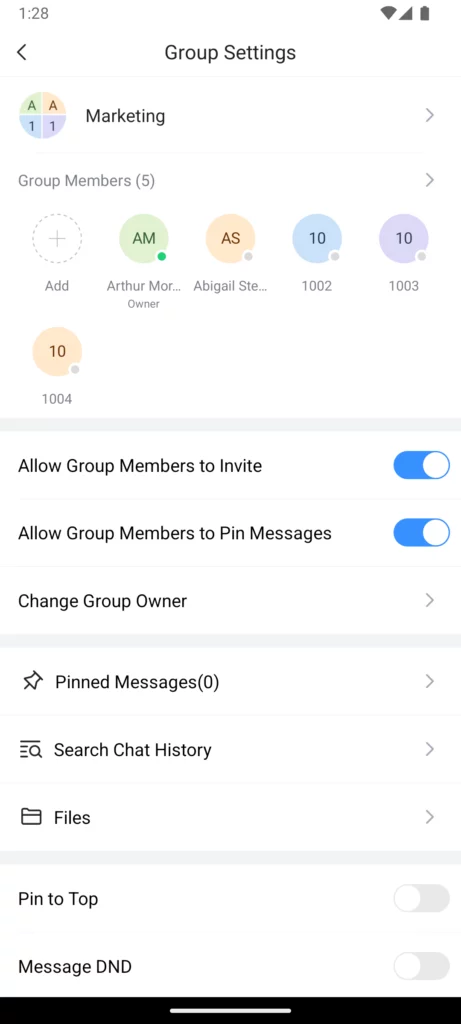
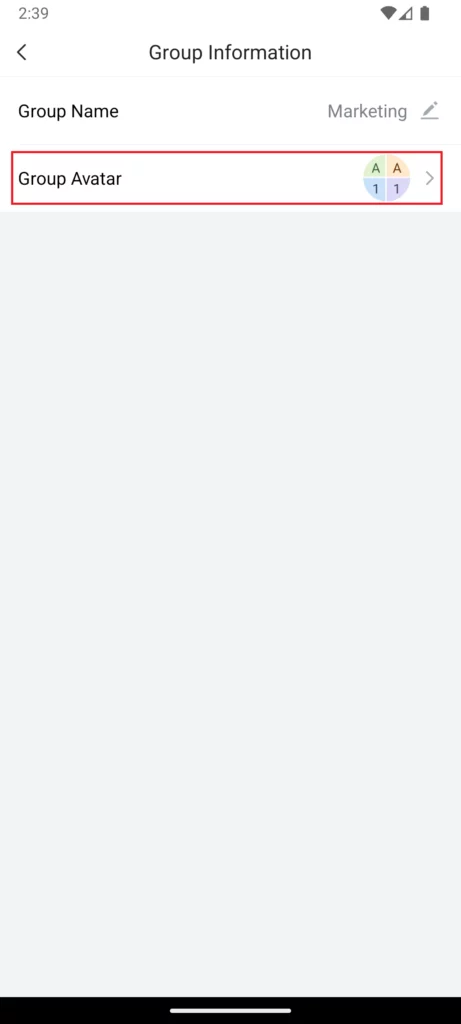
 to initiate chatting with participants.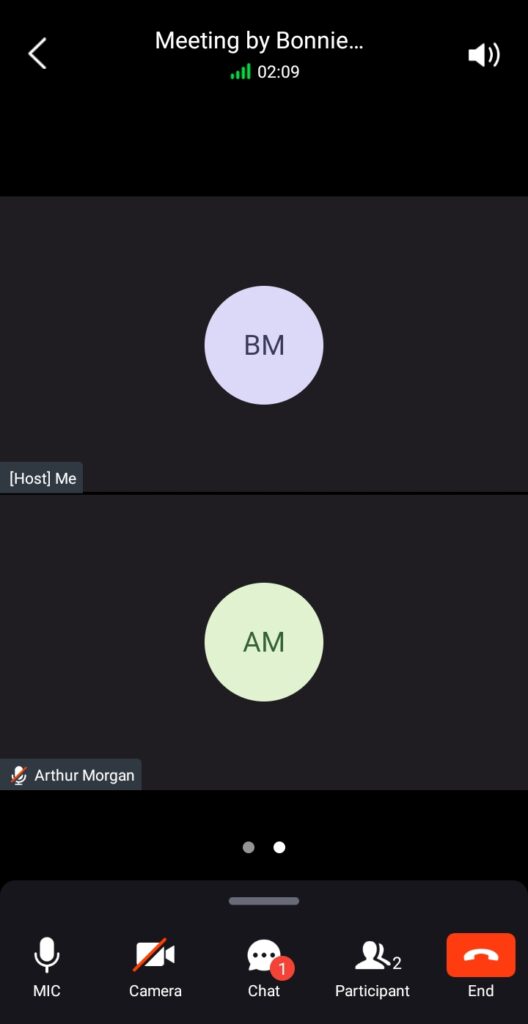
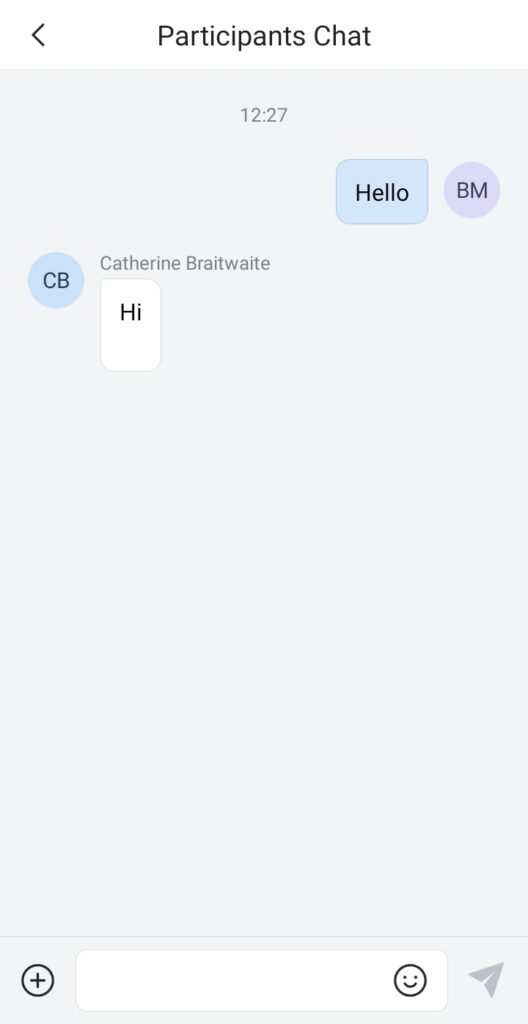
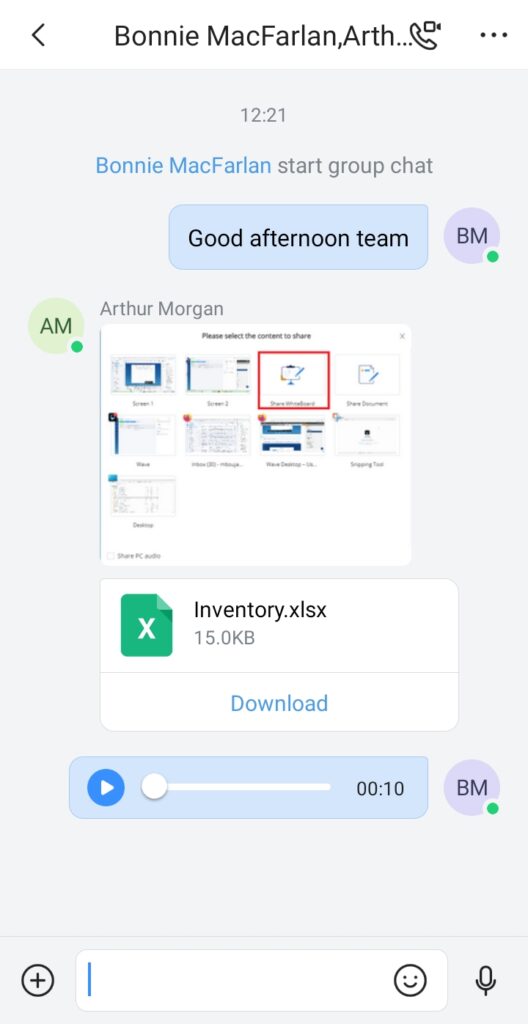
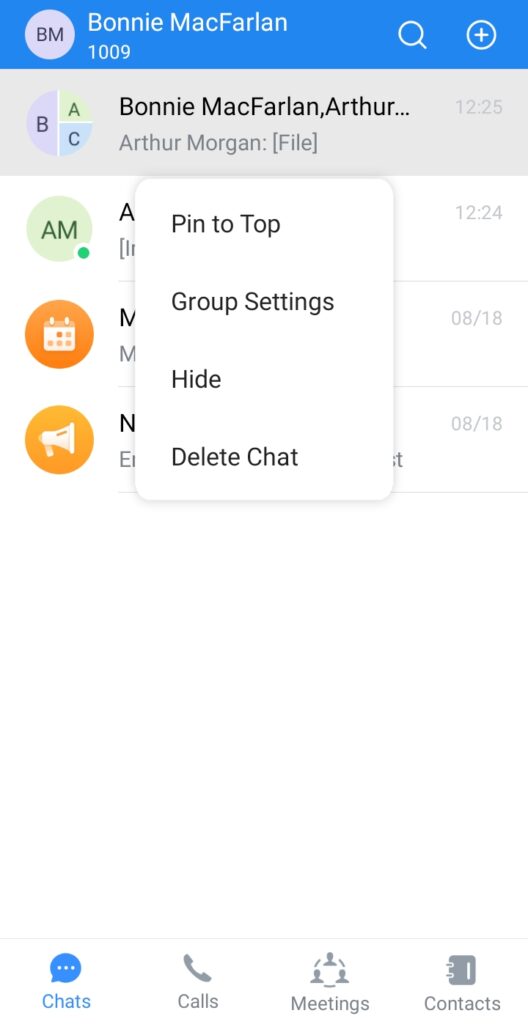
 on the left side of the chat box.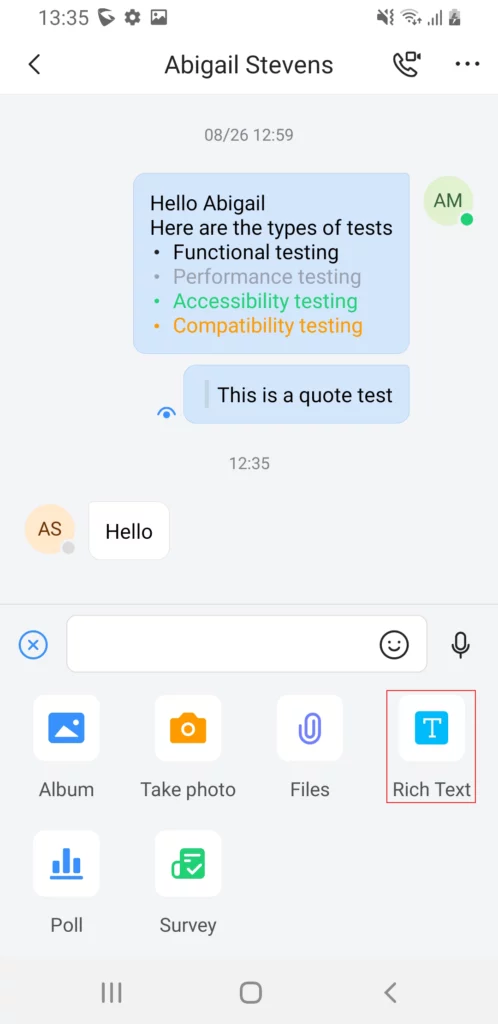
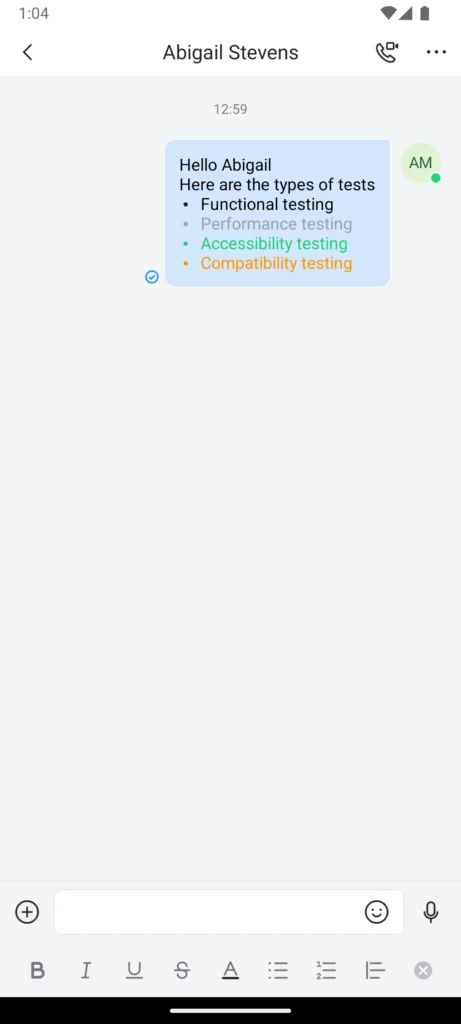
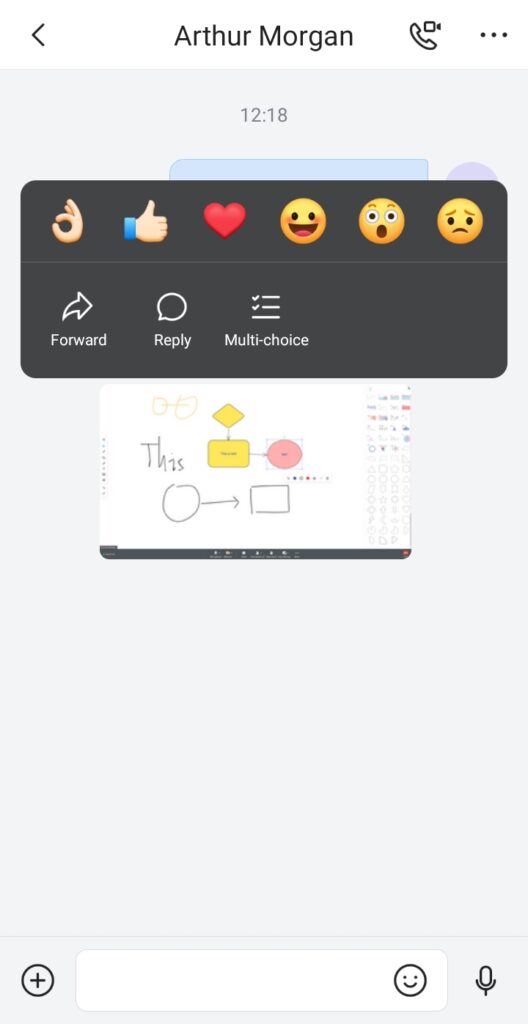
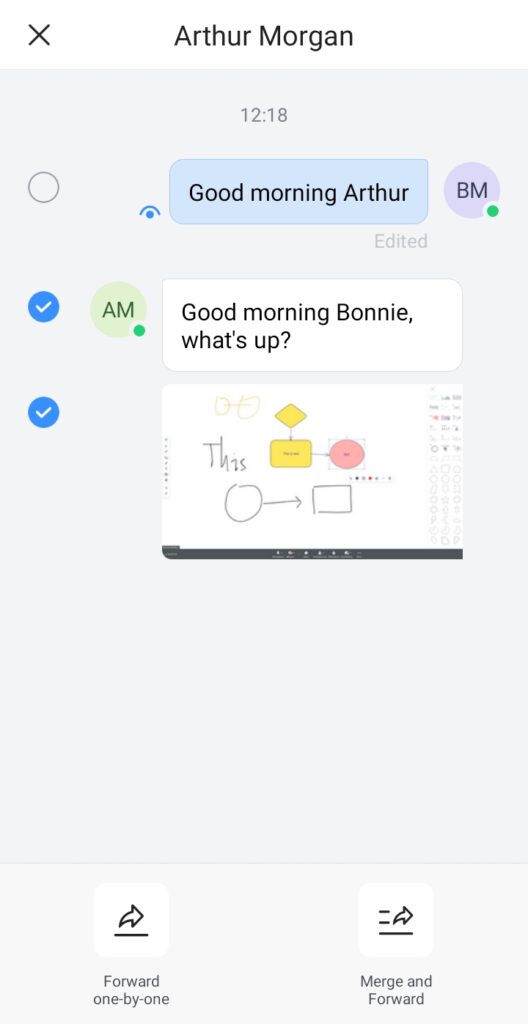
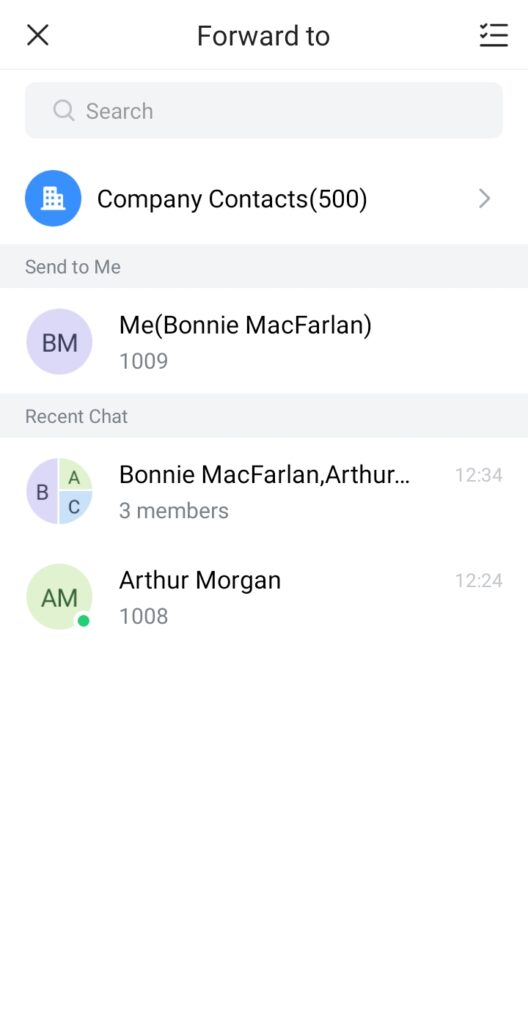
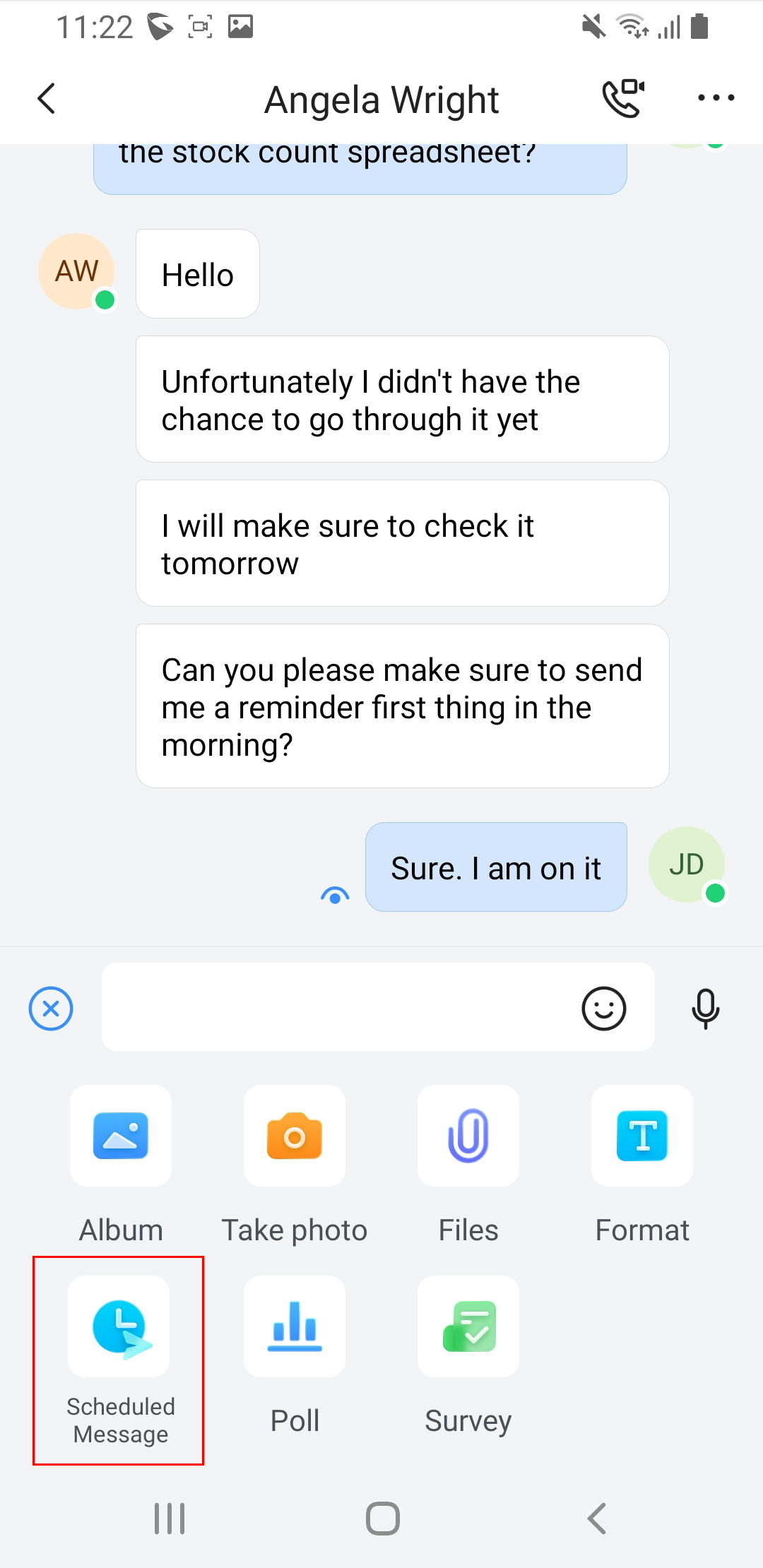
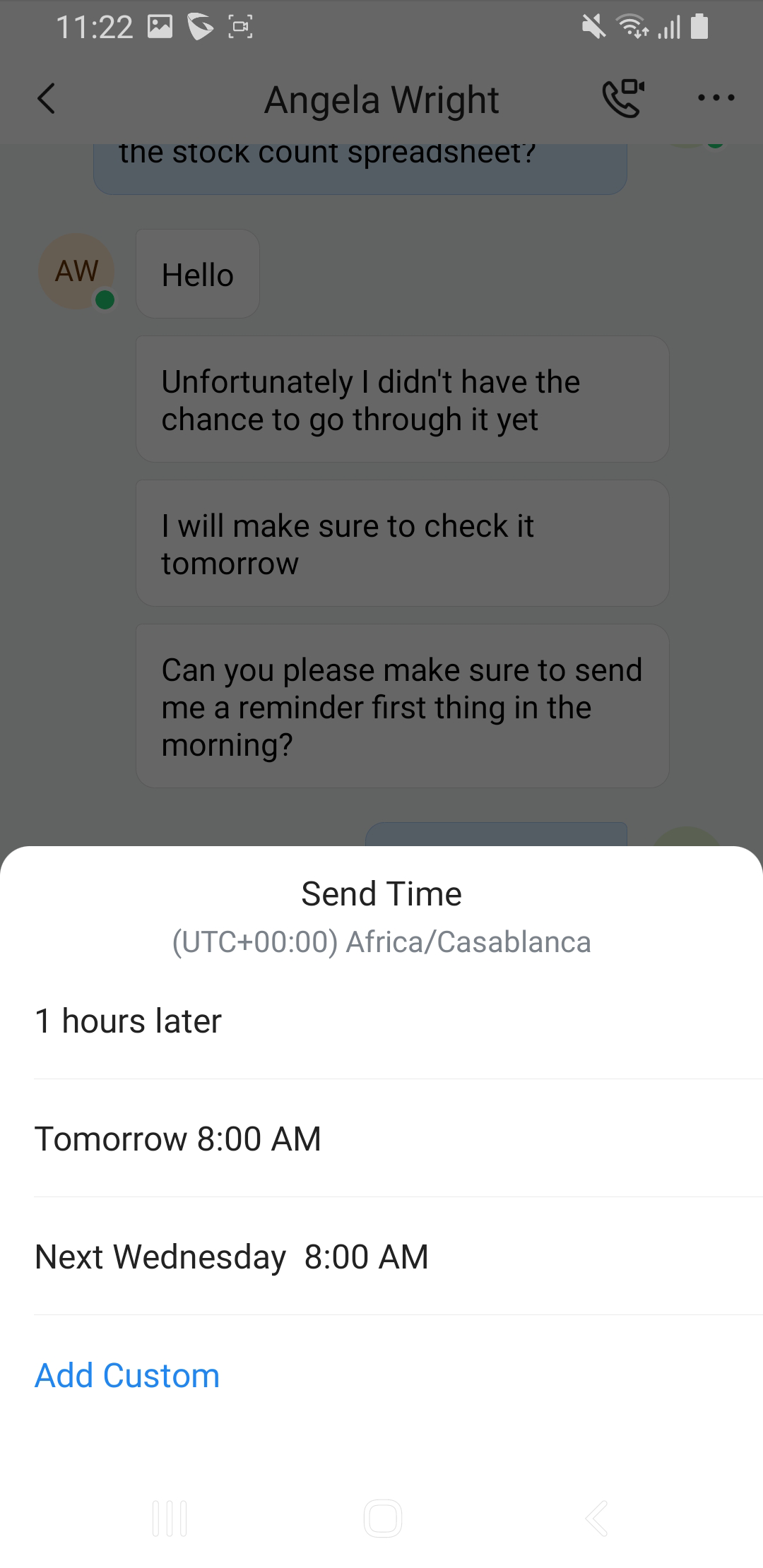
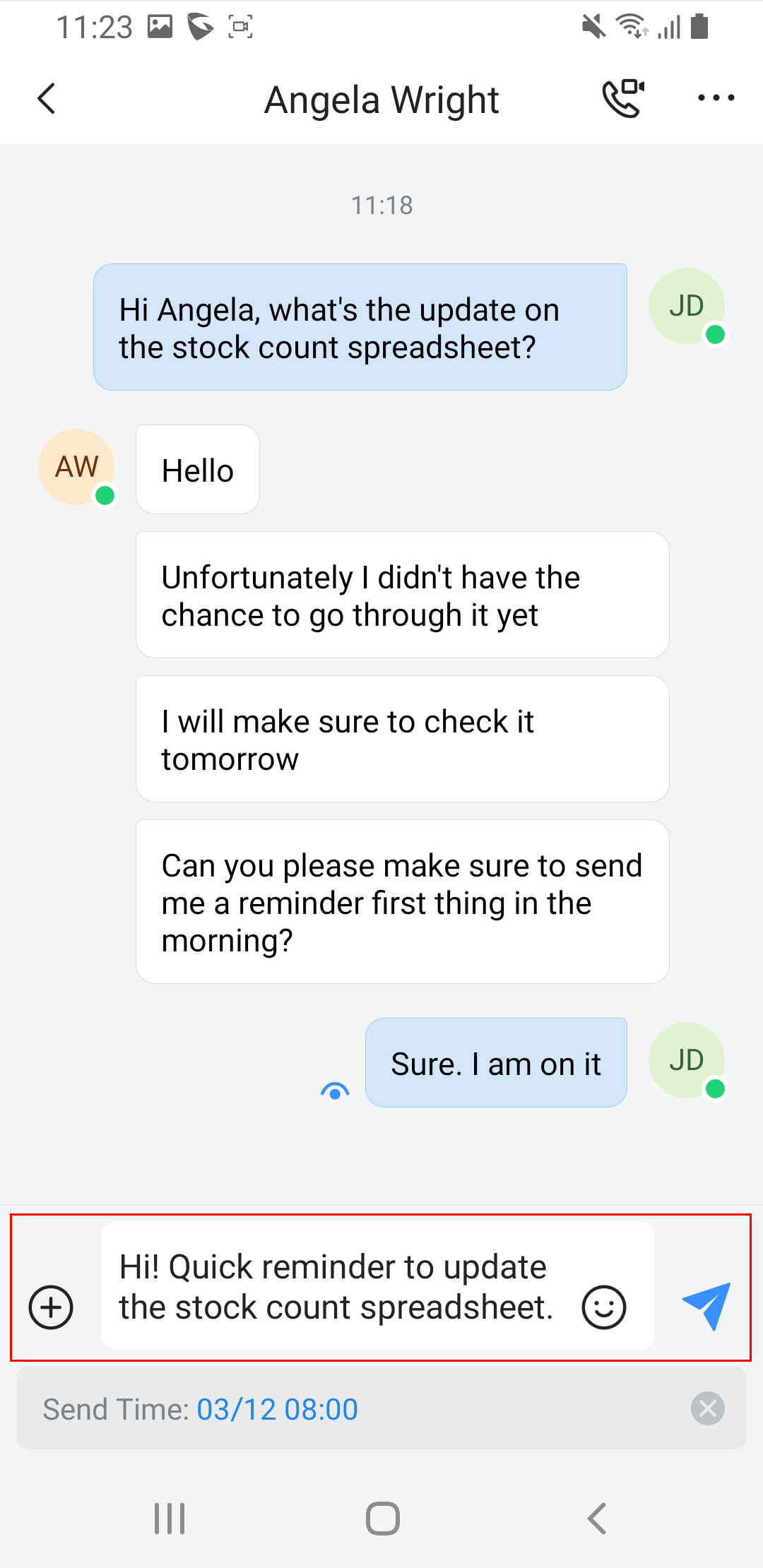
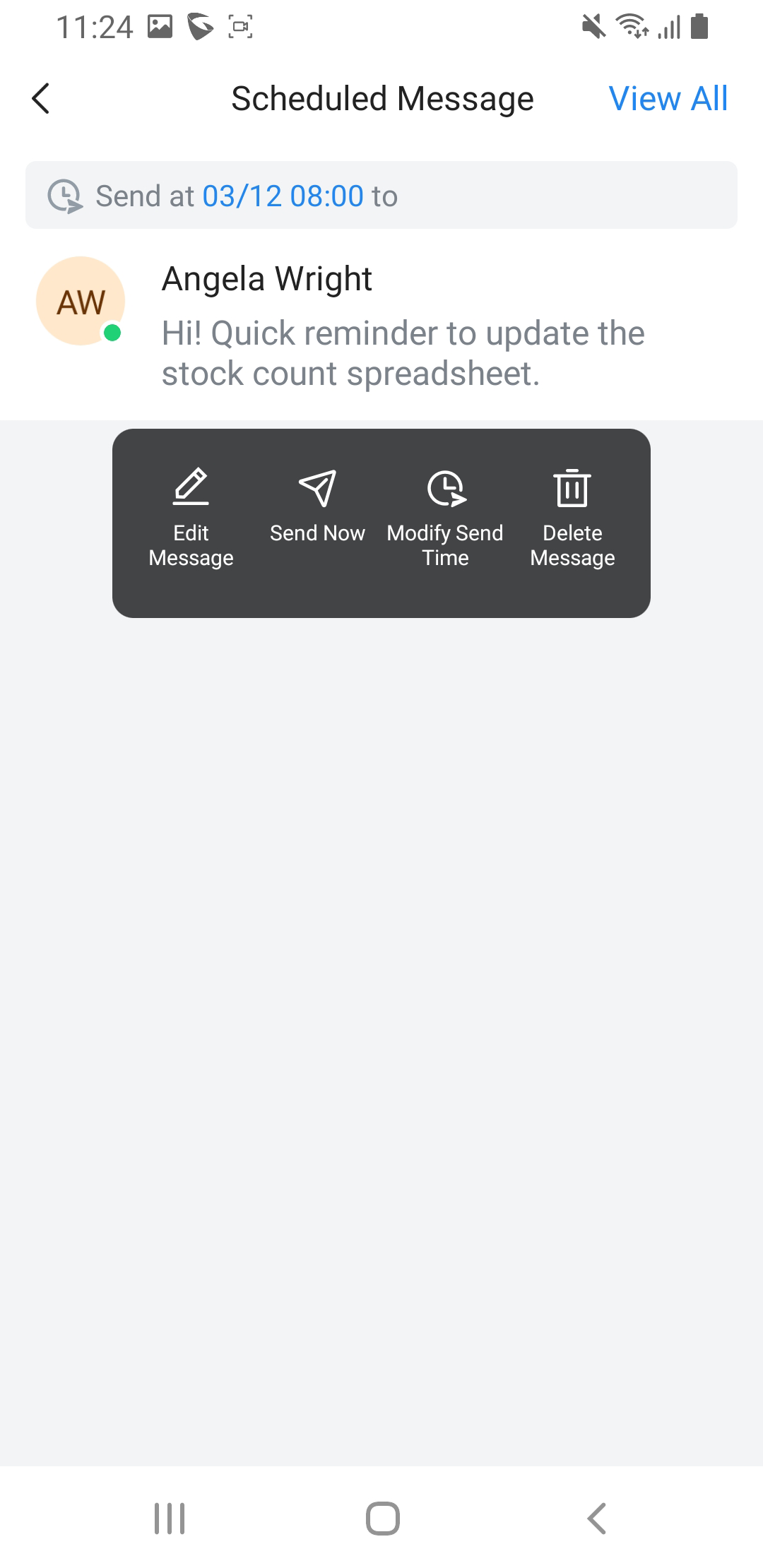
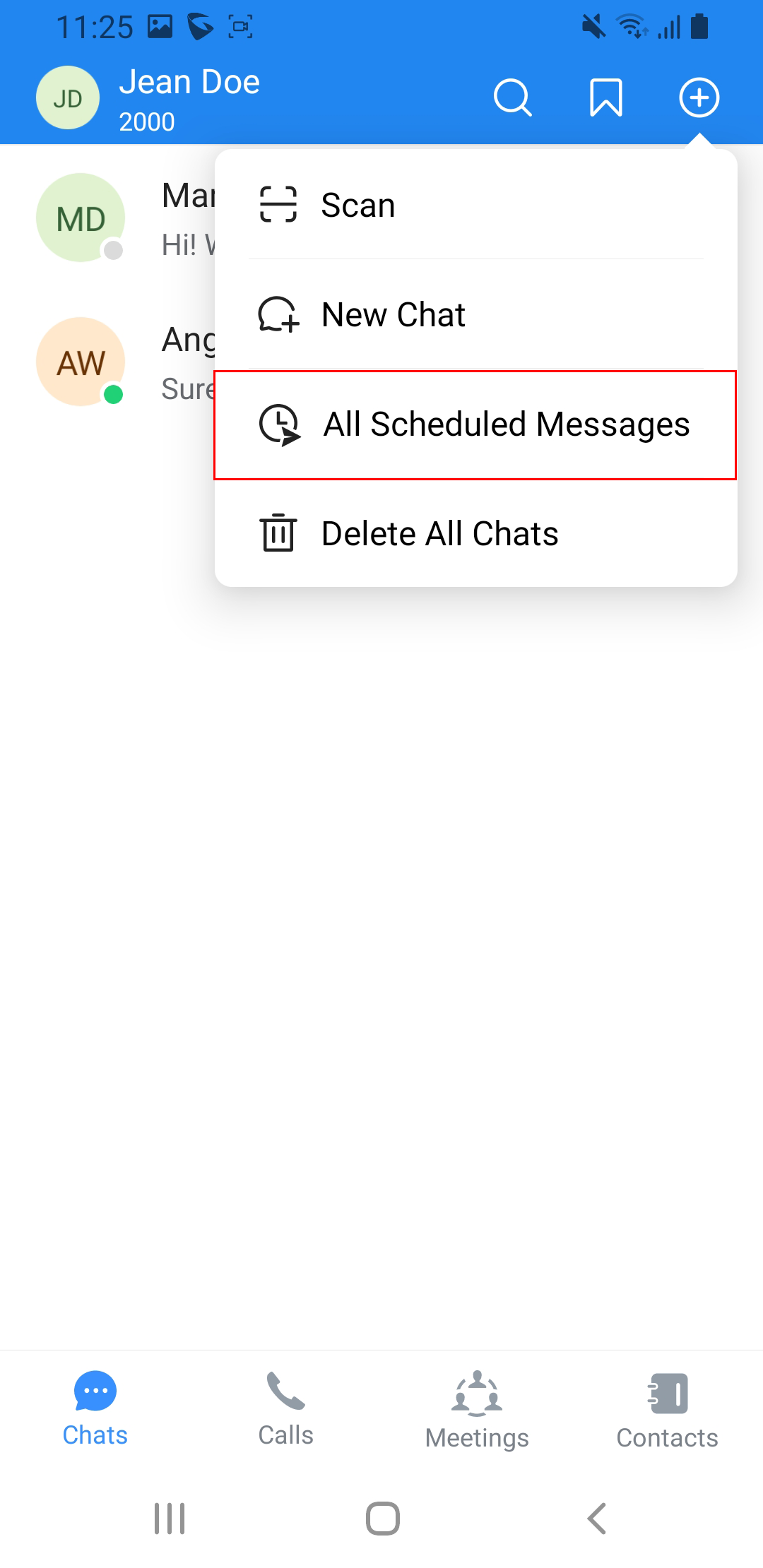
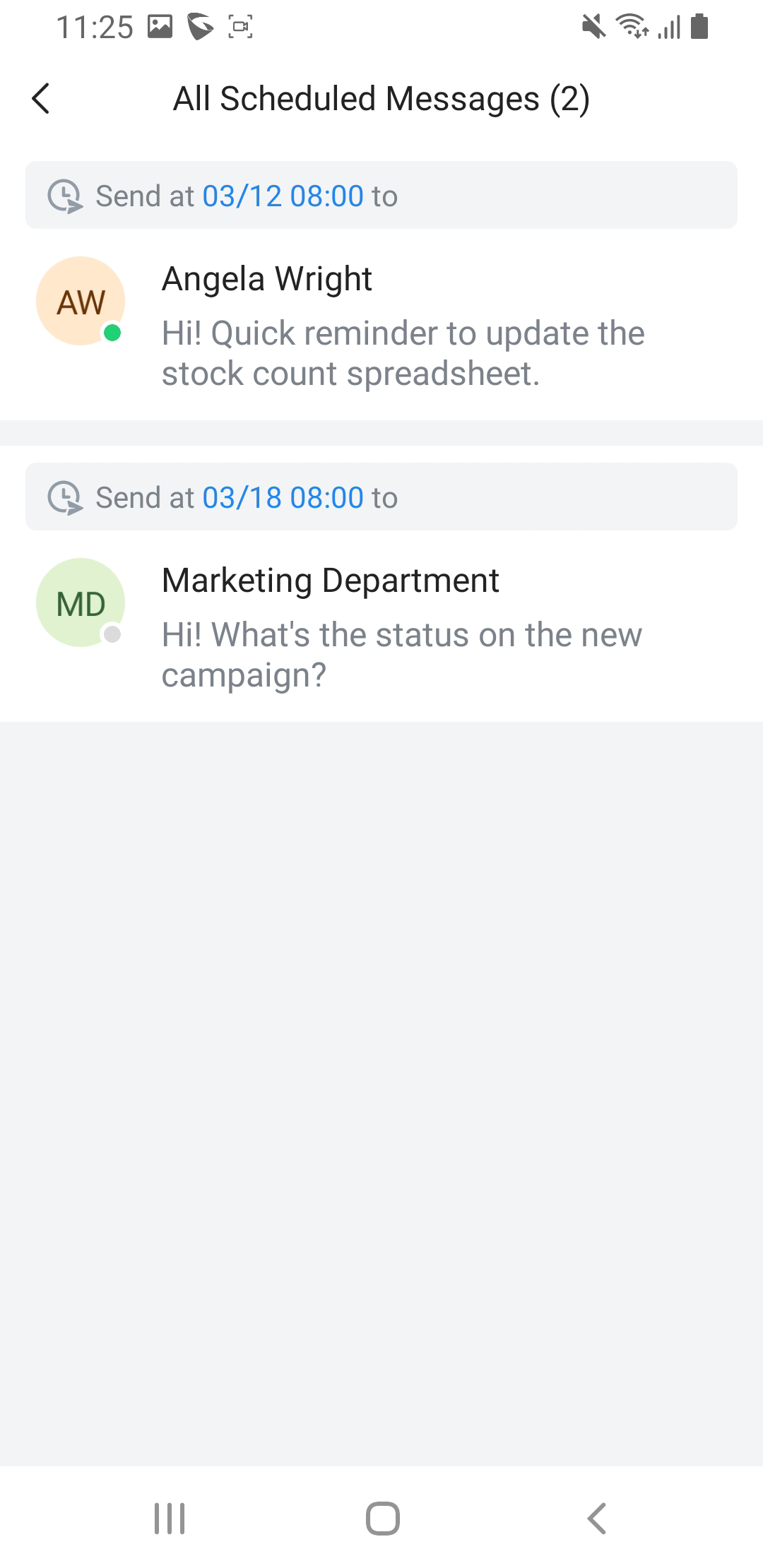
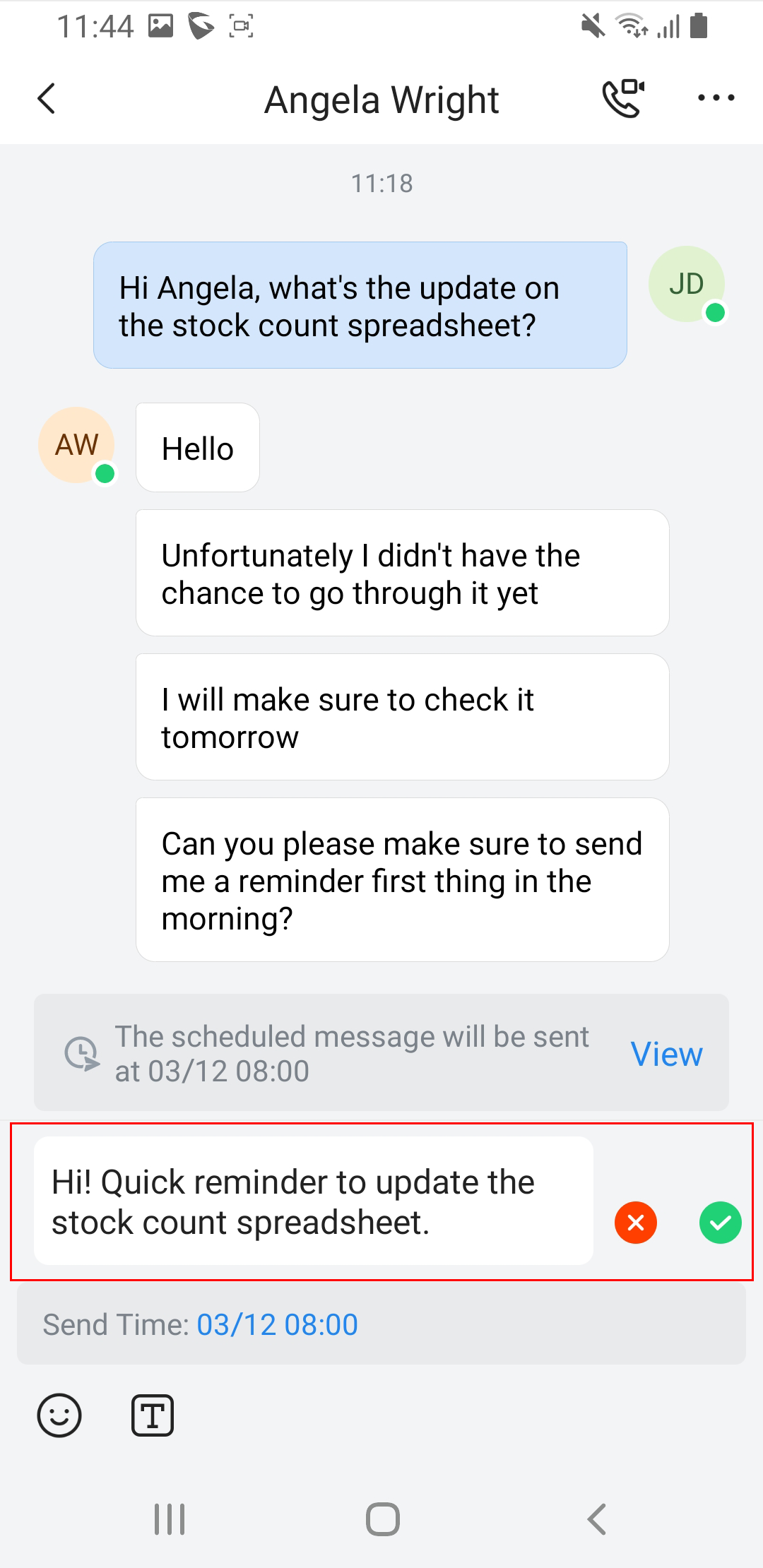
 .
.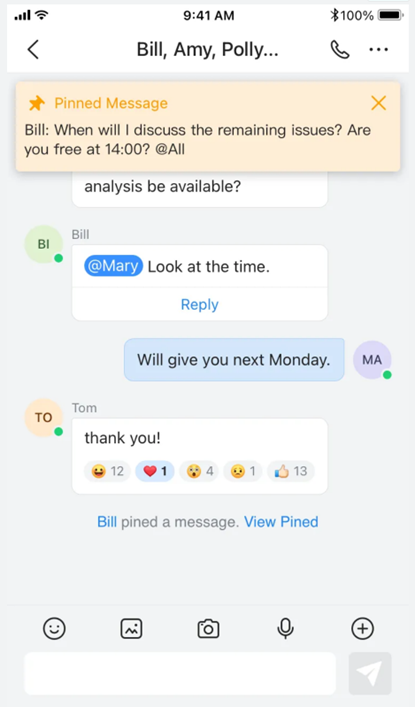
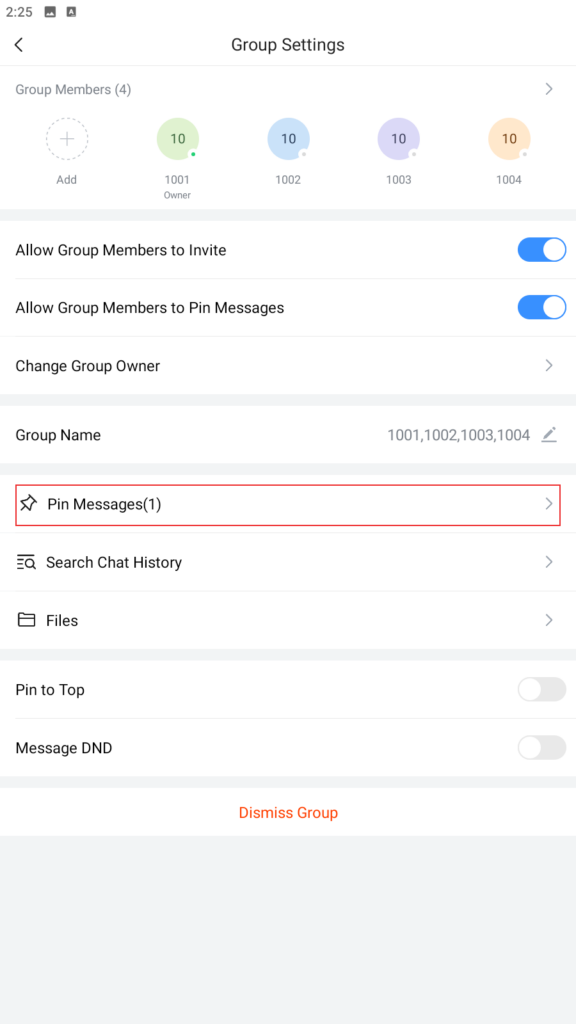
 .
.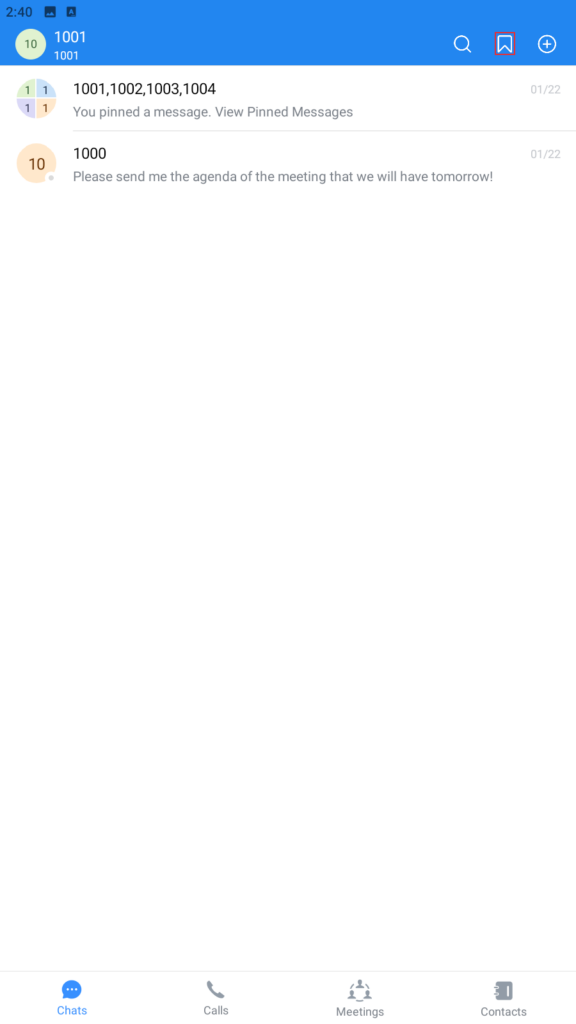
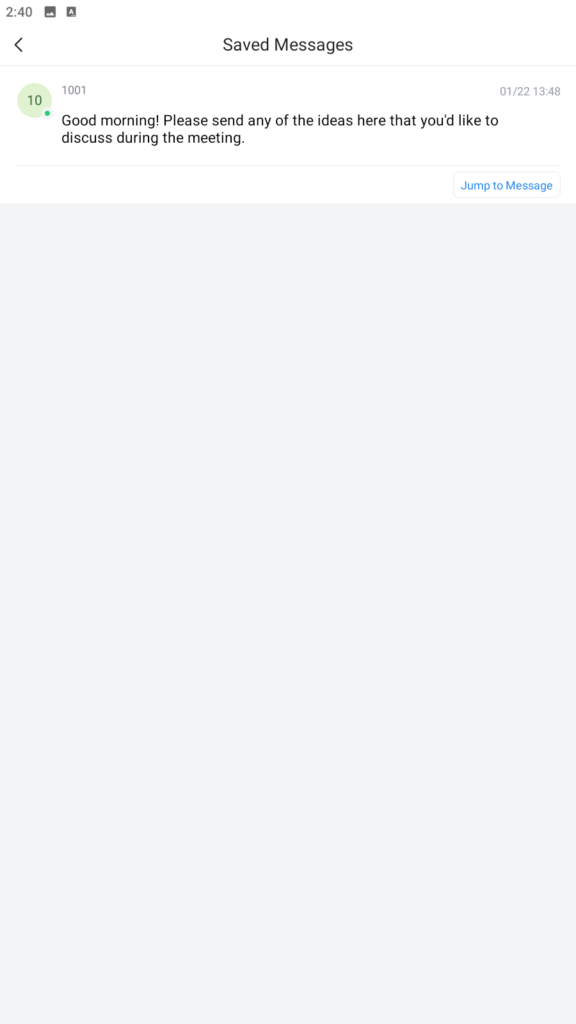
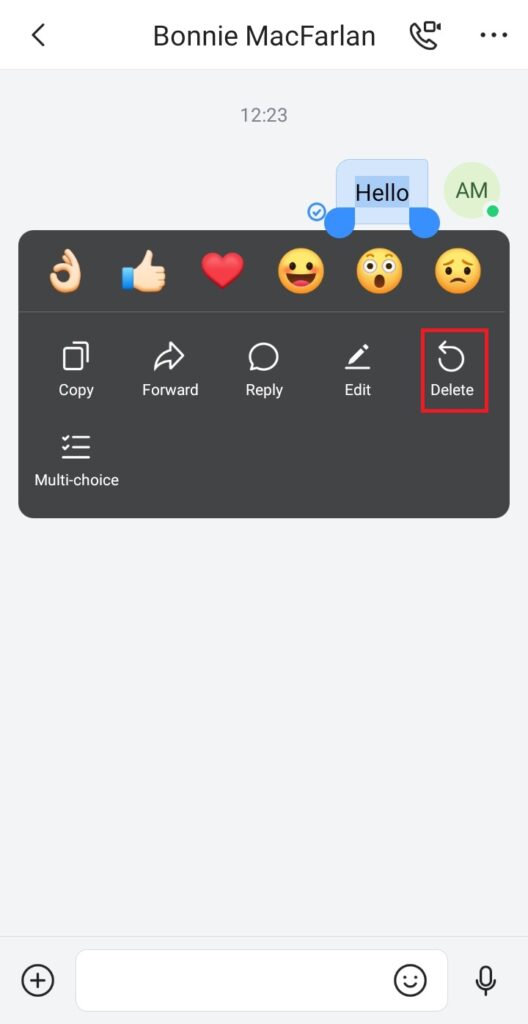
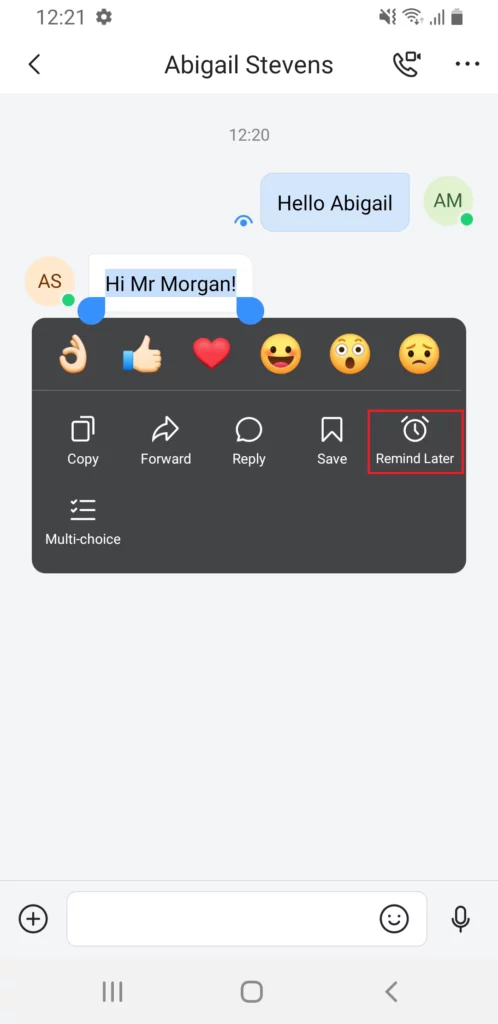
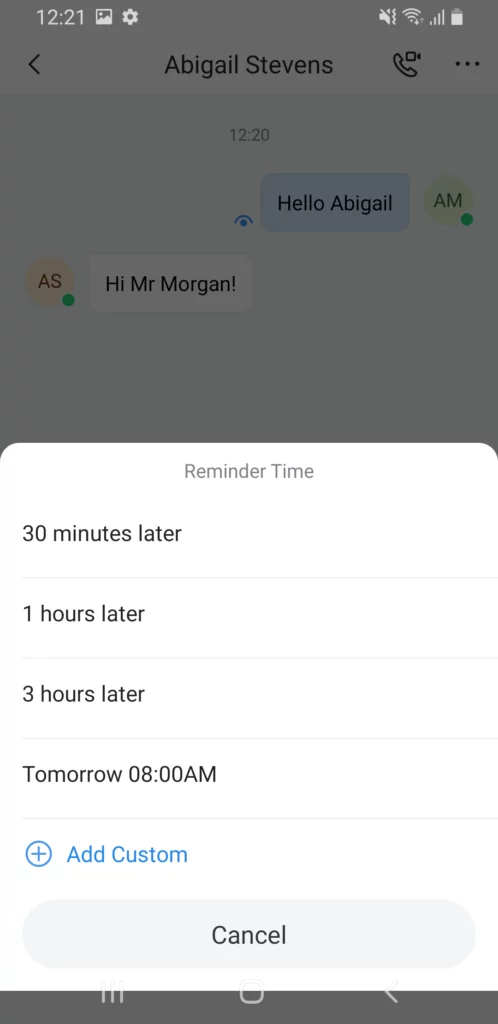
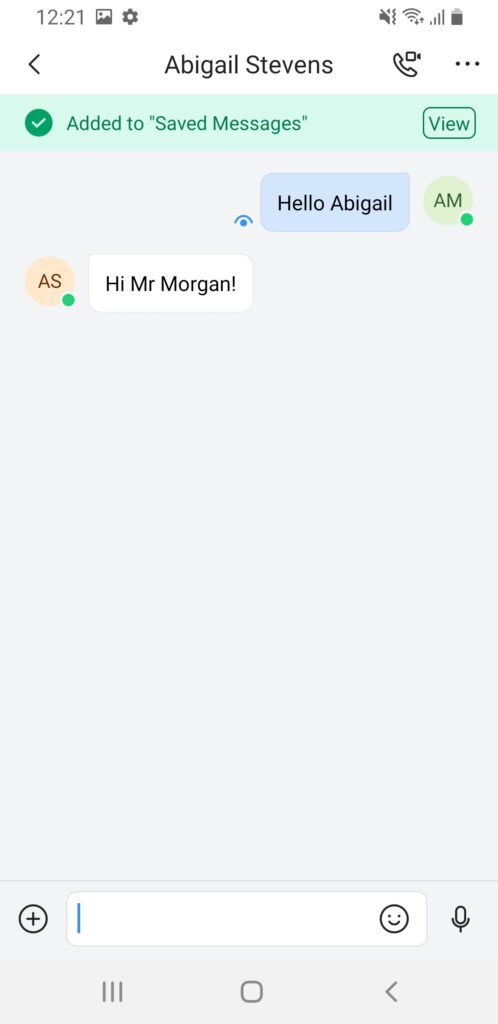
 or
or  . The messages will be displayed as a list, as displayed in the first figure below.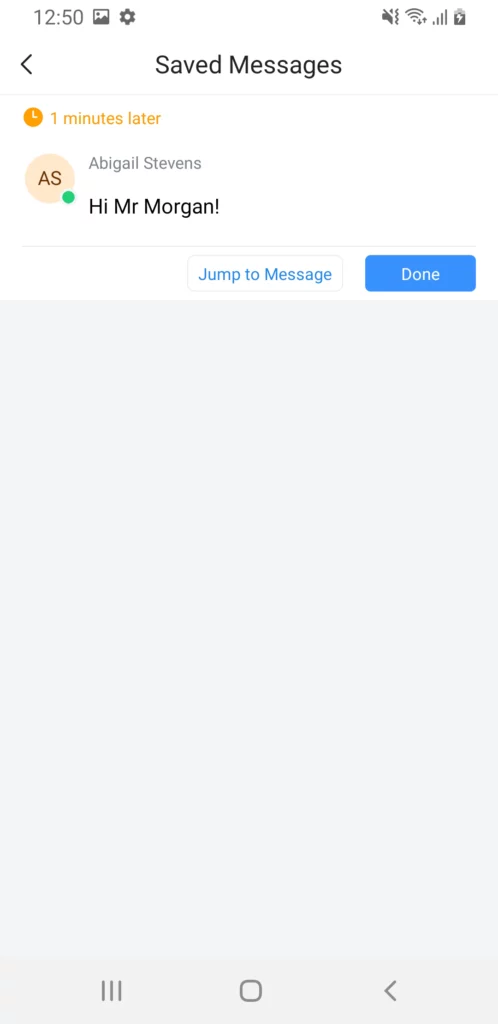
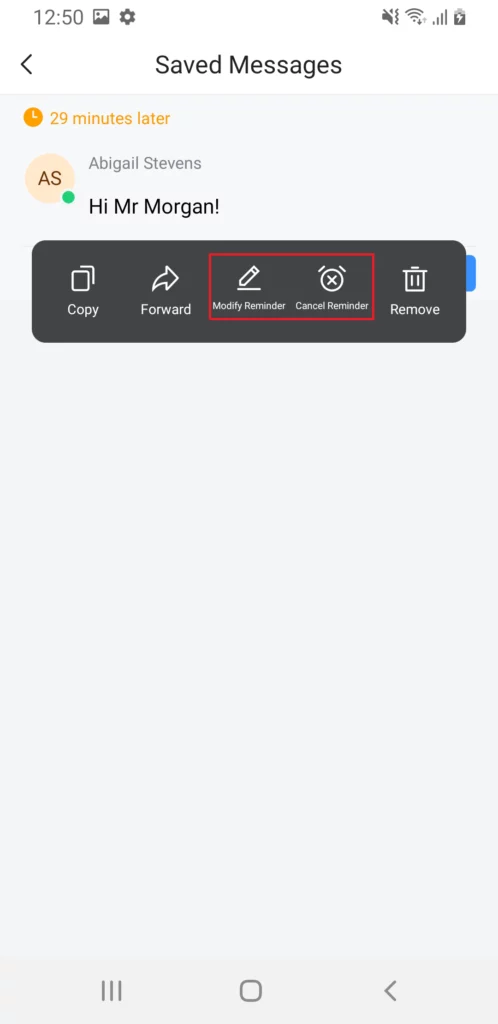
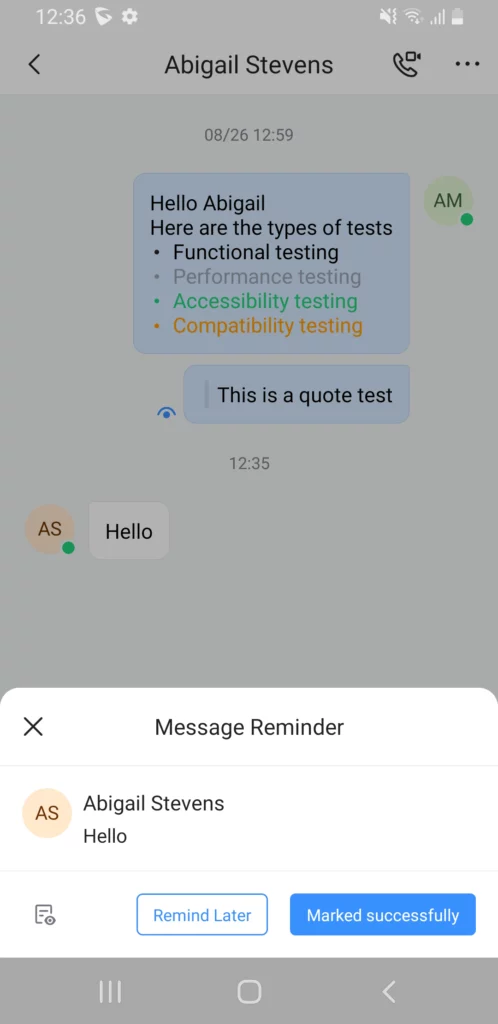
 , they will be able to see the list of all the messages that have had a reminder set for them. Please see the screenshot below.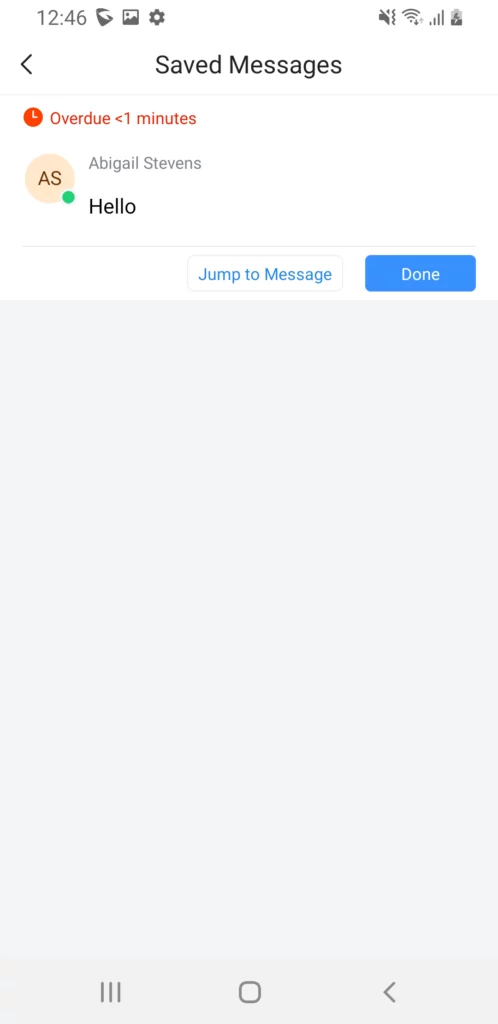
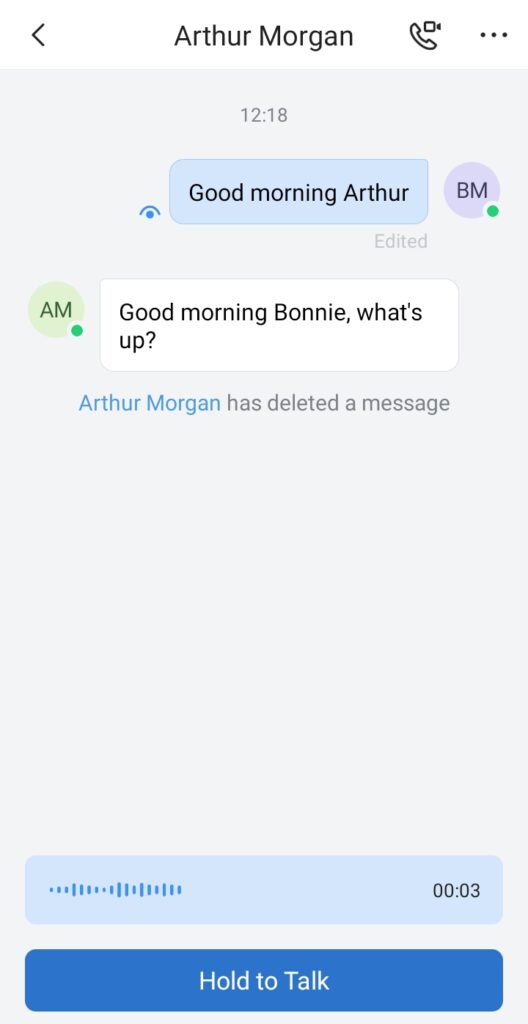
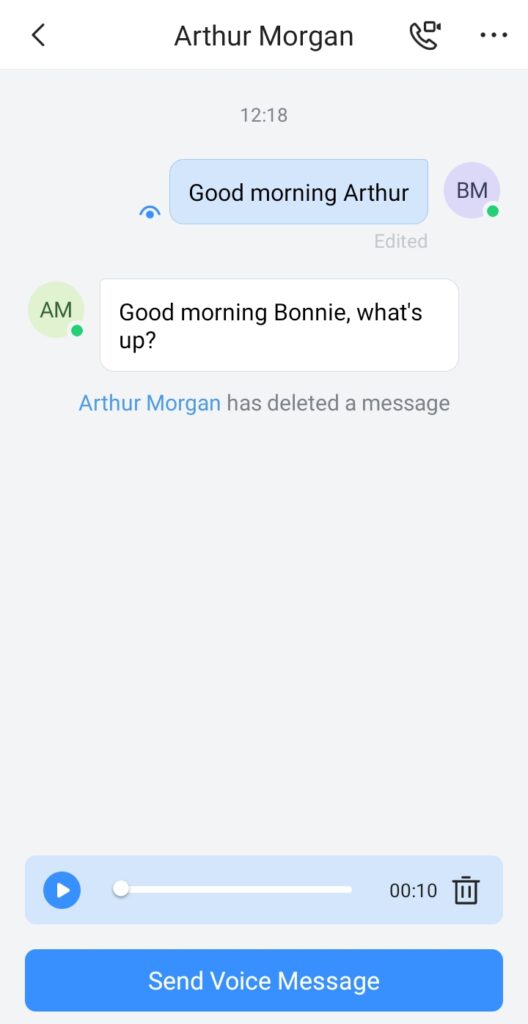
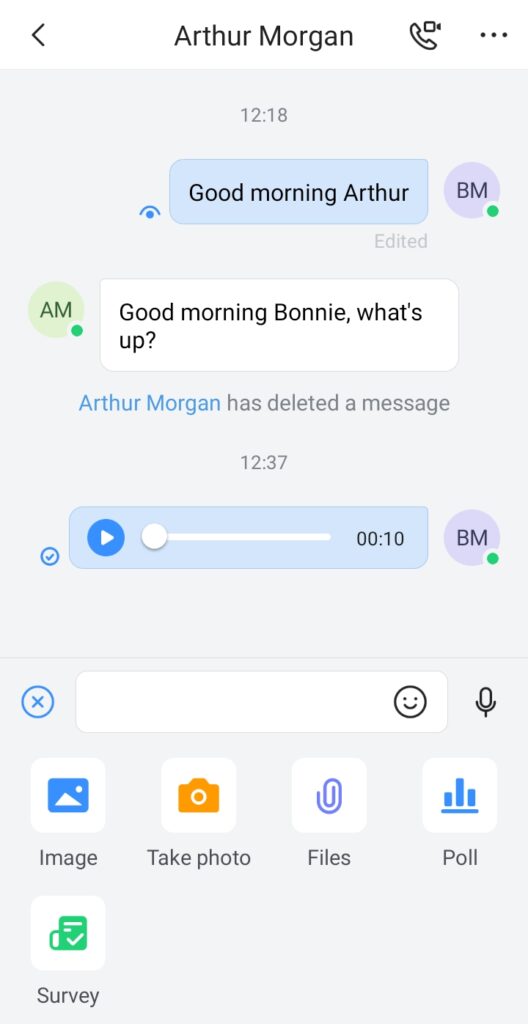
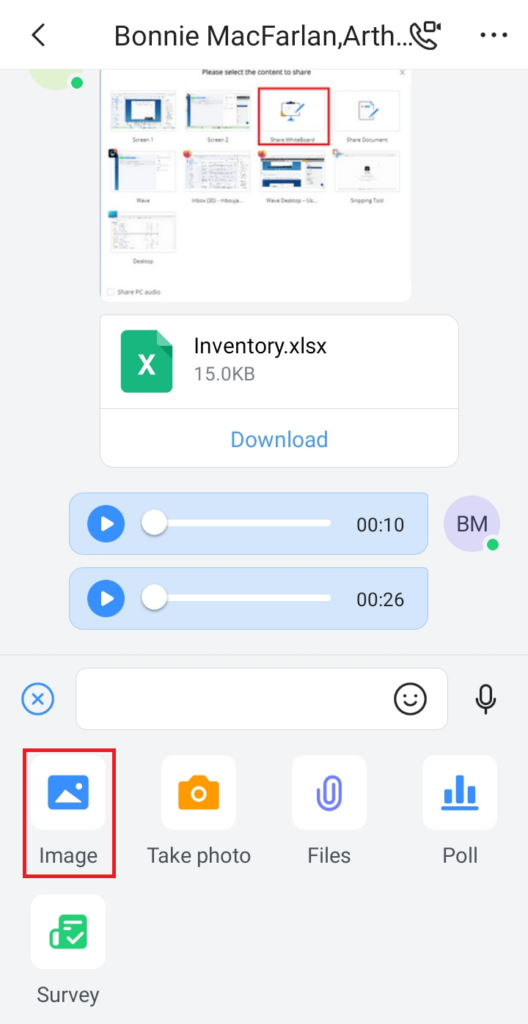
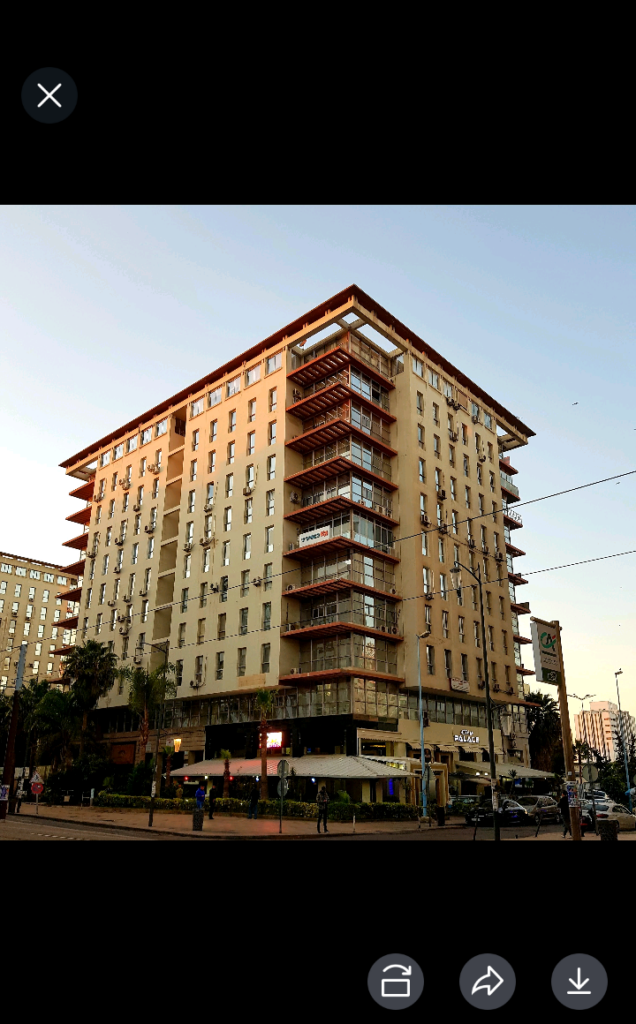
 : This button can be used to rotate the image clockwise.
 : This button can be used to forward the image to another contact.
 : This button can be used to download the image to the smartphone.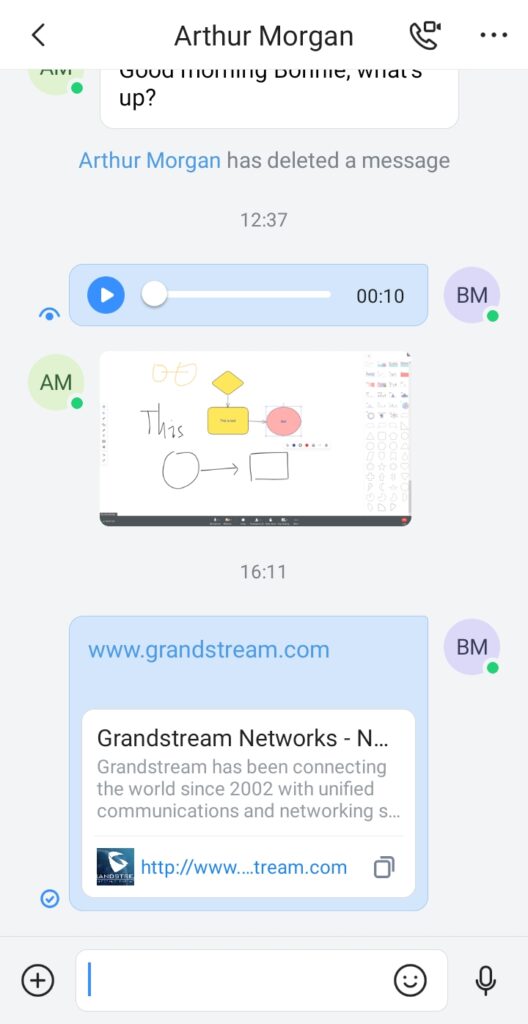
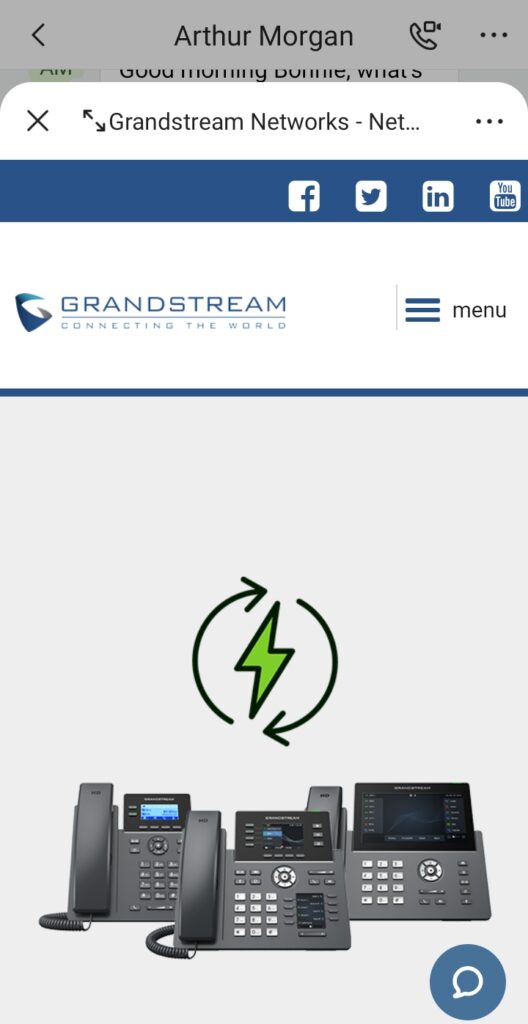
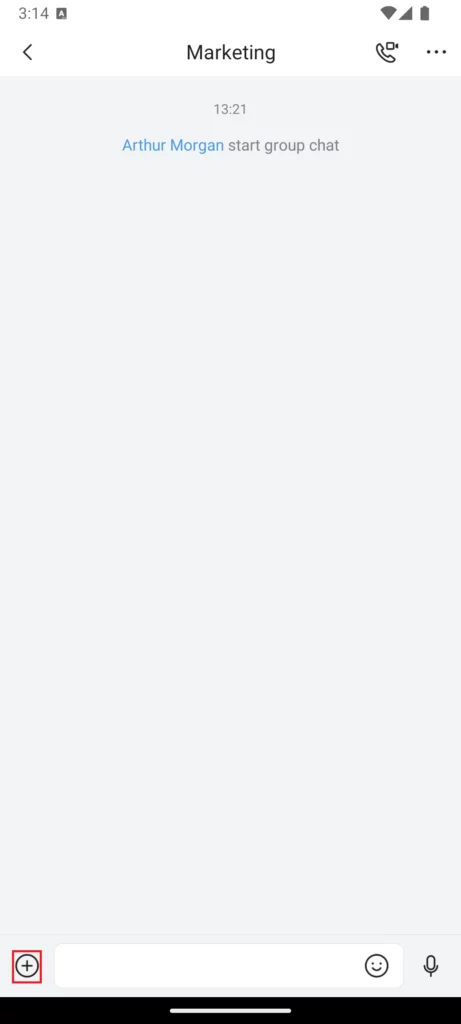
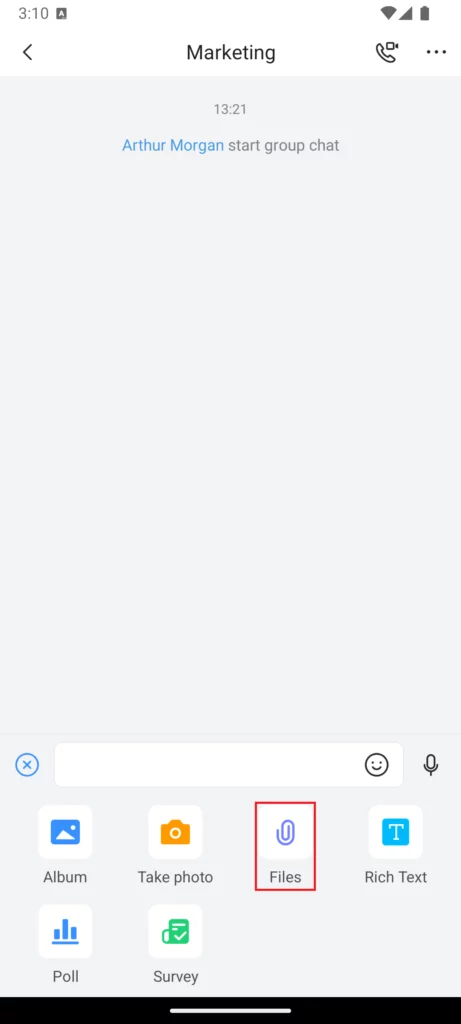
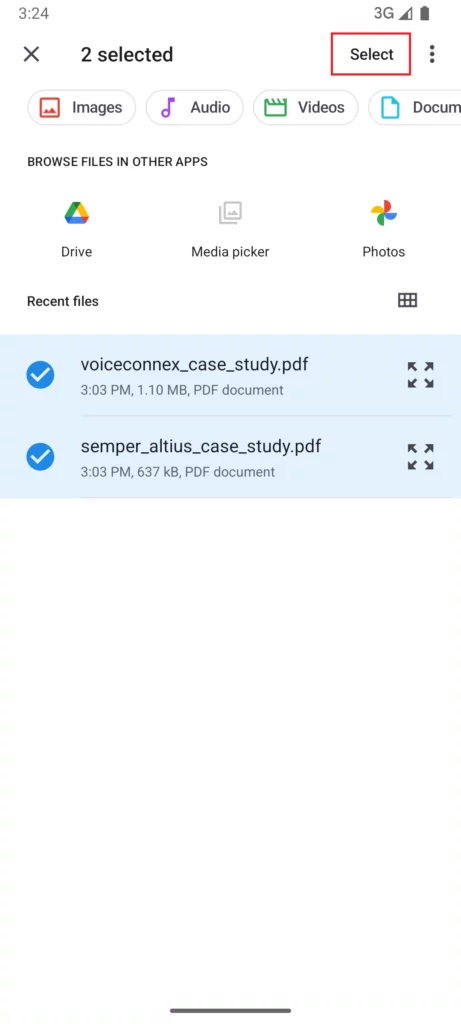
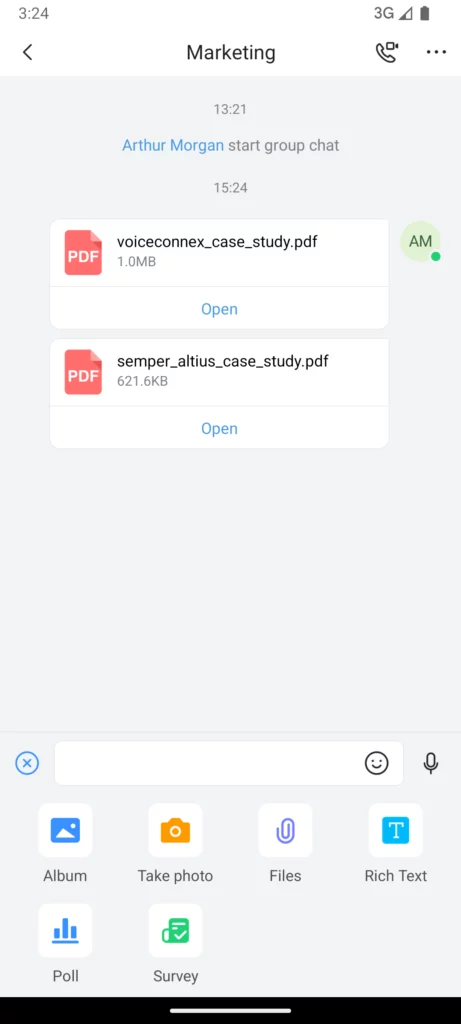
 in the upper-right corner of the interface to access the group settings interface.
 in the upper-right corner of the interface to access the group settings interface.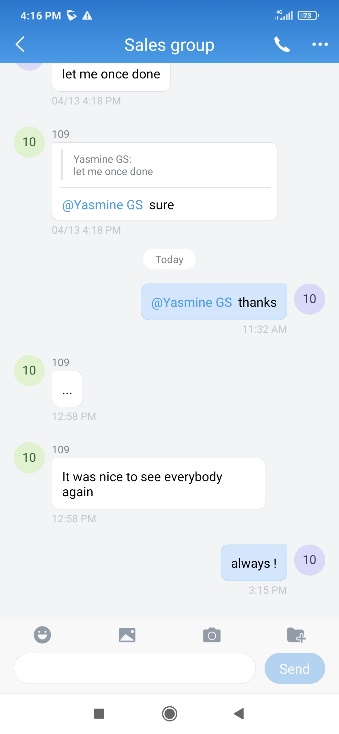
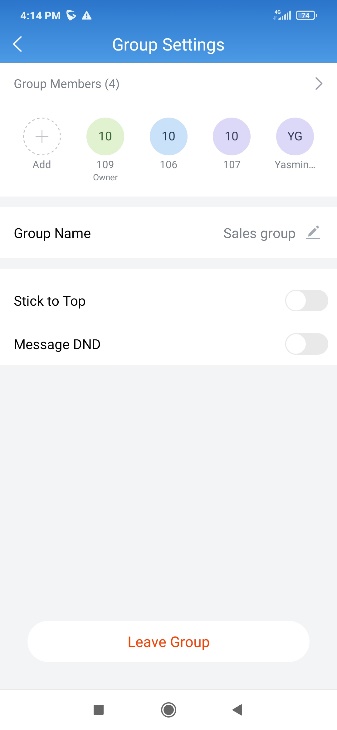
 to add group members and select from the contacts.
 to add group members and select from the contacts.
 on the top right corner of the screen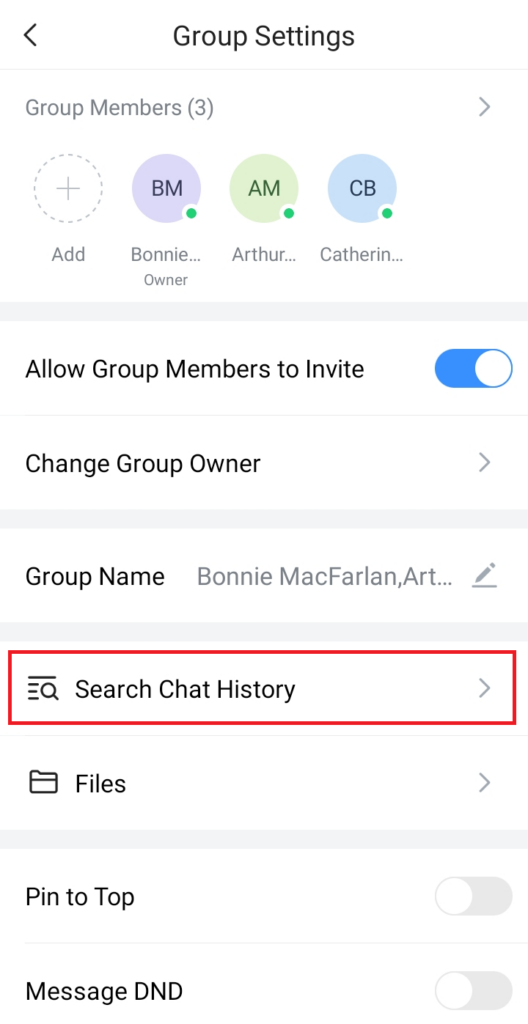
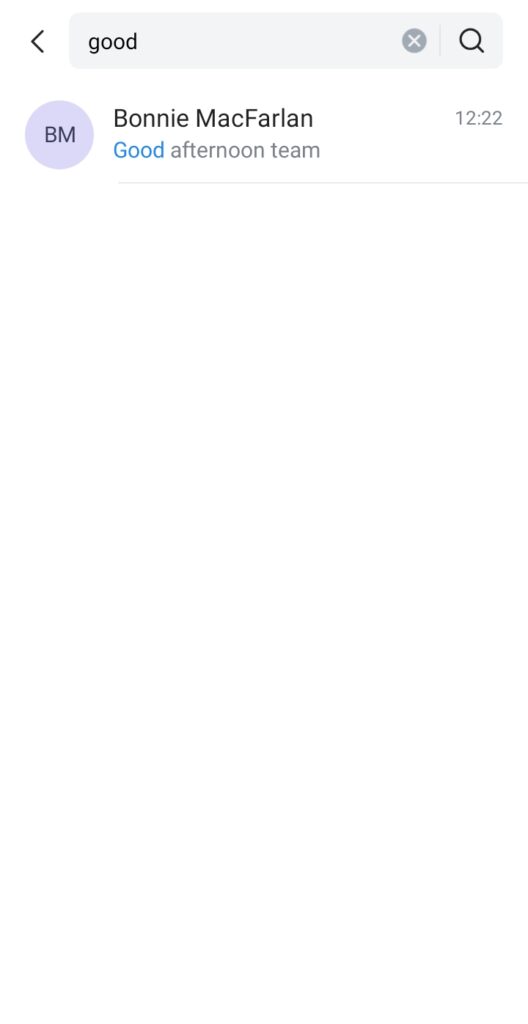

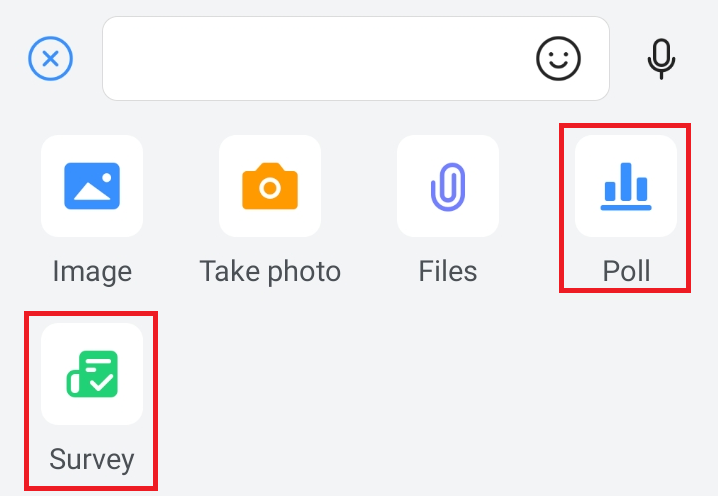
 then click on
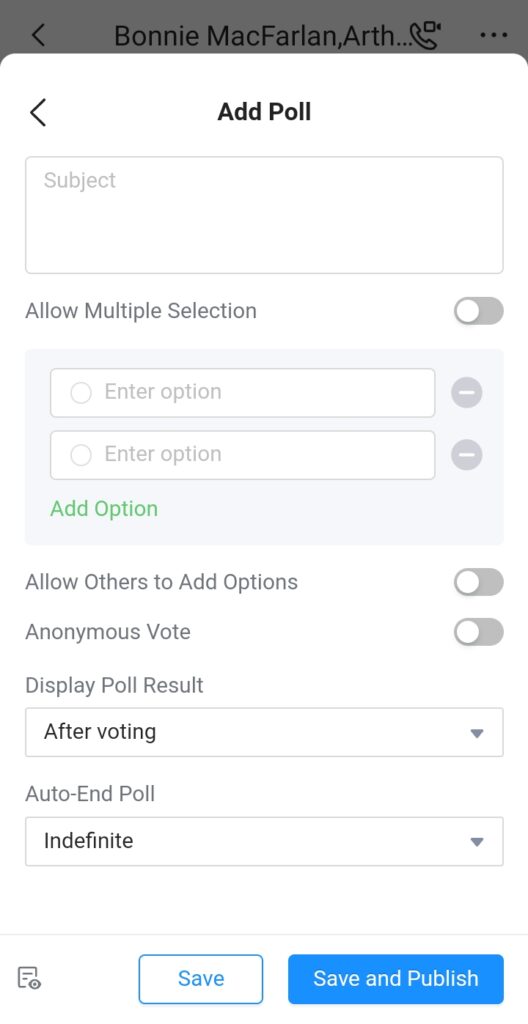
 to save the poll, or click on
  to save and publish the poll. The published poll will be posted to the conversation and will look like the following figure.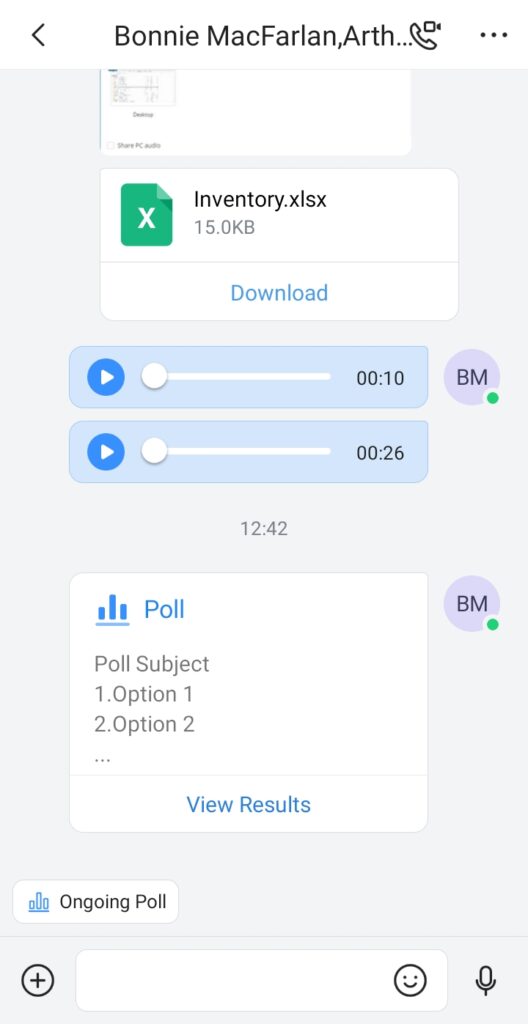
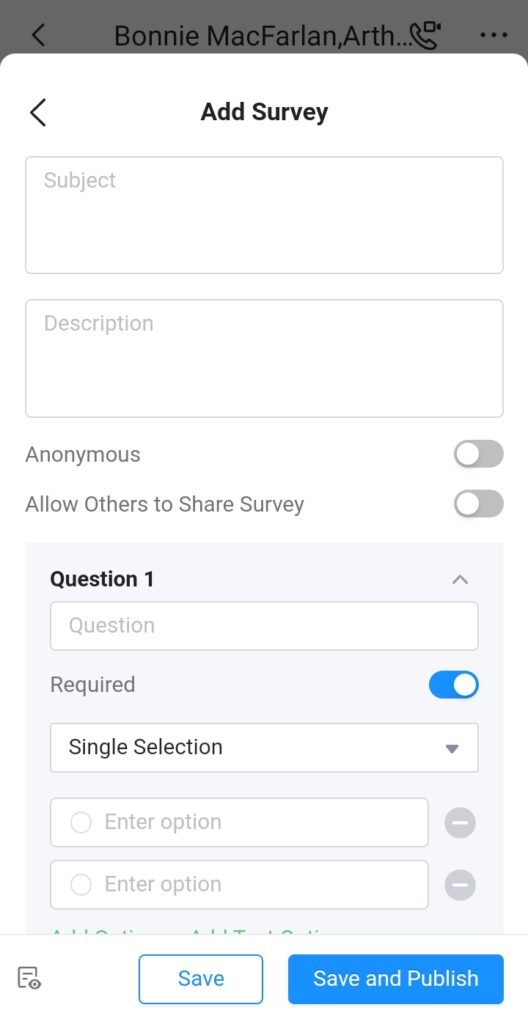
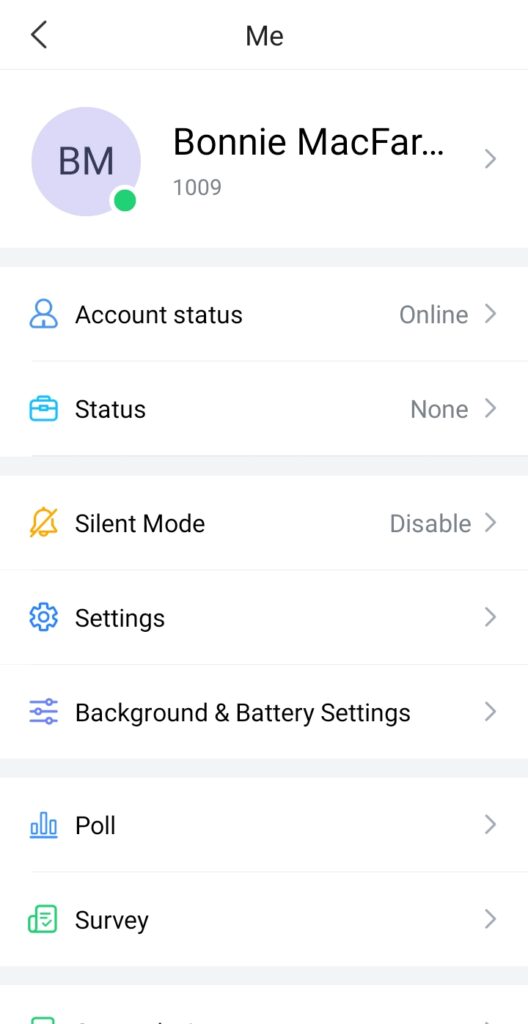
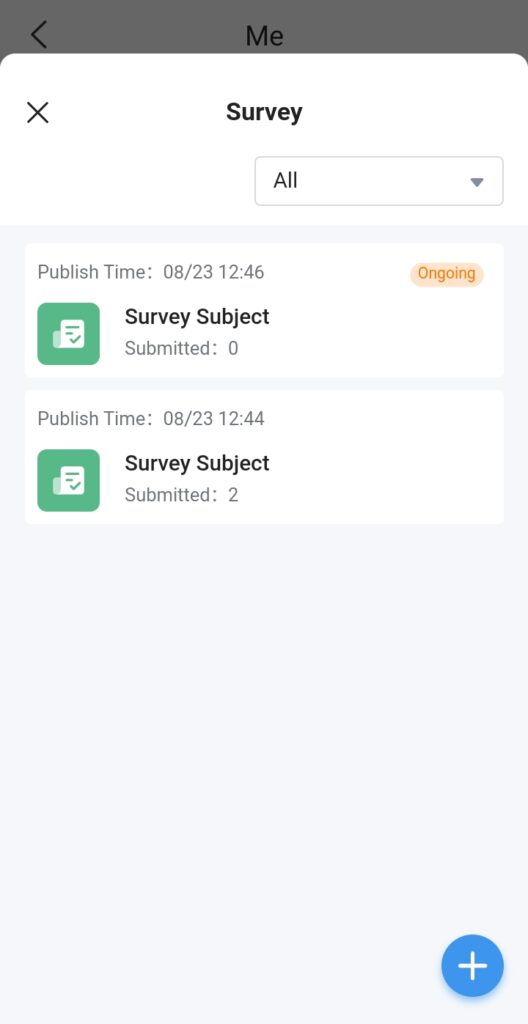

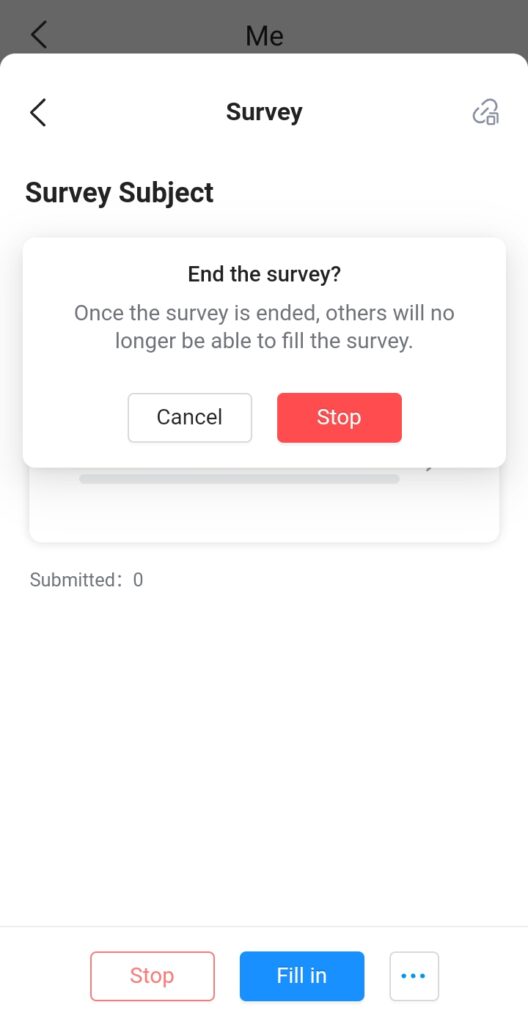
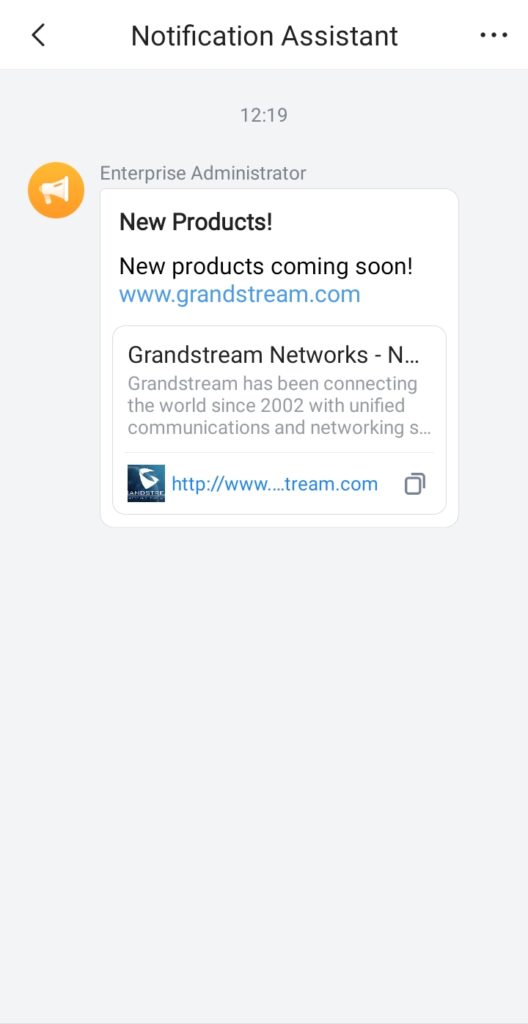
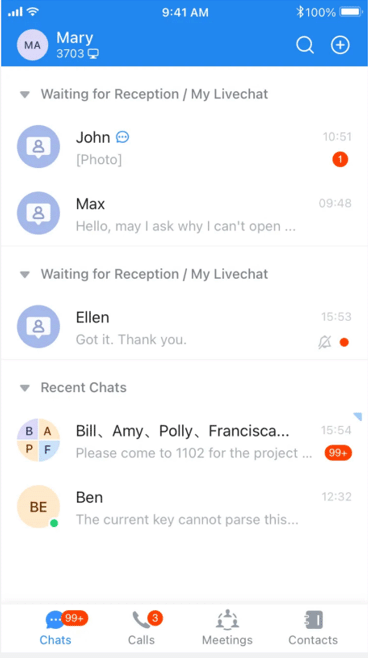
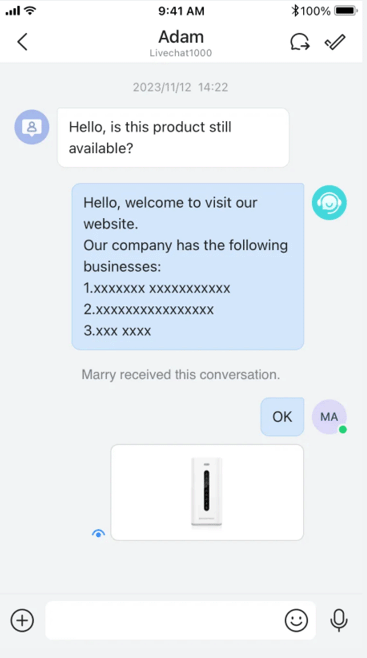
 to mark the session as resolved. If the user wishes to transfer the session to a different agent, he/she can click on
  .
.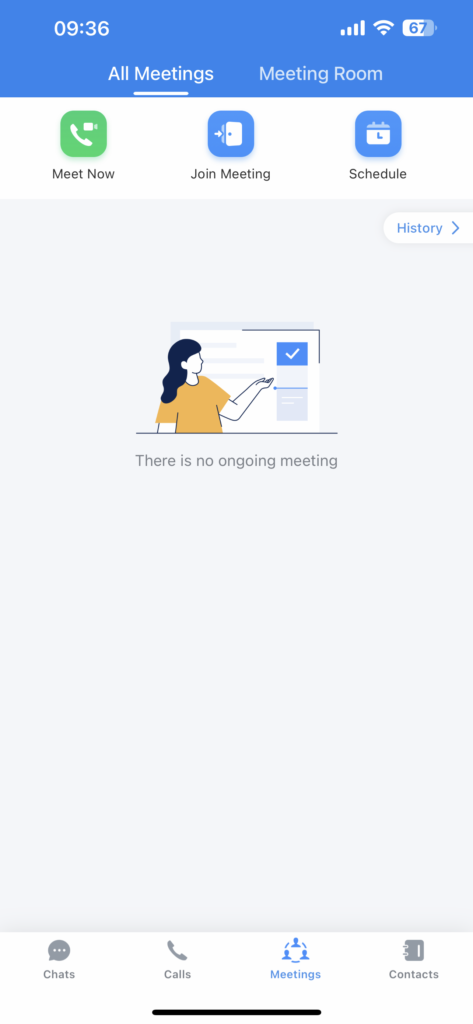
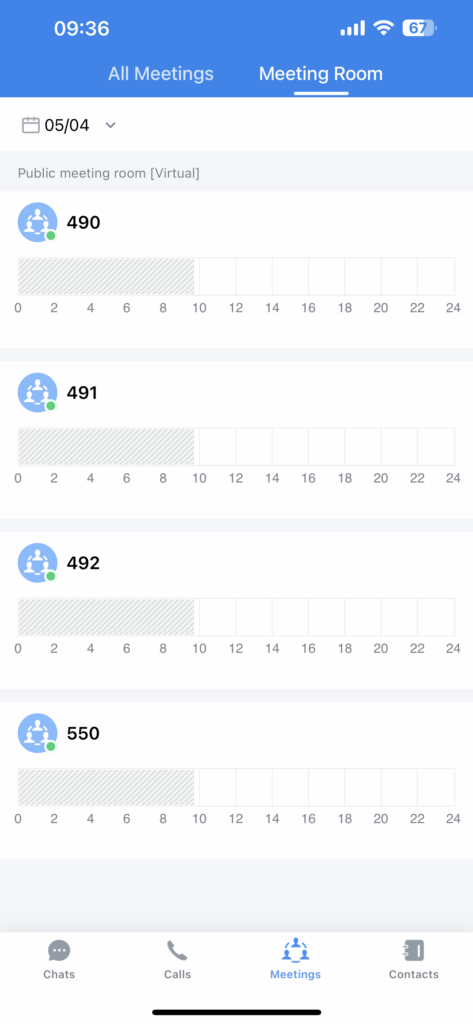
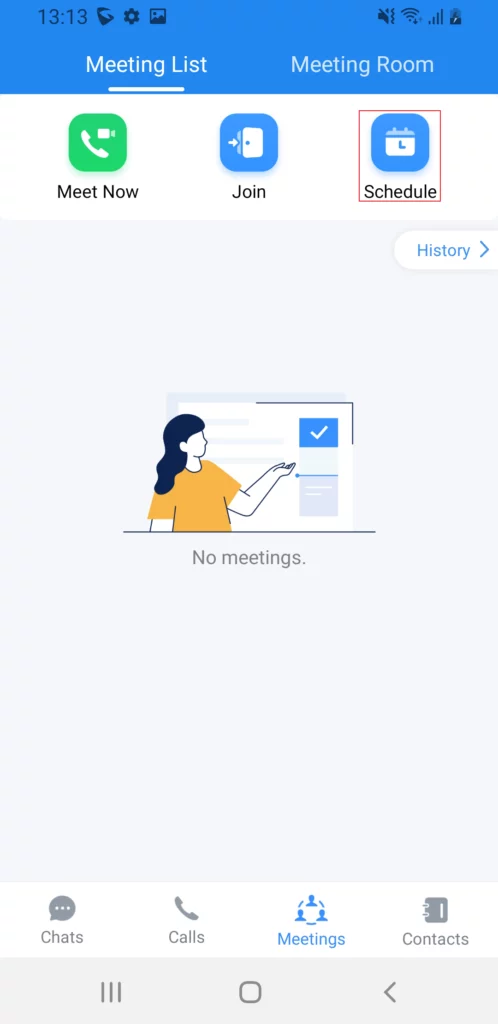
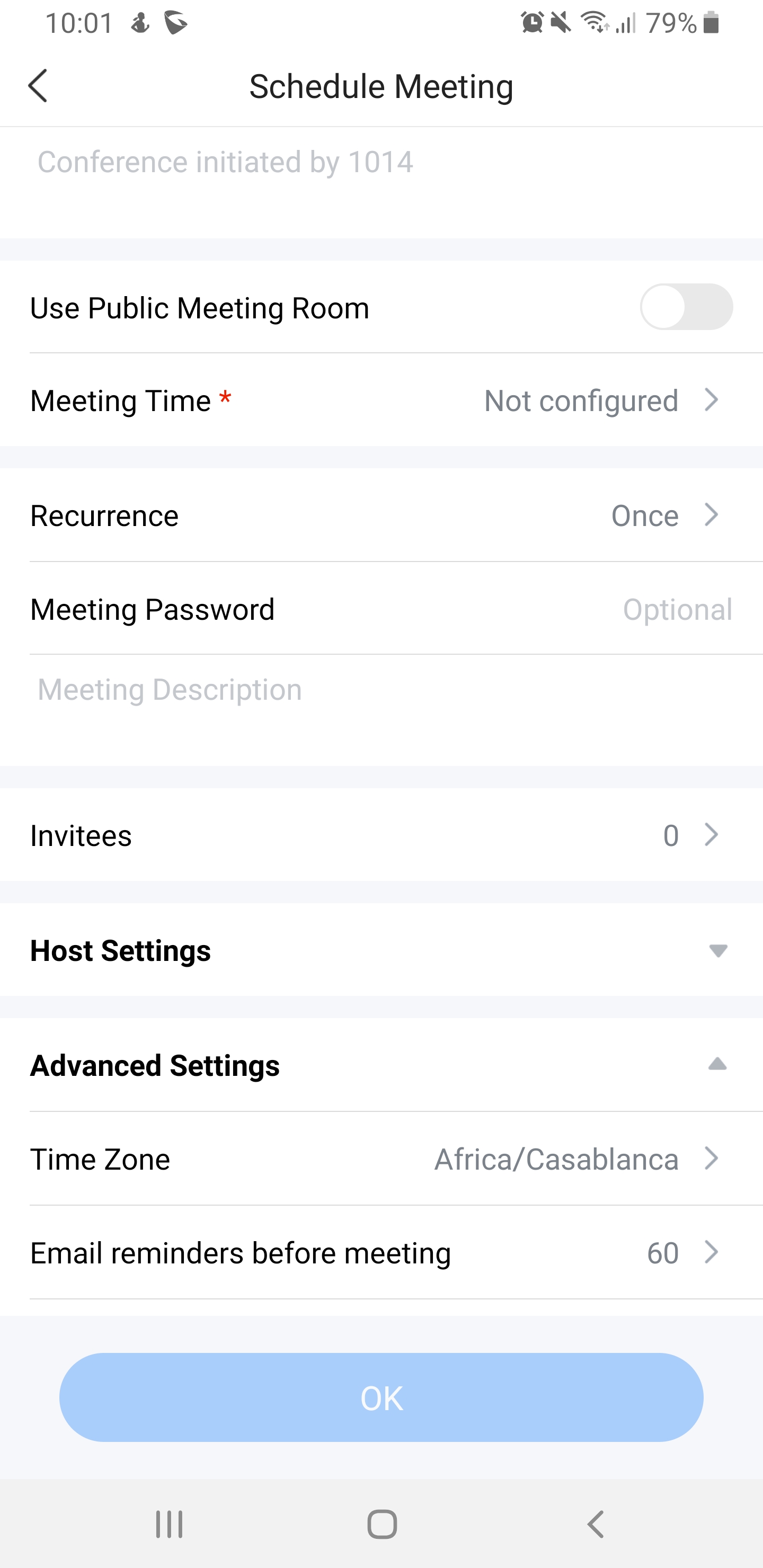
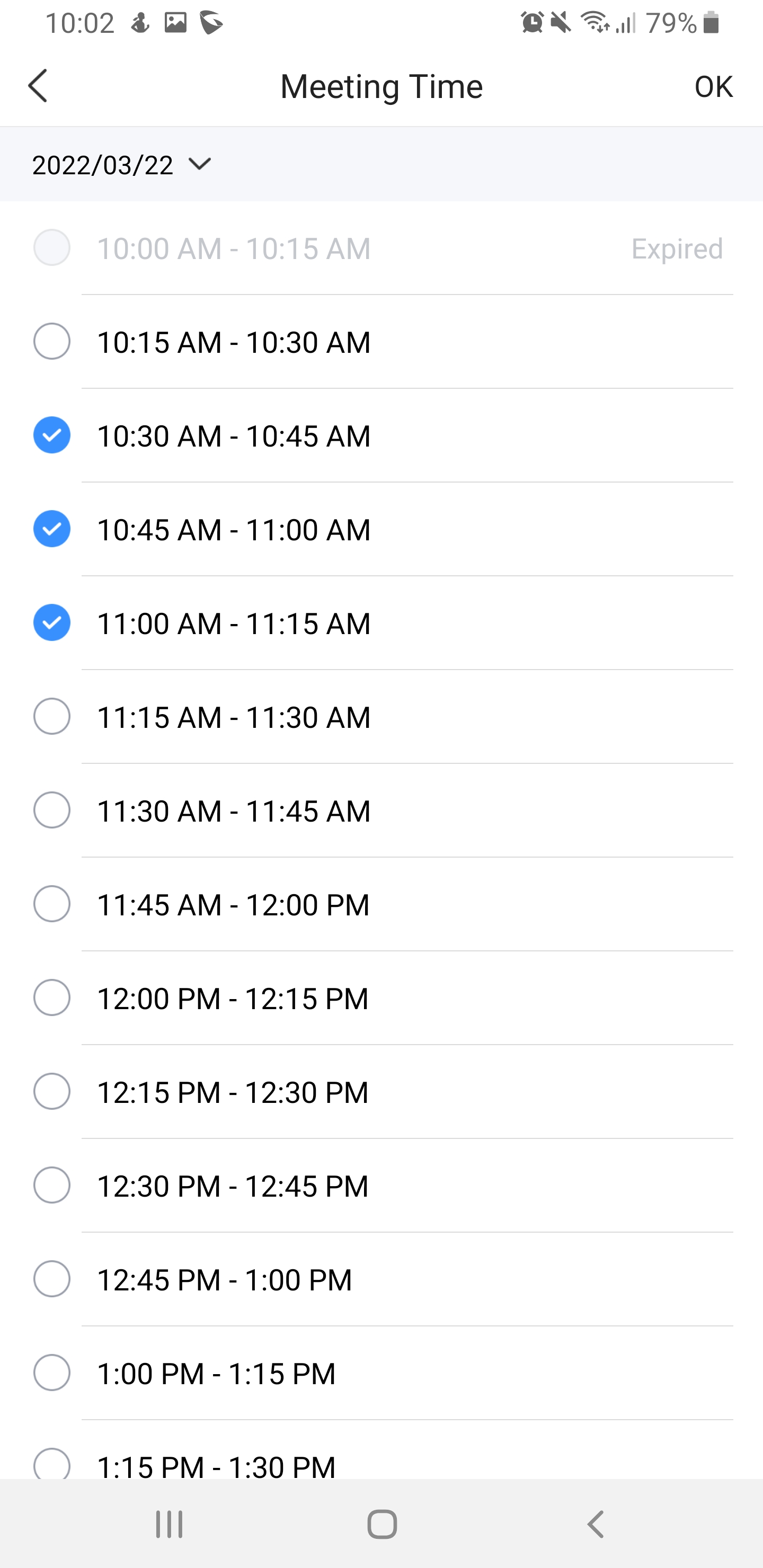
 . Then, tap on “Create”.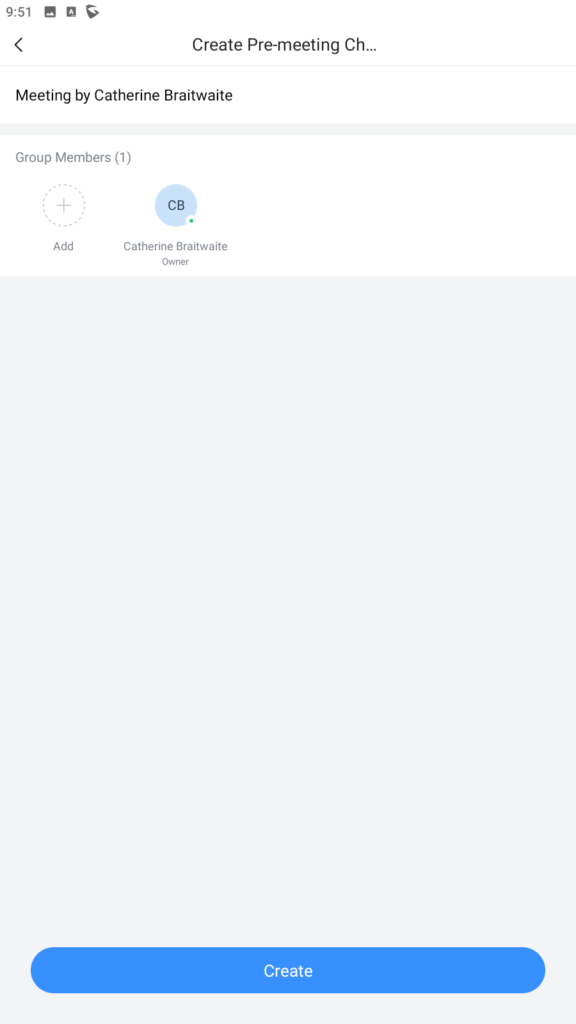
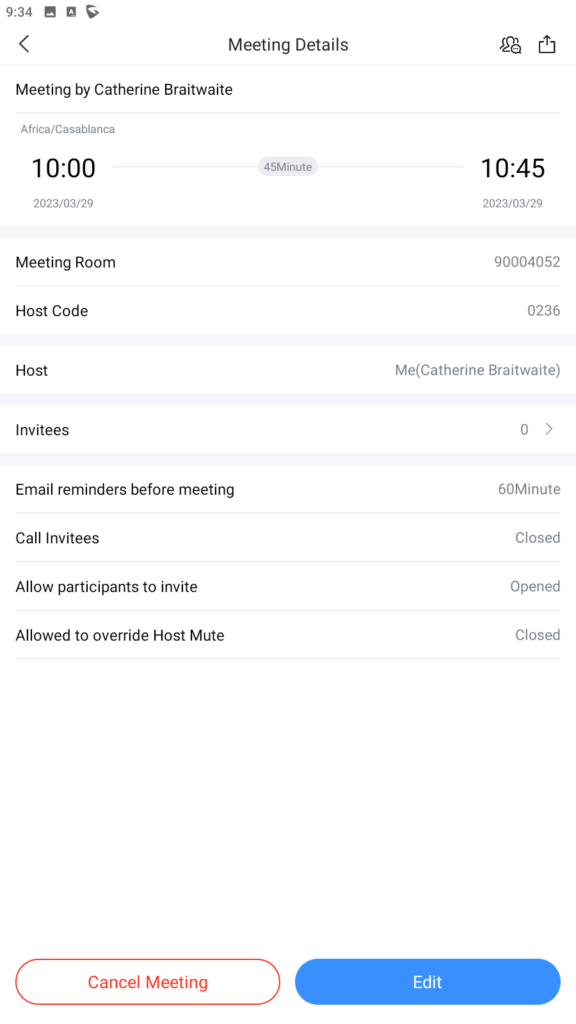
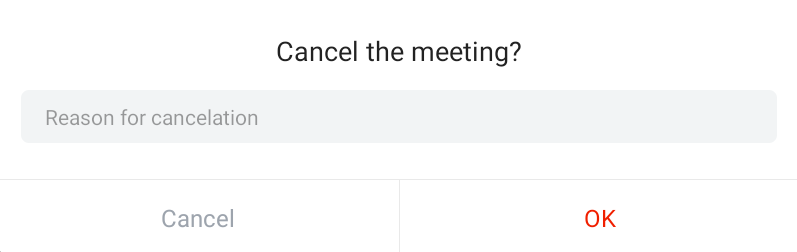
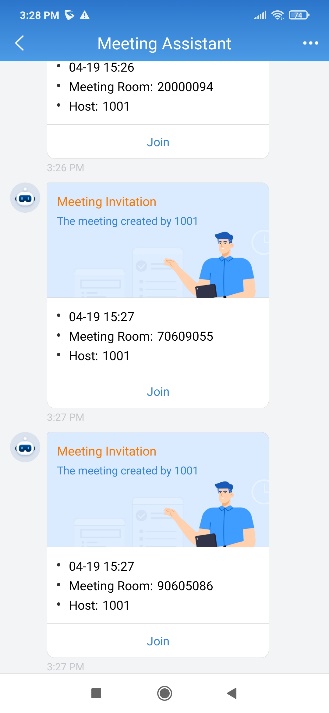
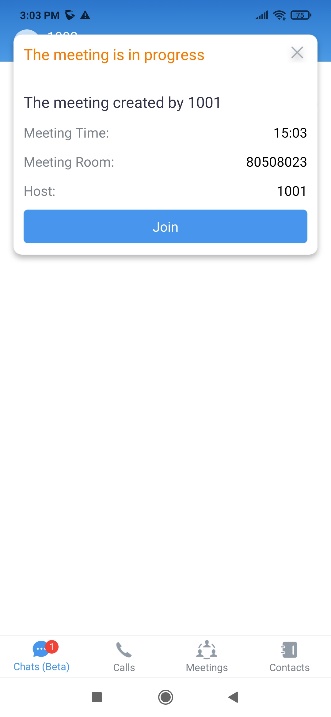
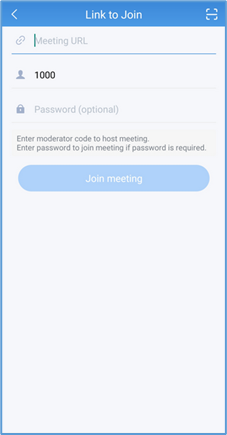


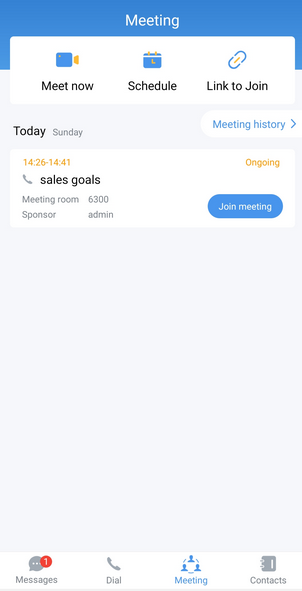
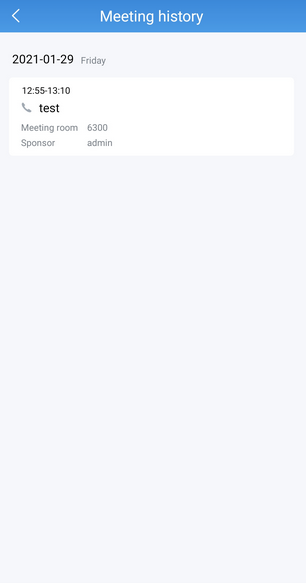
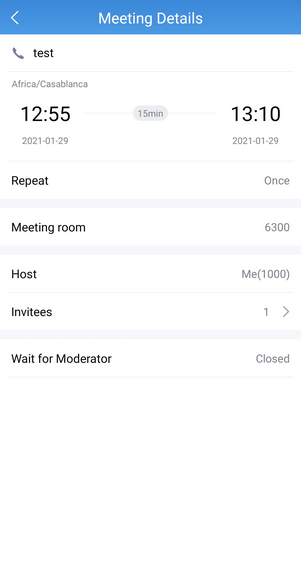
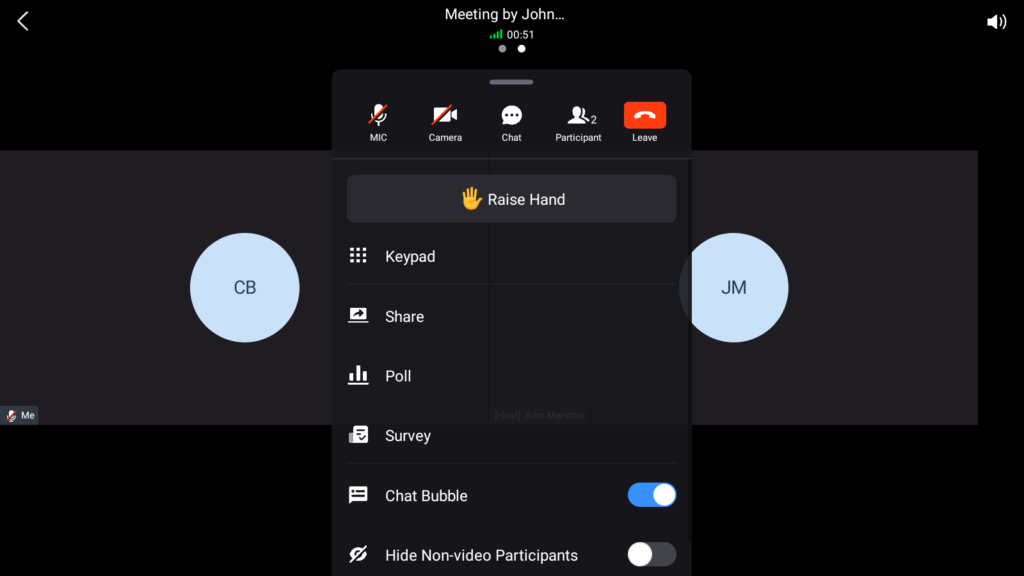
 : Enable or disable the microphone.
 : Enable or disable the camera.
 : Open the chat box.
 : Open the list of participants.
 : Leave the meeting. For the host of the meeting, when he/she clicks on this button, it will prompt two options: “End Meeting” and “Leave Meeting”. End Meeting will finish the meeting, and Leave Meeting will result in the host leaving, and another member will be assigned as the host, and the meeting will carry on.
 : Raise your hand.
 : Open the keypad.
 : Share your screen with the meeting’s participants.
 : Create a poll.
 : Create a survey.
 : Toggle the Chat Bubble on and off.
 : Toggle to display the current speaker during the meeting.
 : Hide the participants who do not have their camera activated.
 : Change the layout to display the speaker.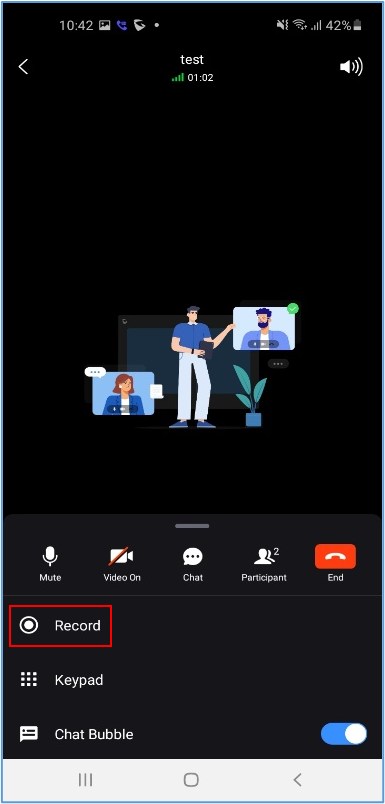
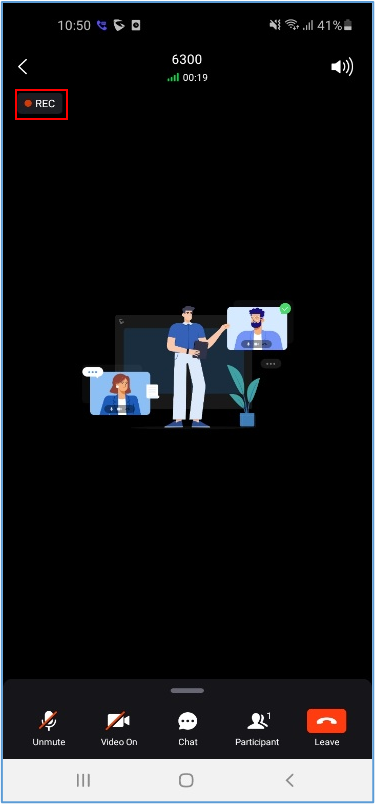
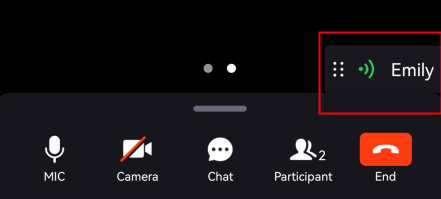
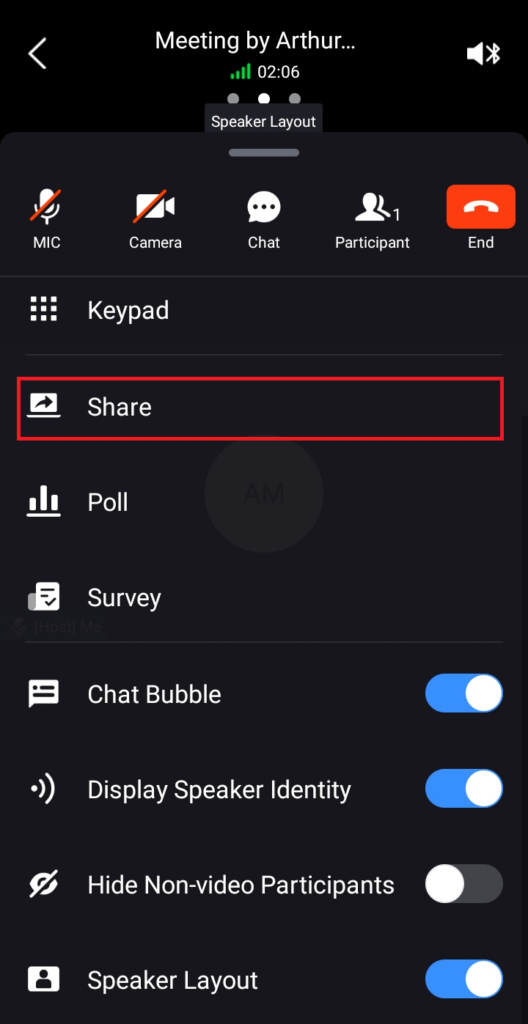
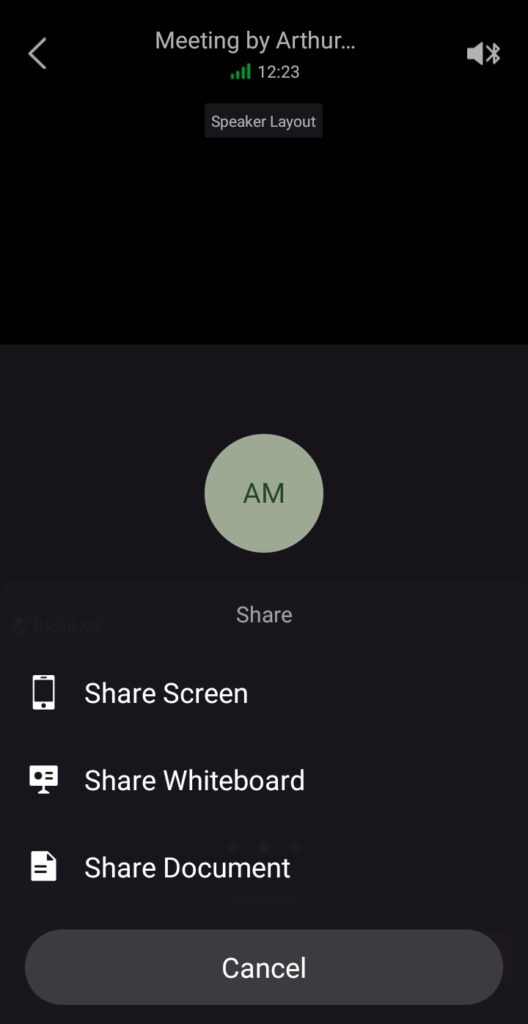
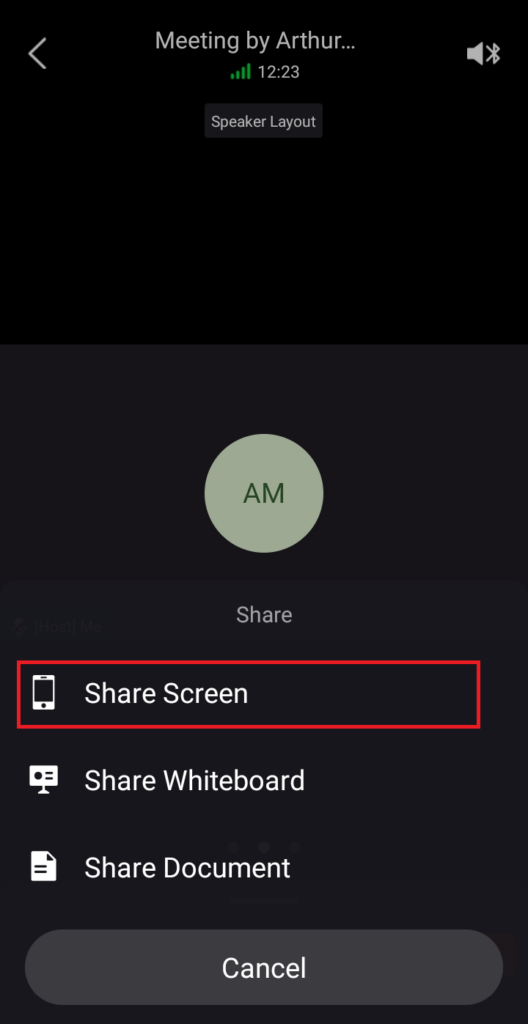
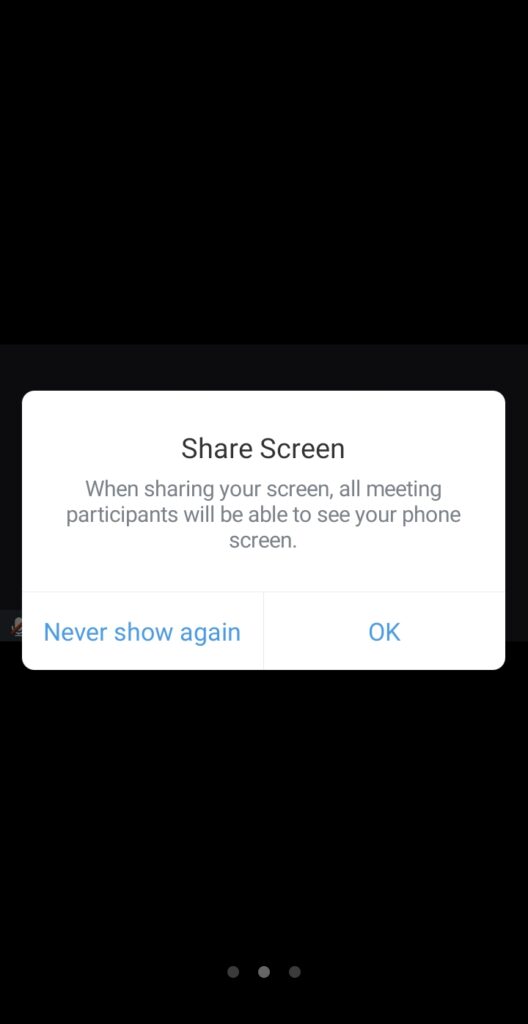
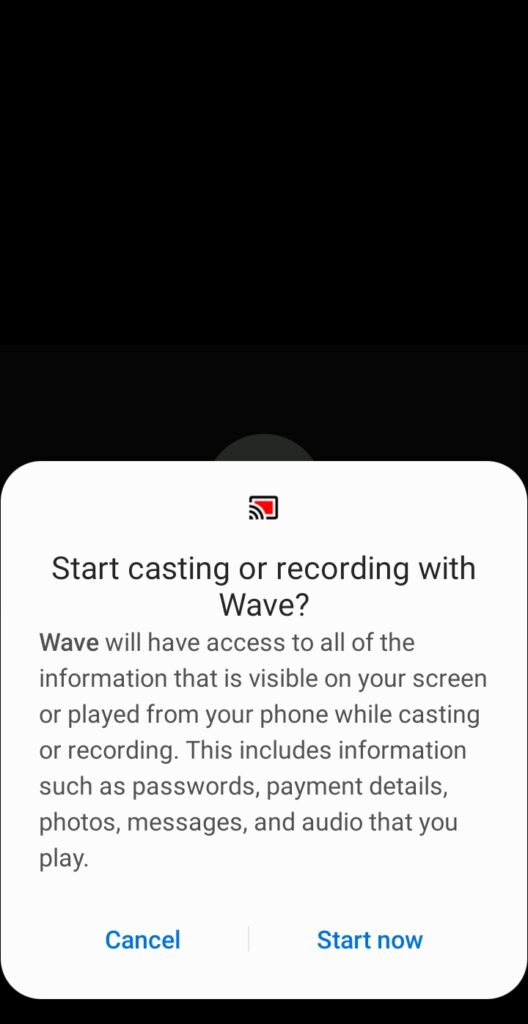
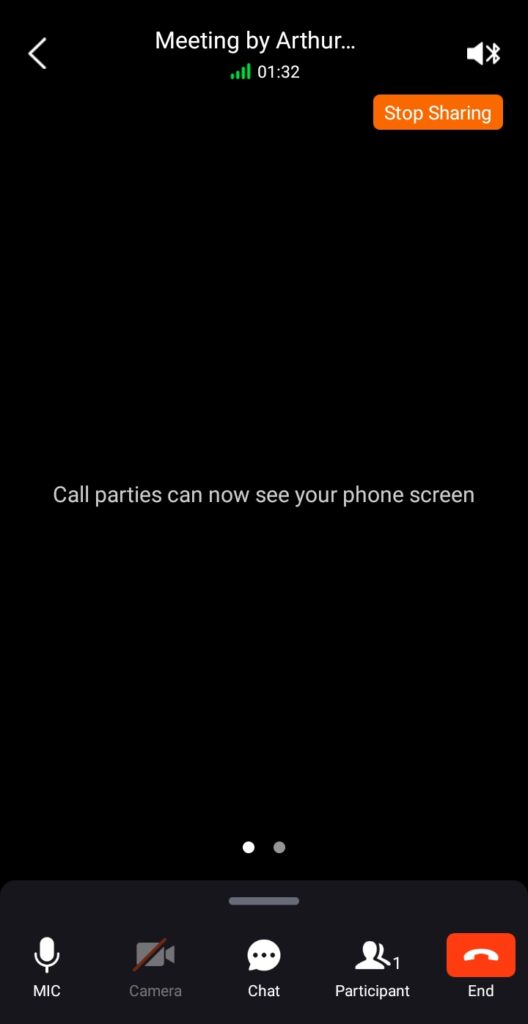
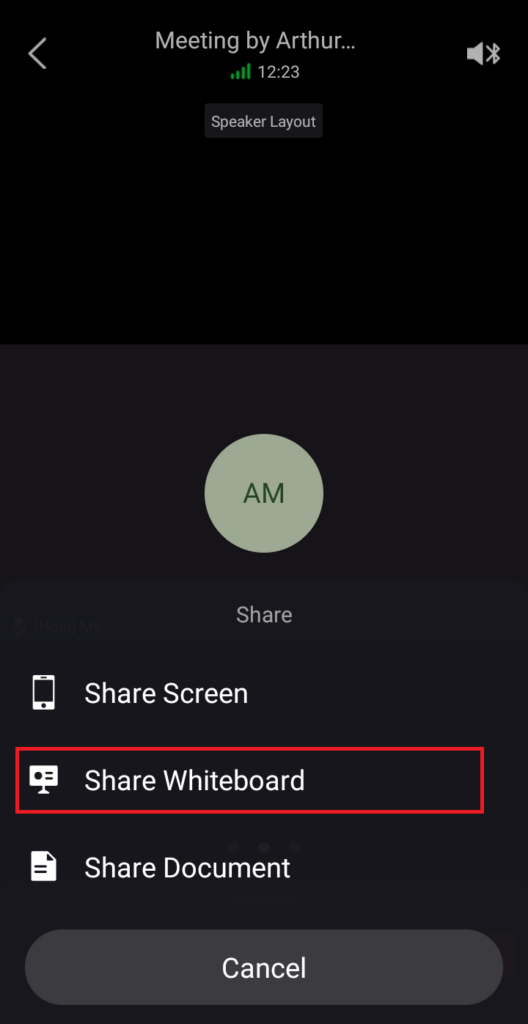
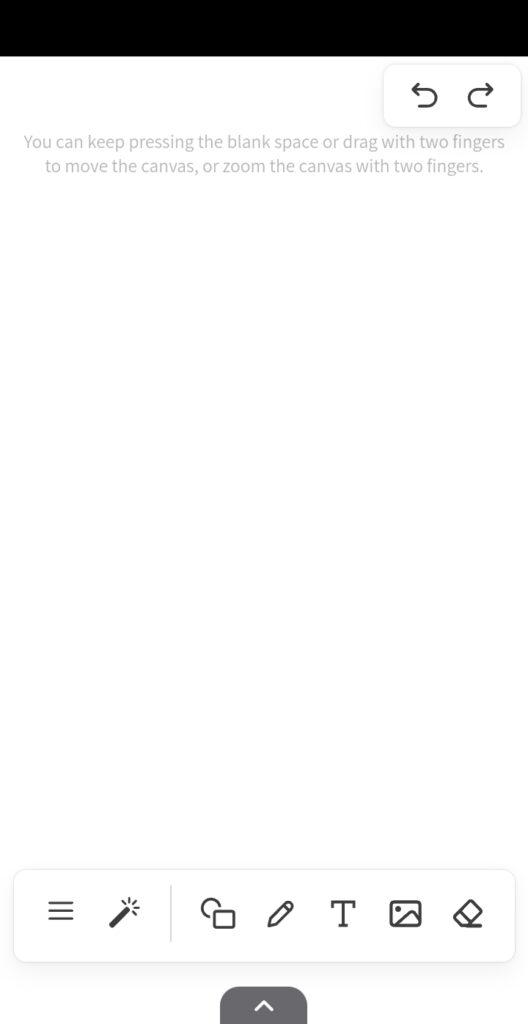
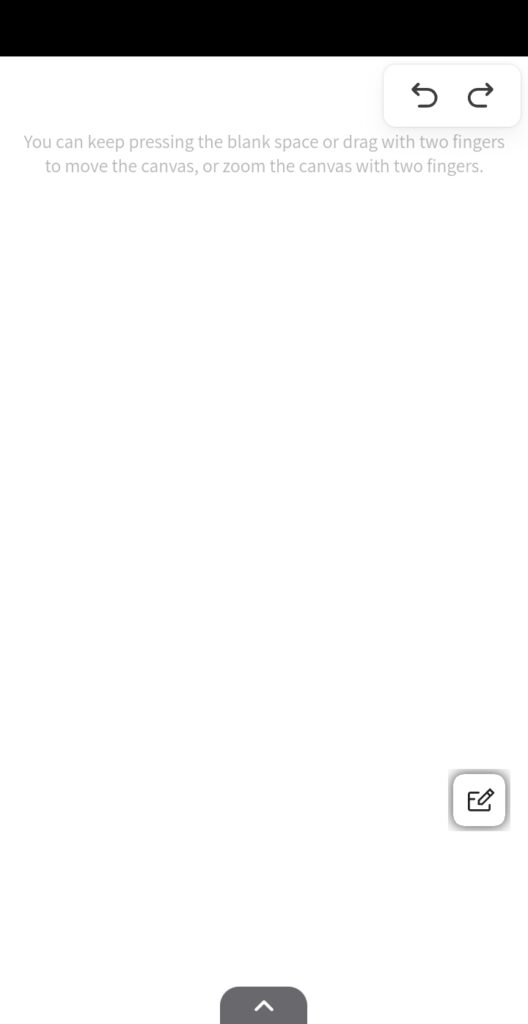
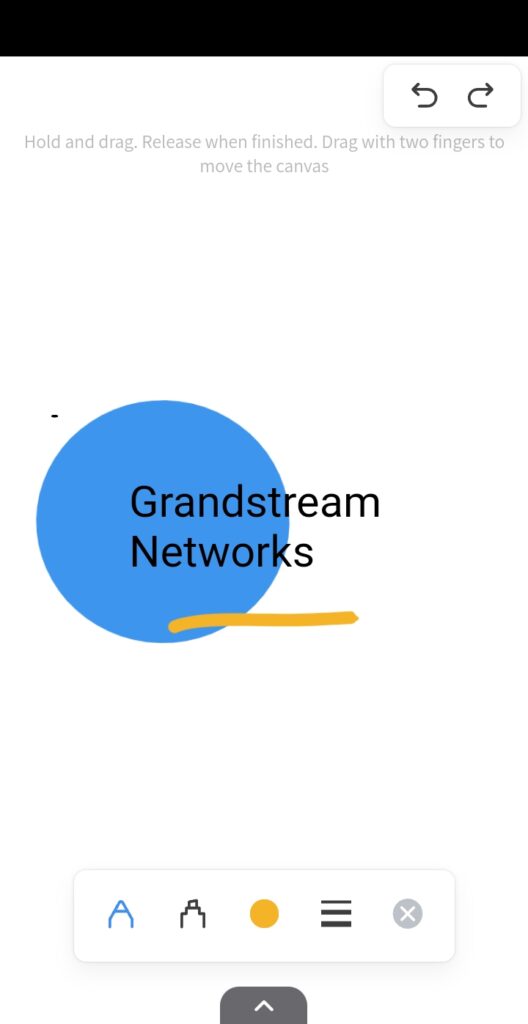
 : The drawing toolbar will appear after clicking this icon.
 : Click to view more options (only the sharer has the permission), including: Enable/Disable Collaboration function (After enabling this function, other participants can draw at the same time), change the Canvas Color, Empty Canvas, Open File (the whiteboard data picture which was previously saved), Save as Picture, etc.
 : This is the laser pointer option, and only the sharer has this option. It displays the drawn track and will disappear in 3 seconds.
 : This is the graphics option. It only supports basic graphics. You can double-click the graphic to add text.
 : This is the brush option. There are two types of brushes: “Common Brush” and “Highlighter”.
 : This is the text option.
 : Pictures can be inserted. After inserting a picture, you can drag the edge to change the size of the picture.
 : This is the eraser option.
 : This is the undo option.
 : This is the recovery option.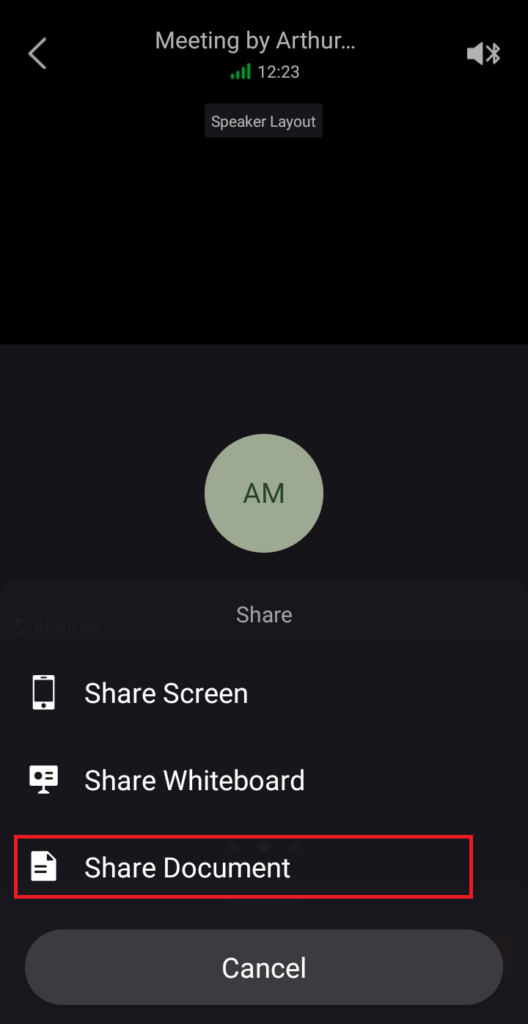
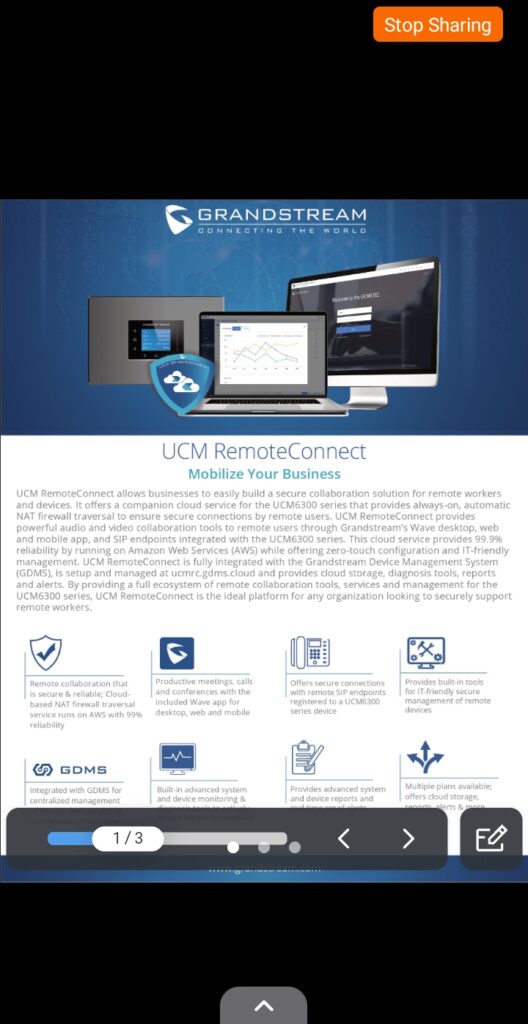
 button to use annotations on the shared document.
 : This option to change the brush thickness and color.
 : This is the paintbrush option. It supports different modes: Free, Line, Rectangle/square, Circle, and Arrow.
 : This is the eraser option.
 : This is the empty option to clear all the annotations.
 : This option prevents the other participants from drawing annotations at the same time.
 to view the participant list.
 in the upper-right corner. The video conference supports inviting participants, sharing a link invitation, and scanning a QR code to join the meeting with the Wave app.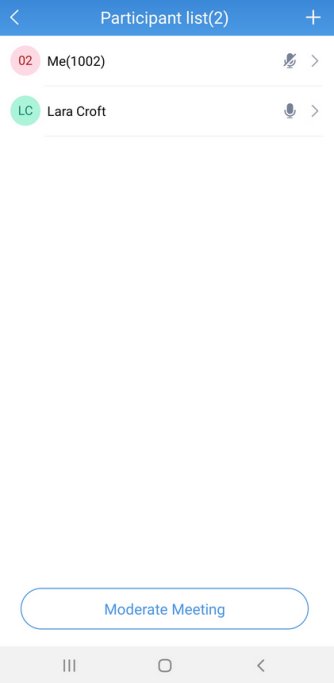
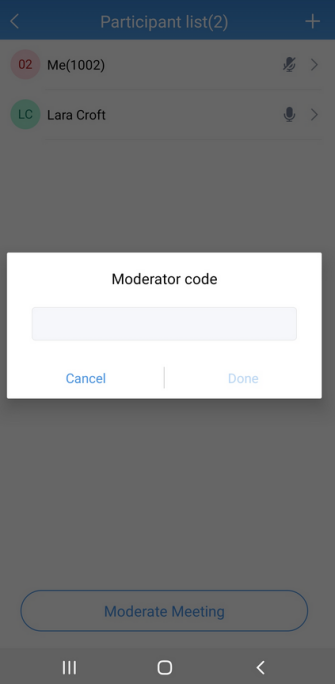
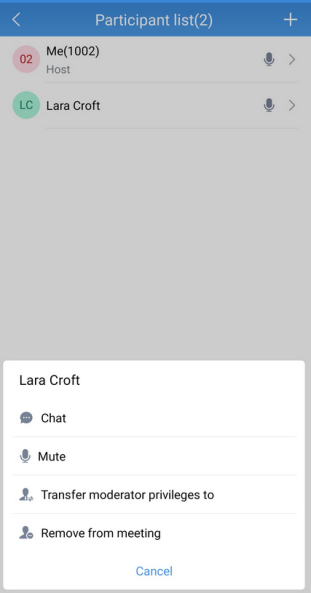
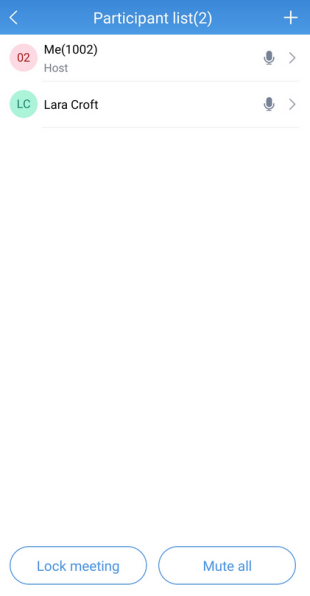
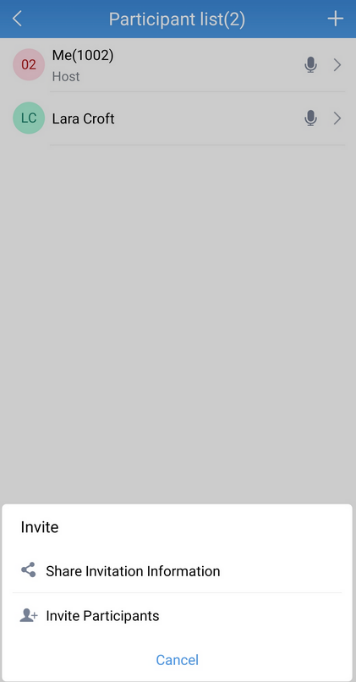
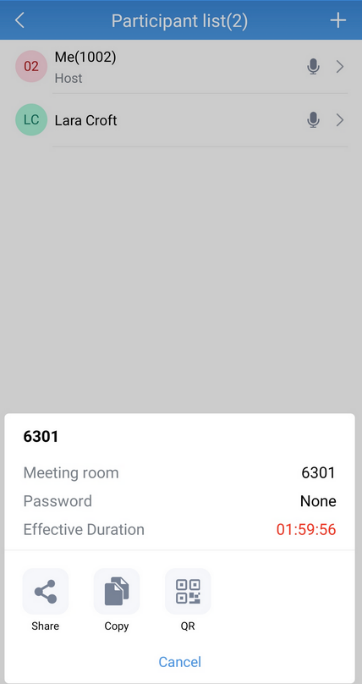
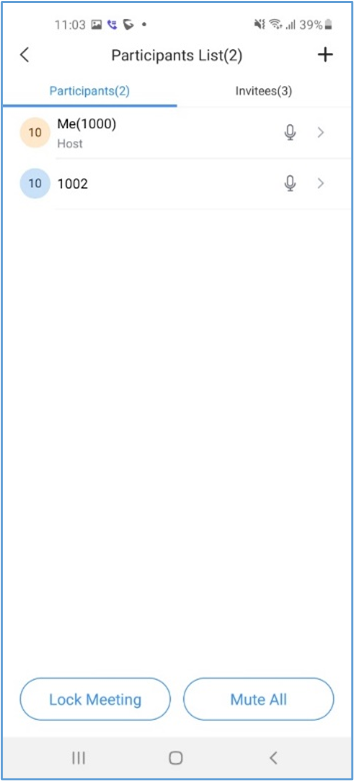
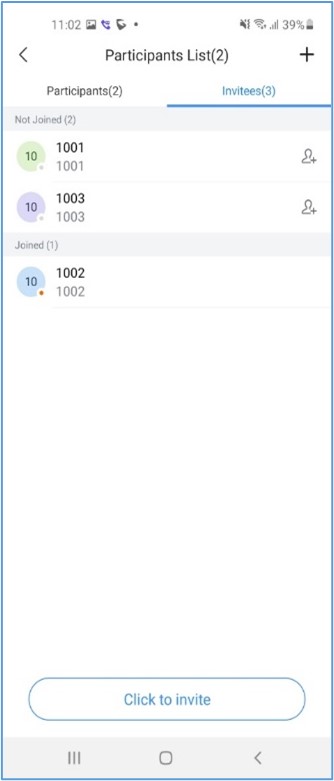
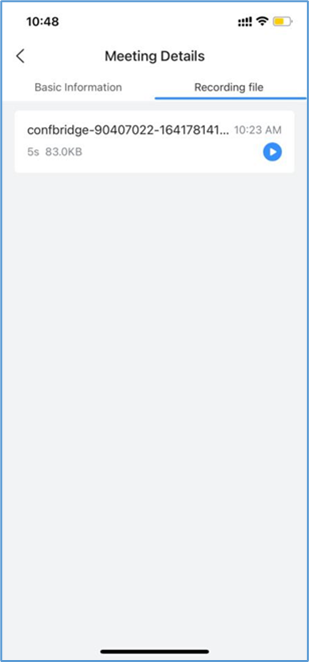
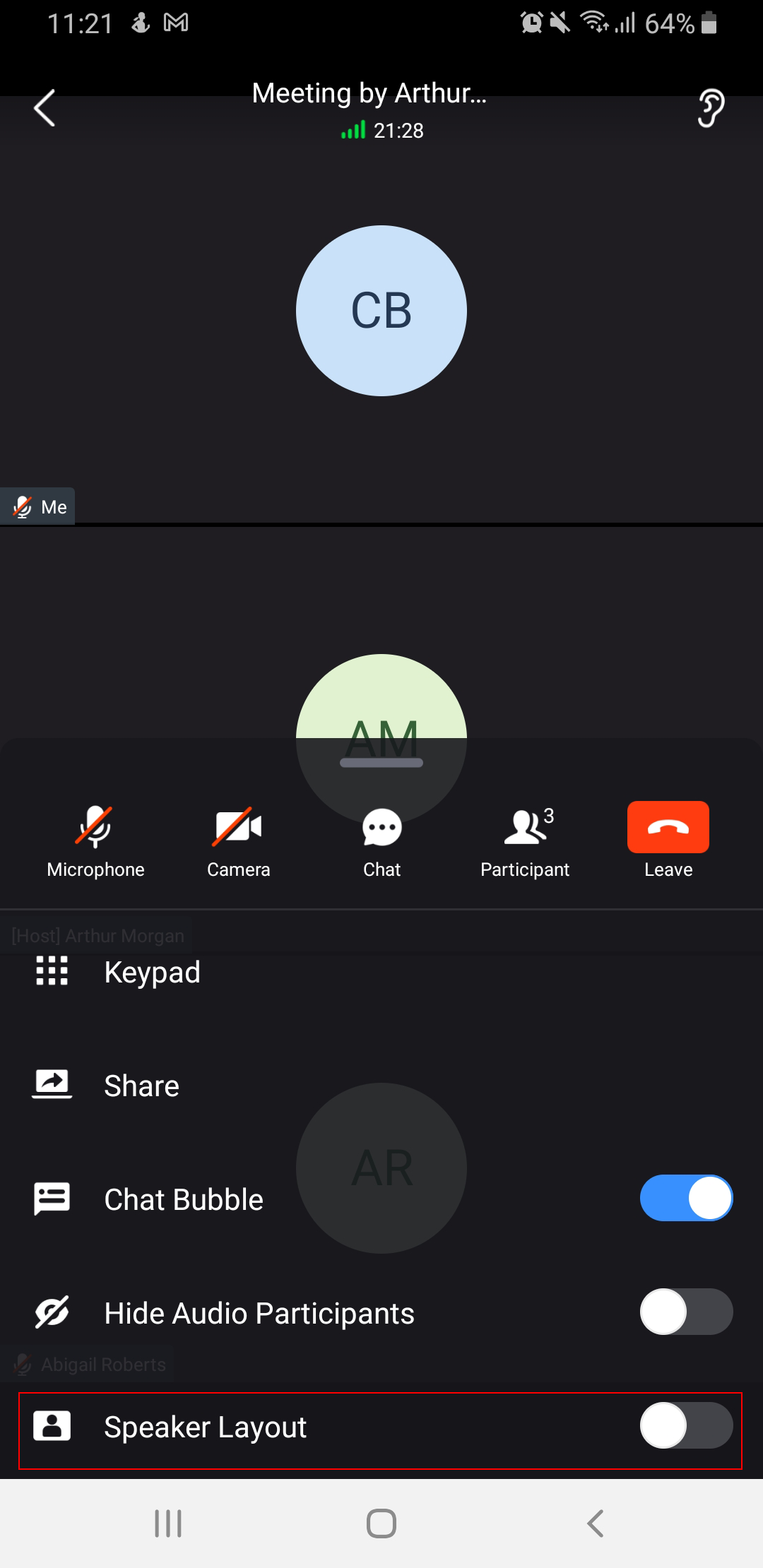
 , during the meeting, the moderator will be prompted to select whether to end the meeting or leave the meeting.
 button to end the meeting that is currently in progress. Then, the meeting will end directly.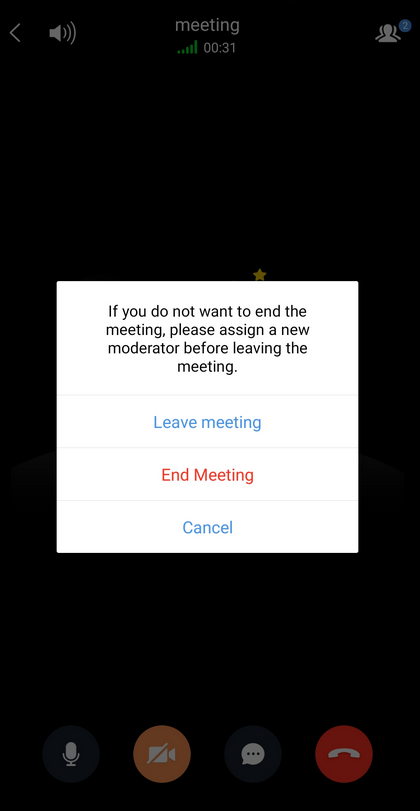
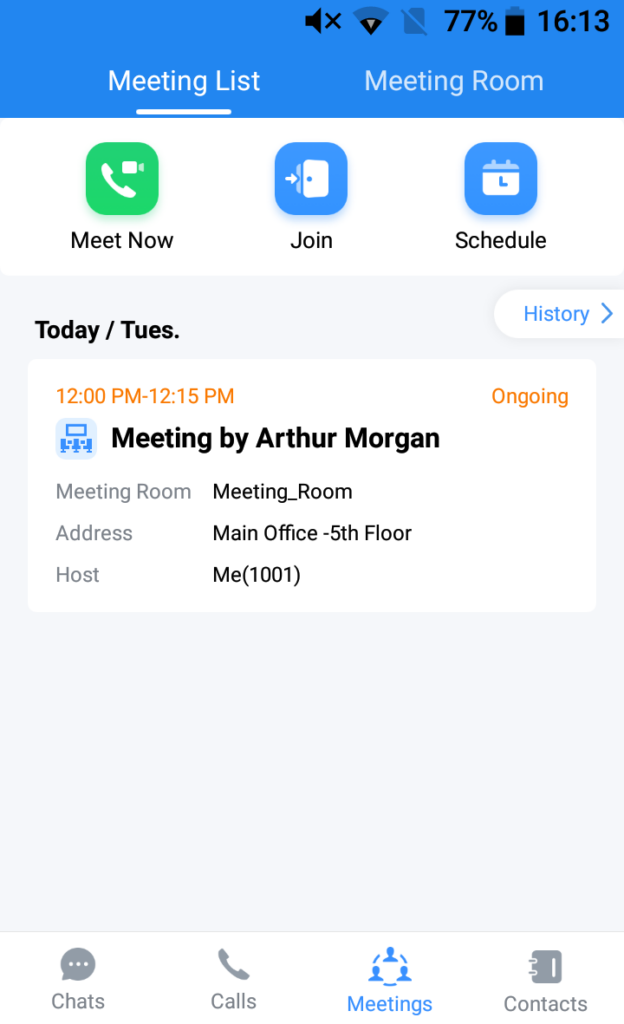
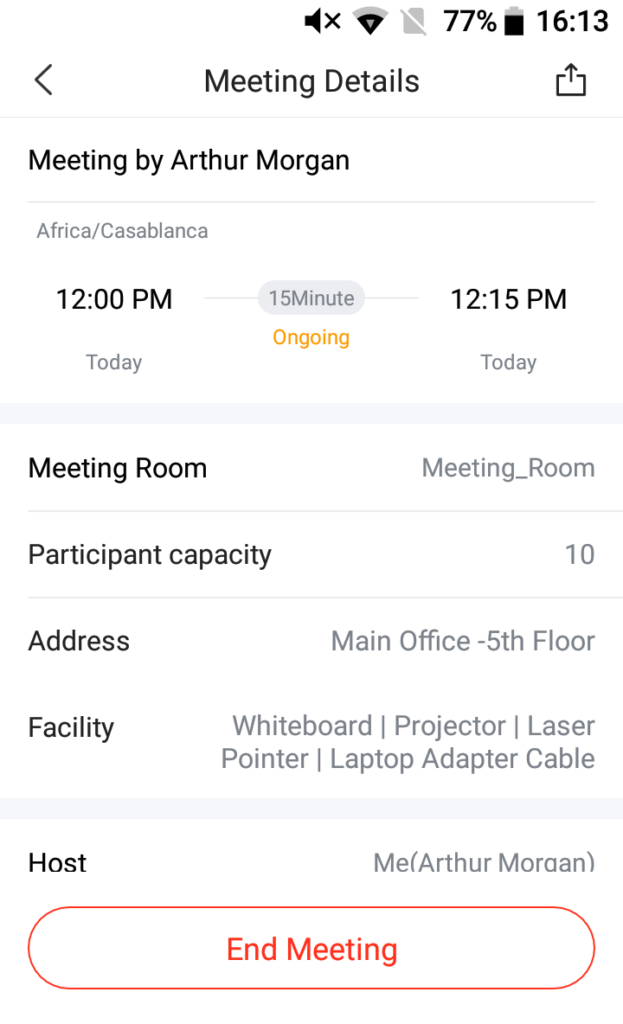
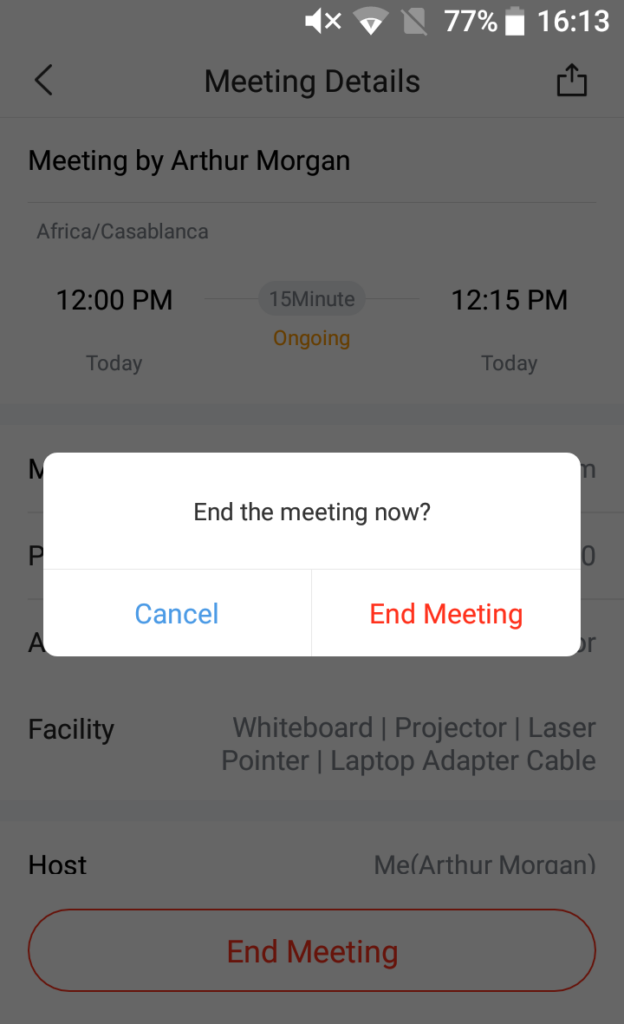

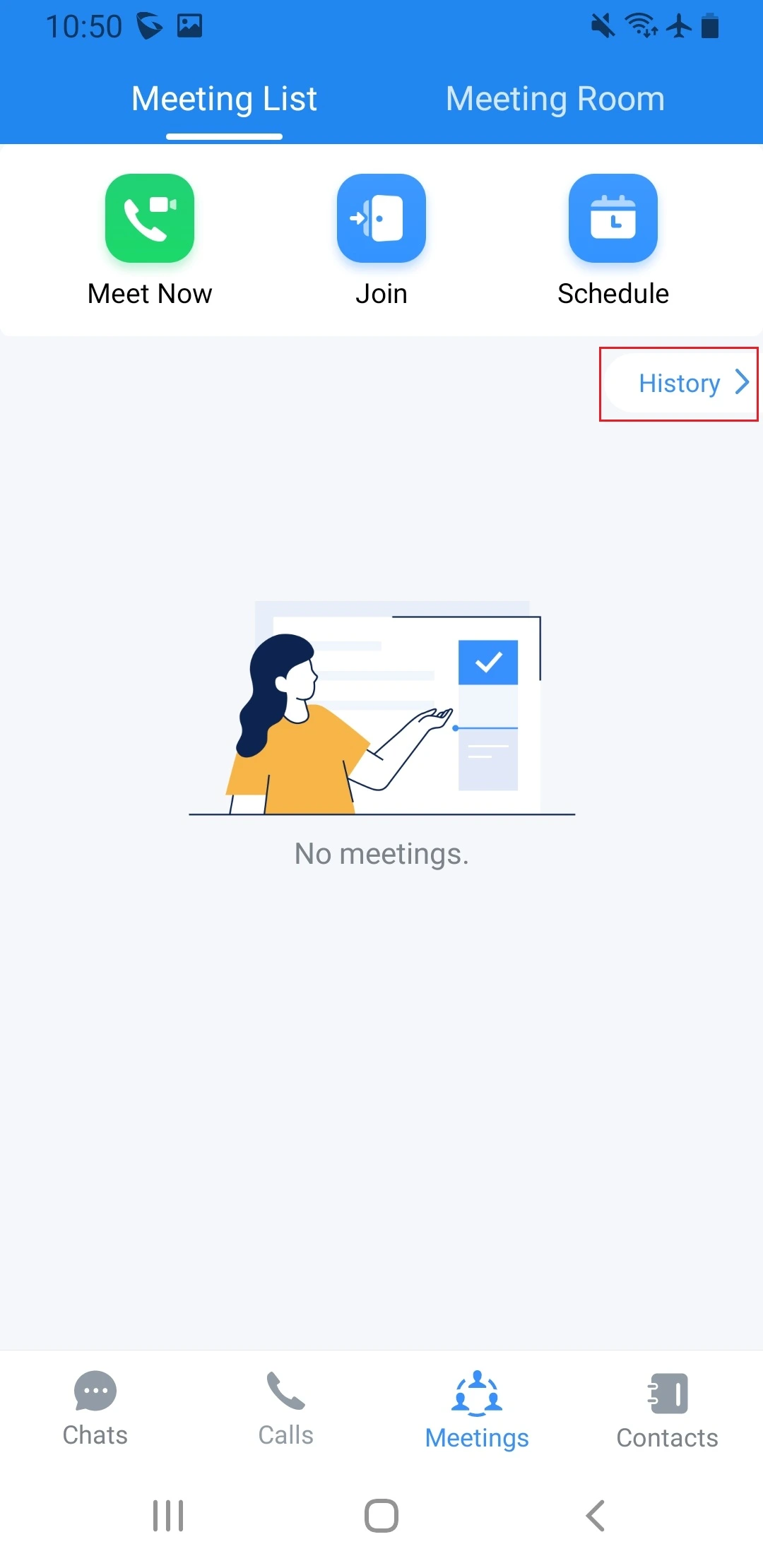
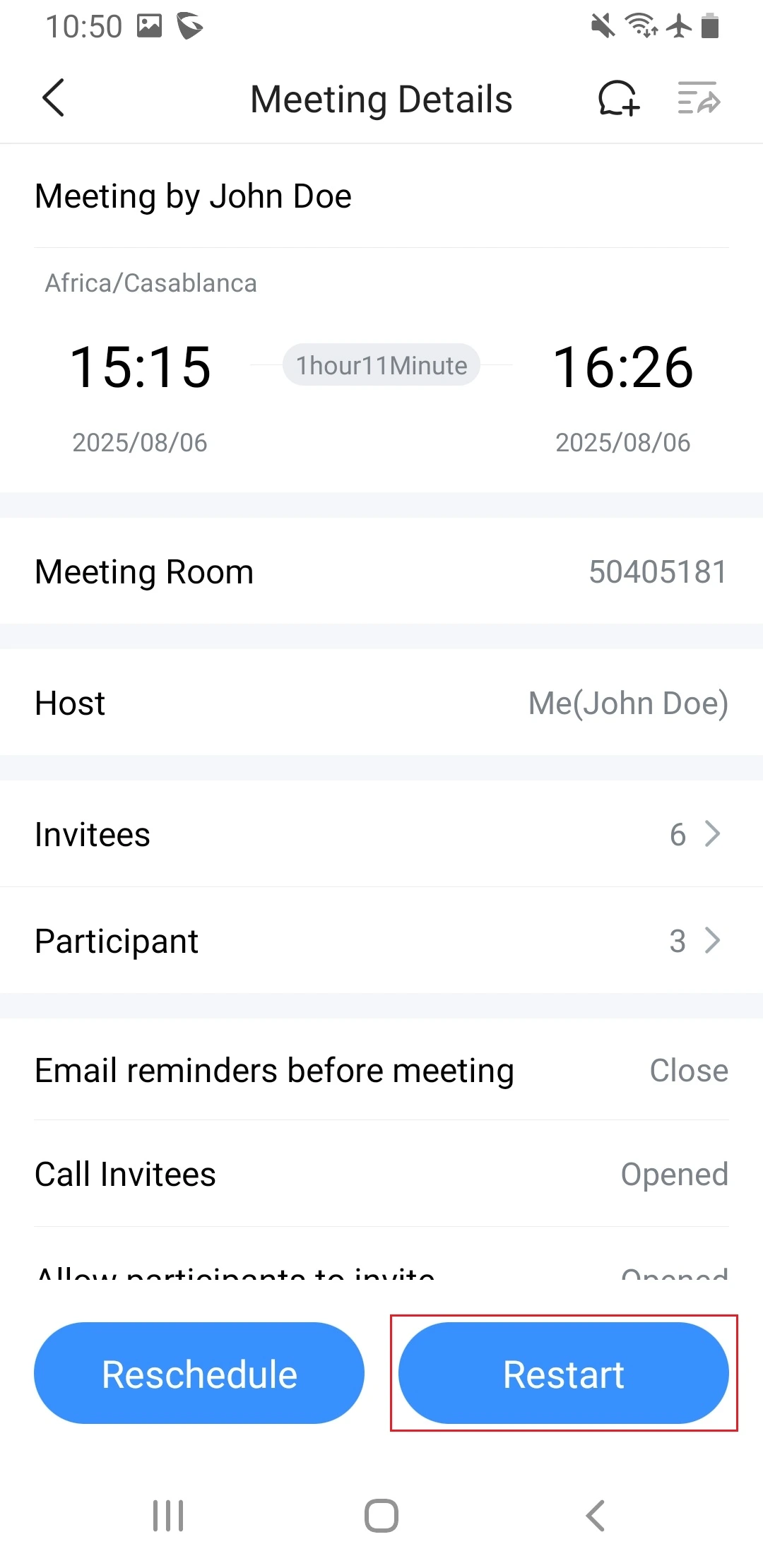
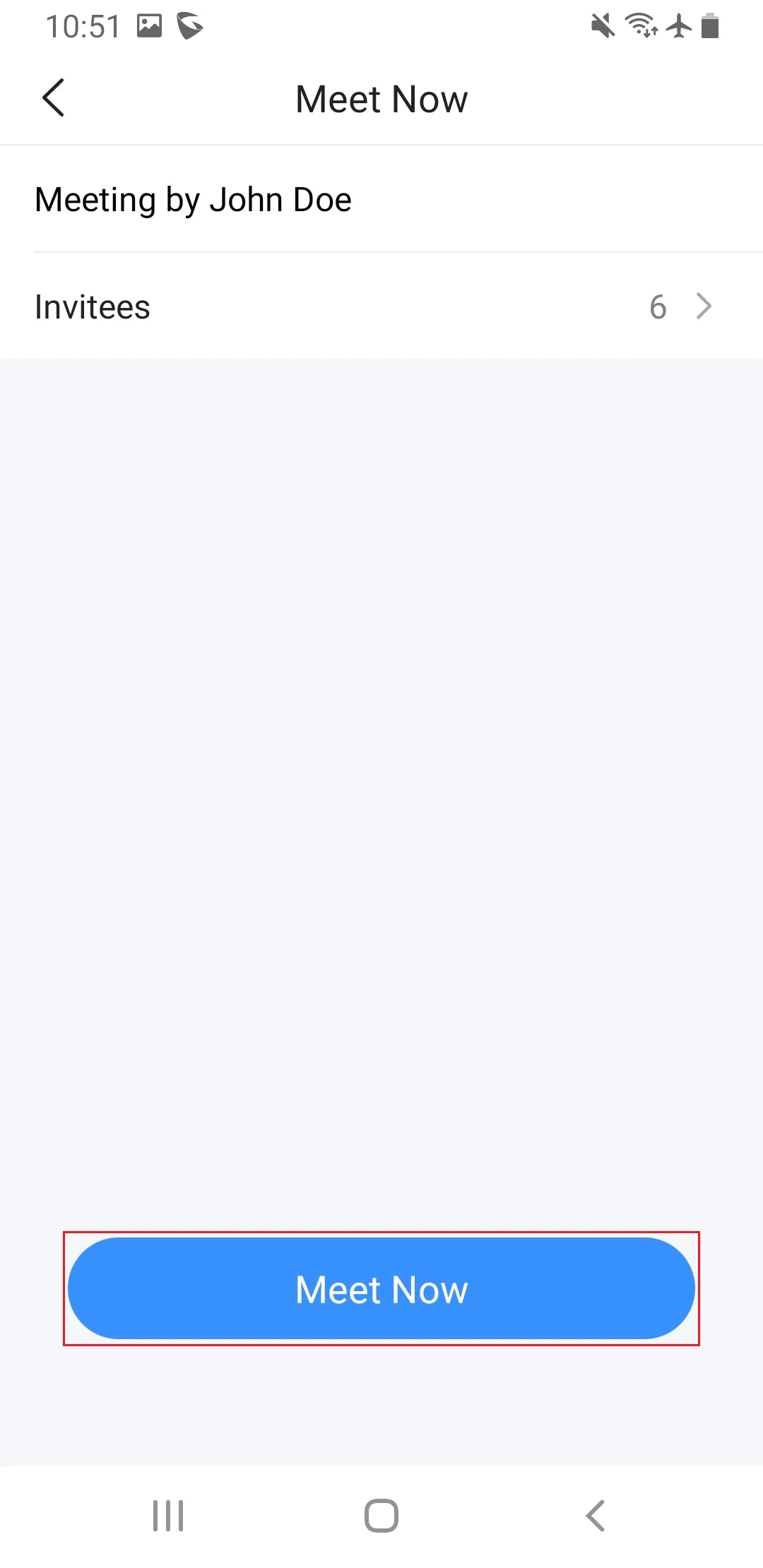
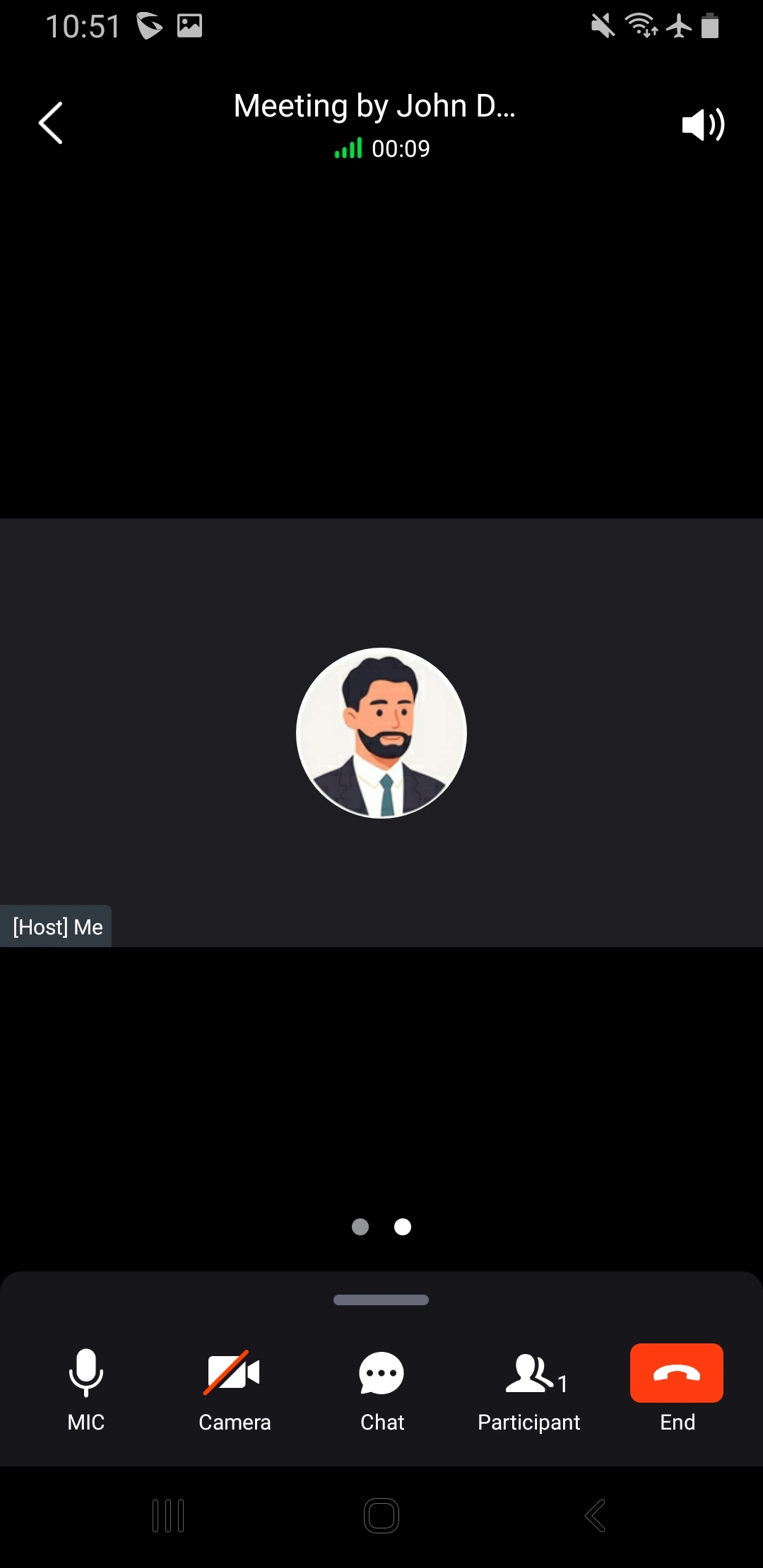
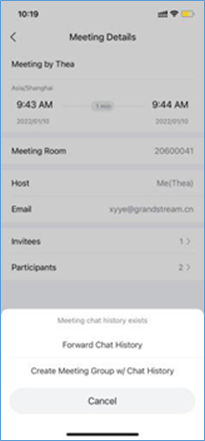
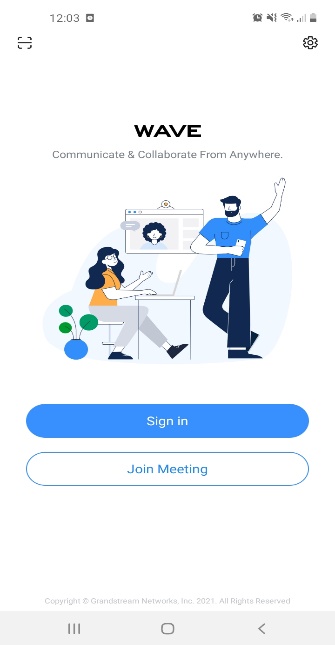
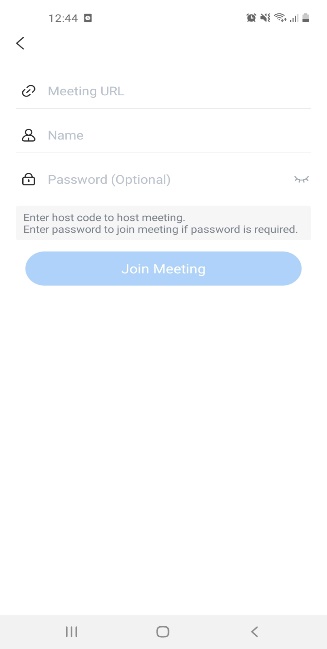
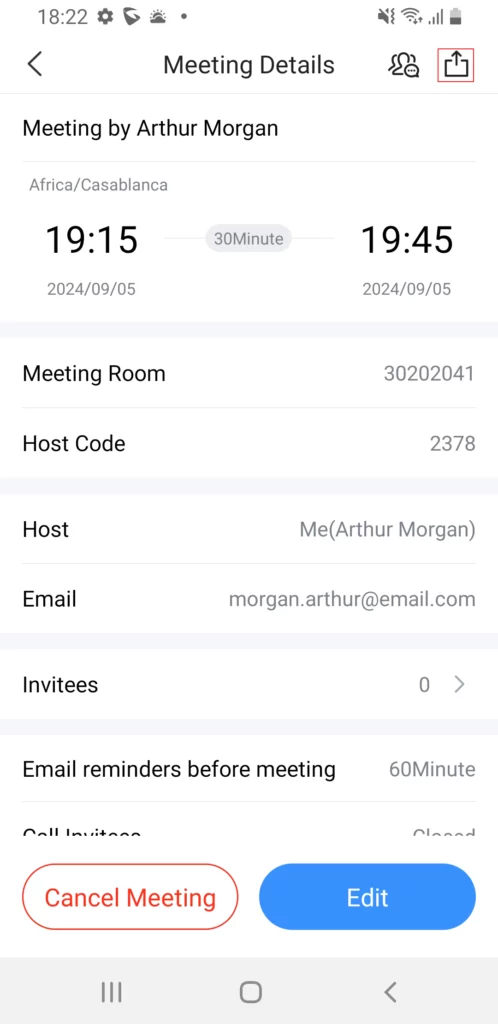
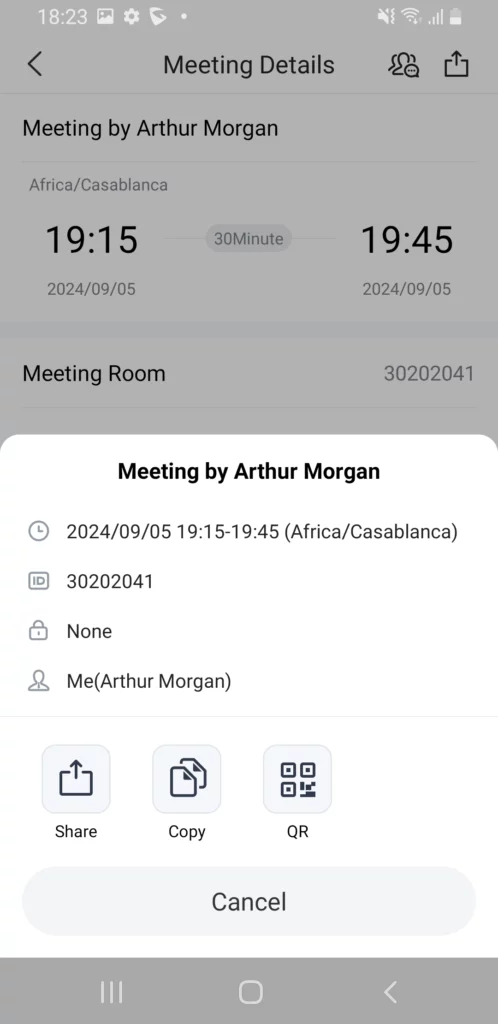
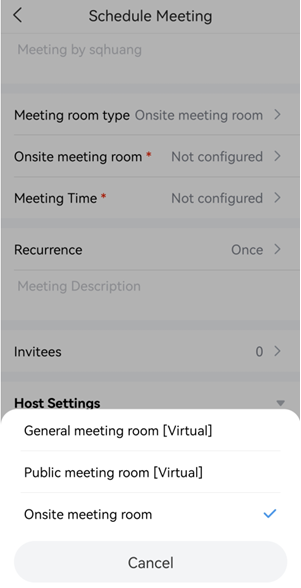
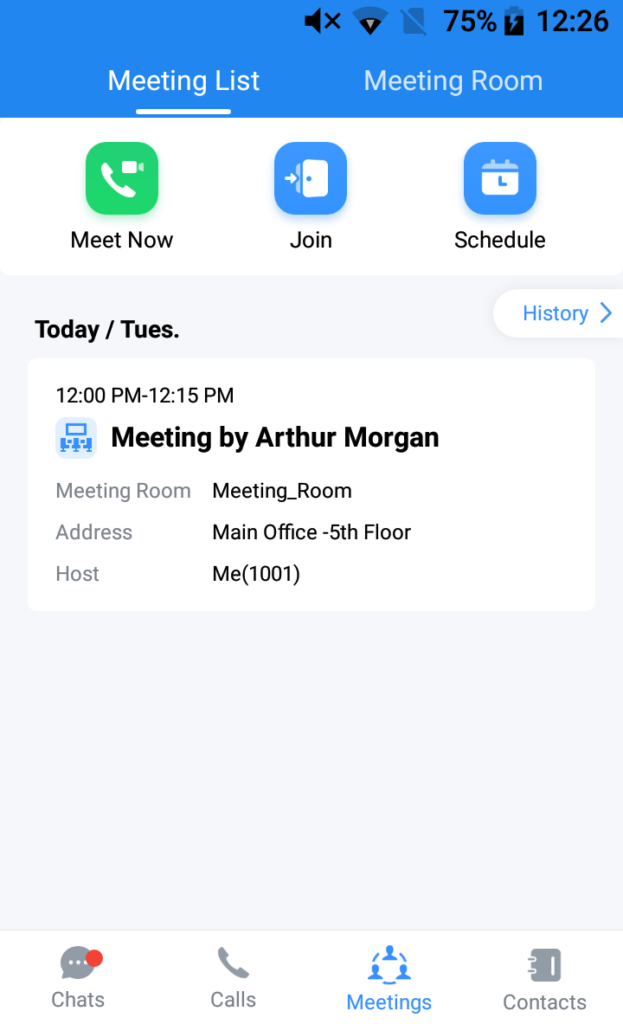
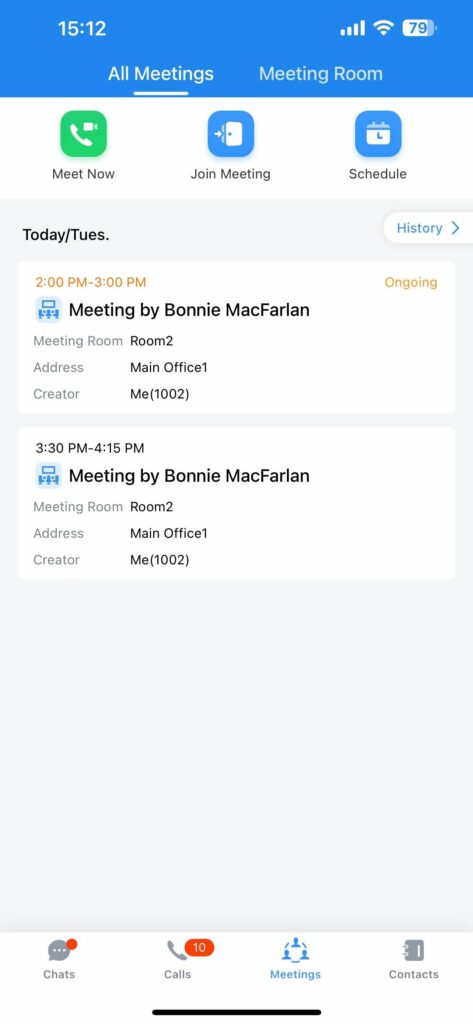
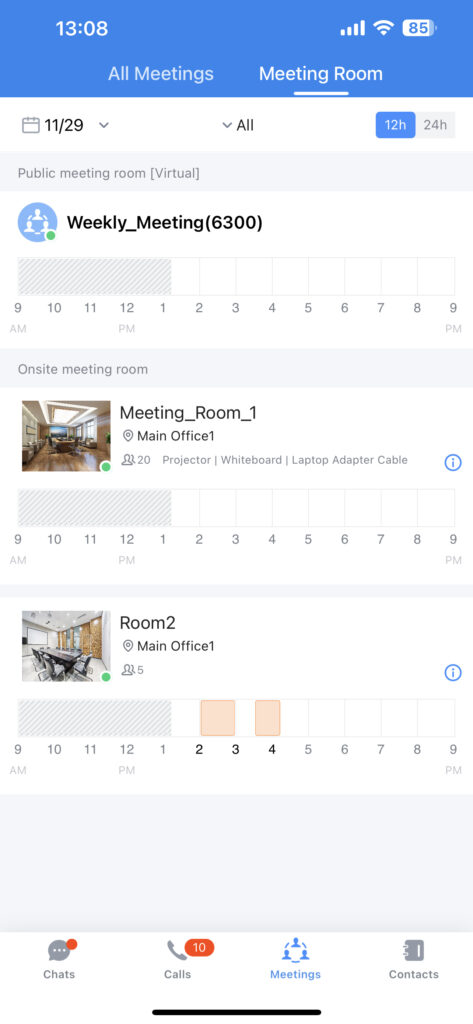
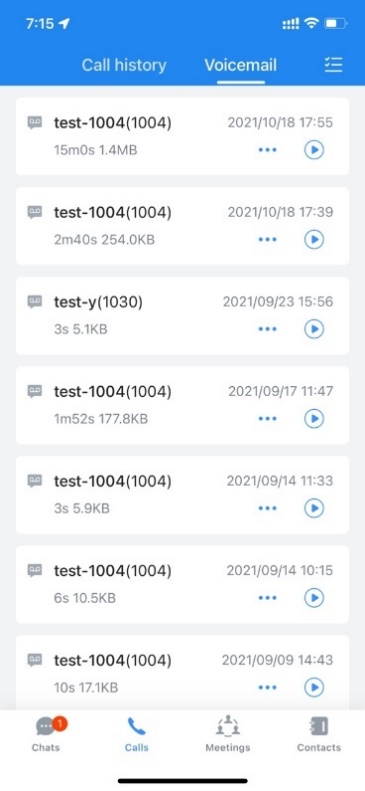
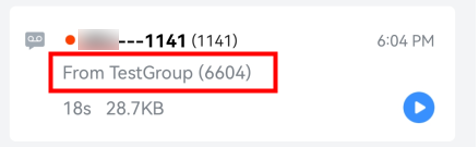
 button to select to make an audio/video call or send a chat message to the voicemail sender. As the screenshot shows on the right side: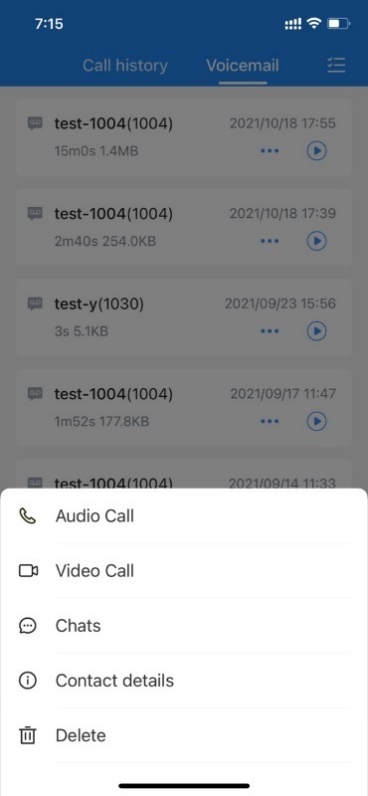
 icon and select the “DTMF” option.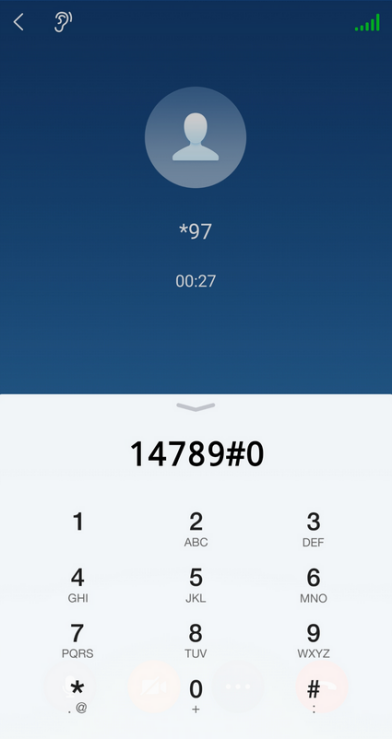
 to display contacts as the screenshot shows on the right side: In the Wave app, users can click the “Contacts” menu to view all contacts, favorites, LDAP contacts, local UCM contacts, and CloudIM contacts.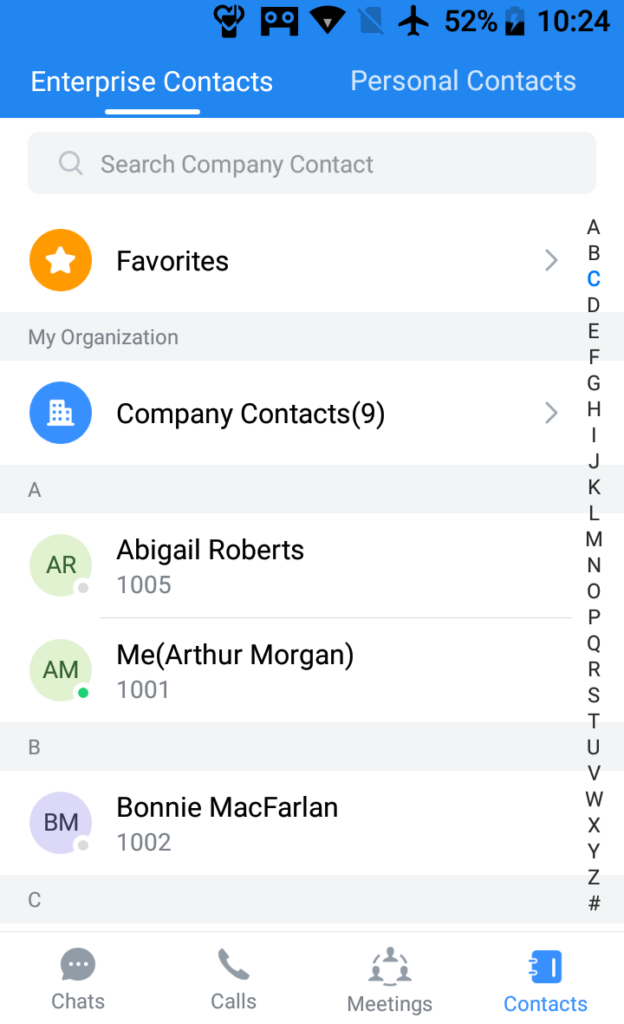
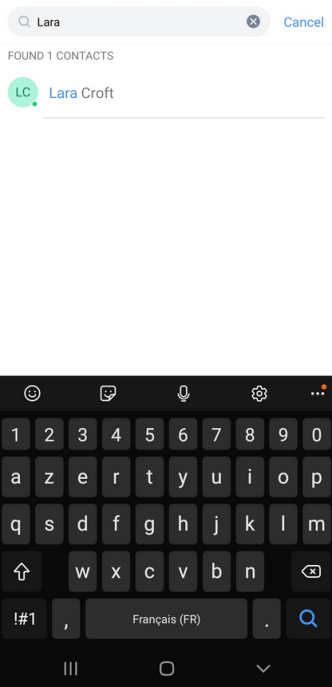
 : Initiate audio call
 : Initiate video call
 : Open the dial pad to edit the contact’s number before dialing
 : Chat with the contact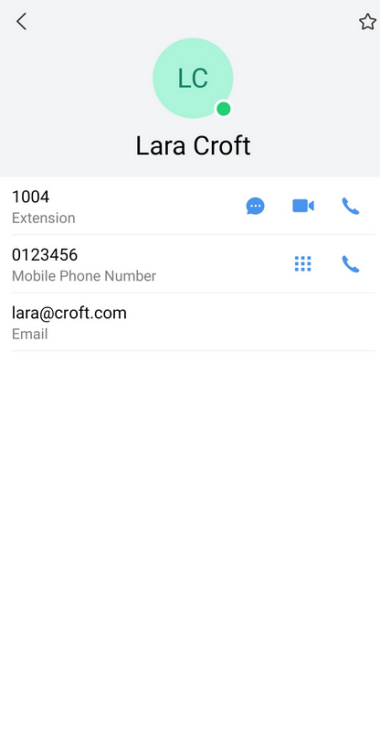
 at the top right of the interface, and when the button changes to
  , the contact will be set as a favorite contact.
 to remove the contact from favorites.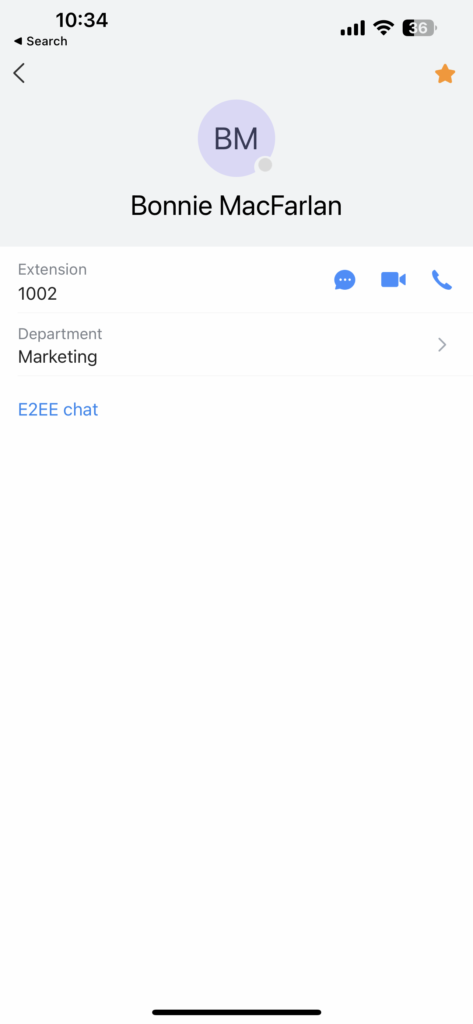
 at the top of the contact list to enter the favorites management interface, as shown on the right.
 at the bottom right corner of the interface to enter the contact selection page.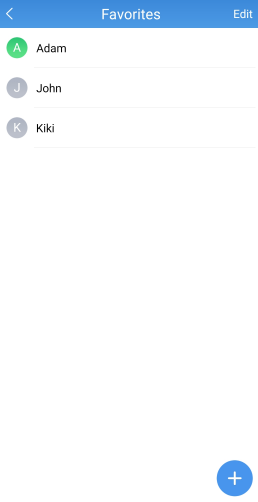


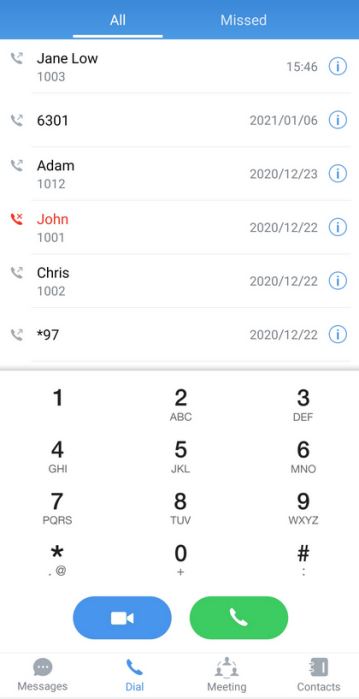
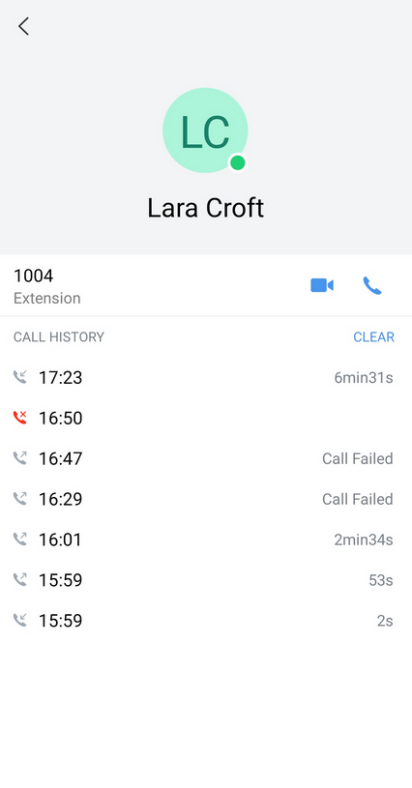
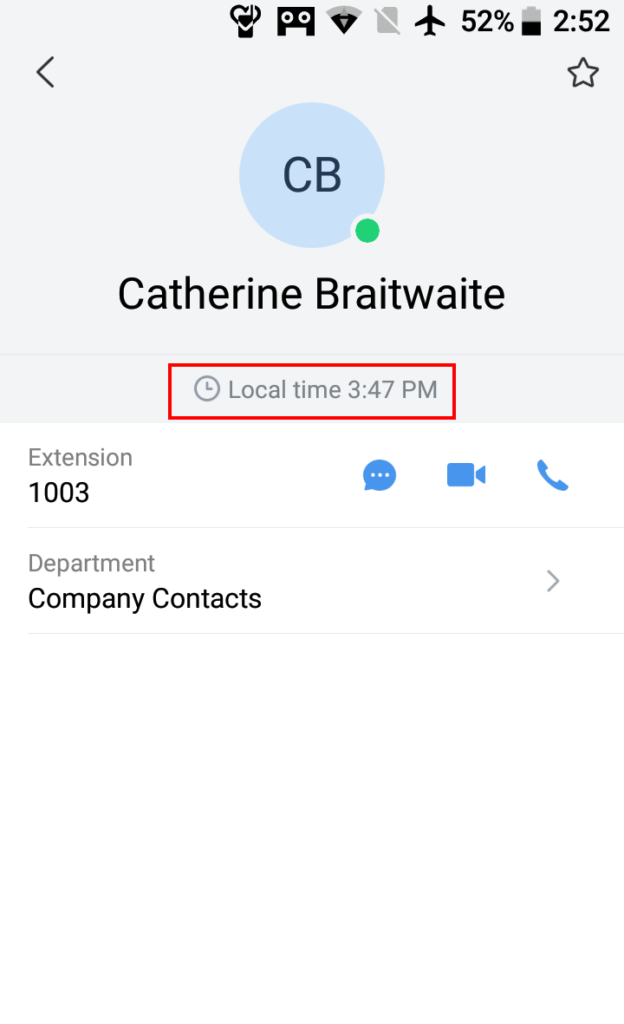
 then add the contact’s information in the form, which can be seen in the figure below.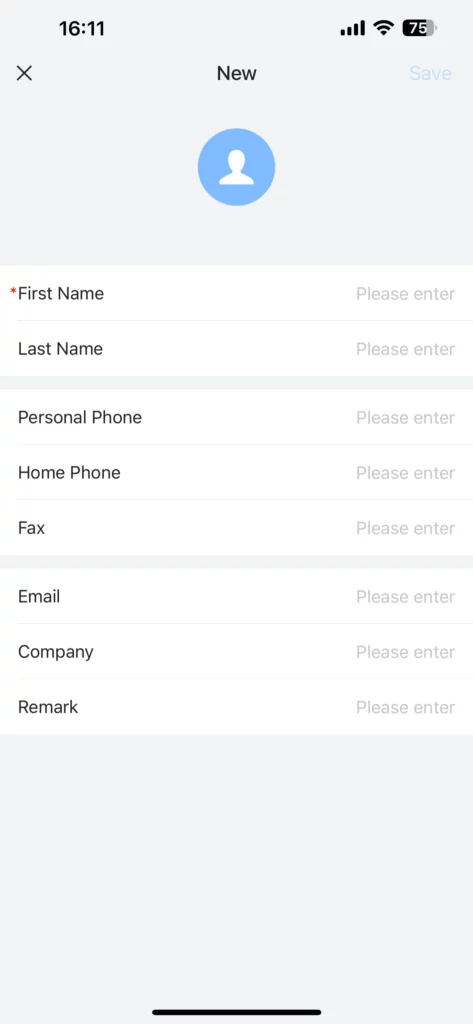
 .
.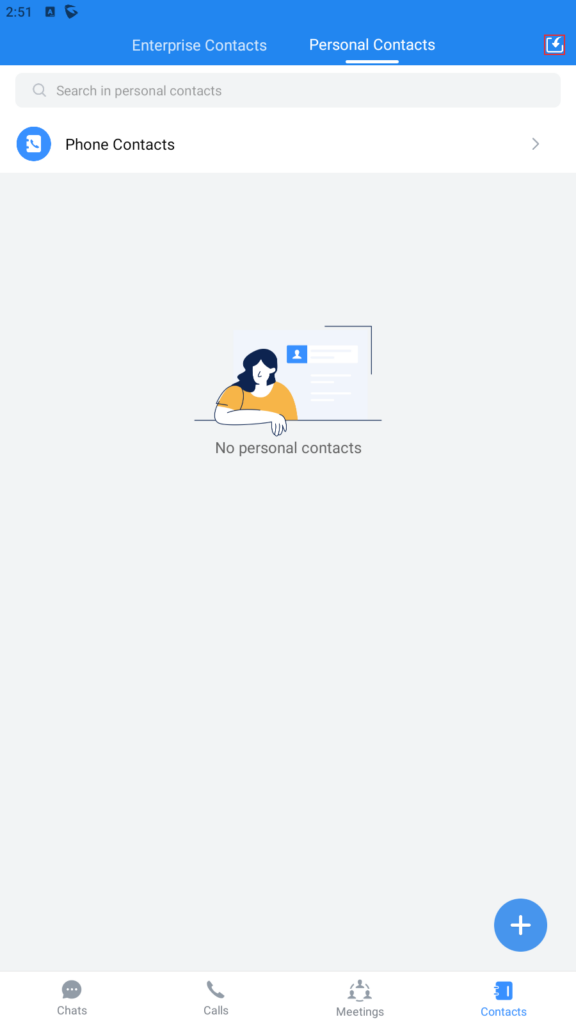
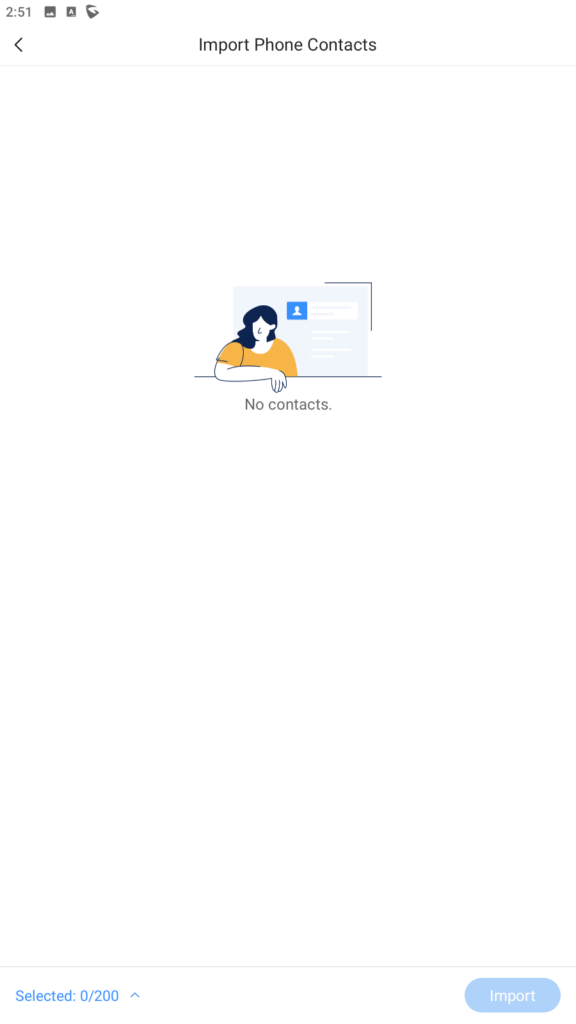
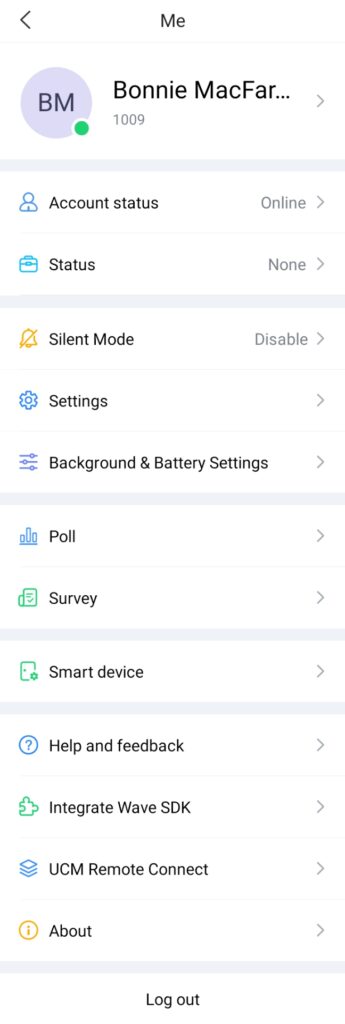
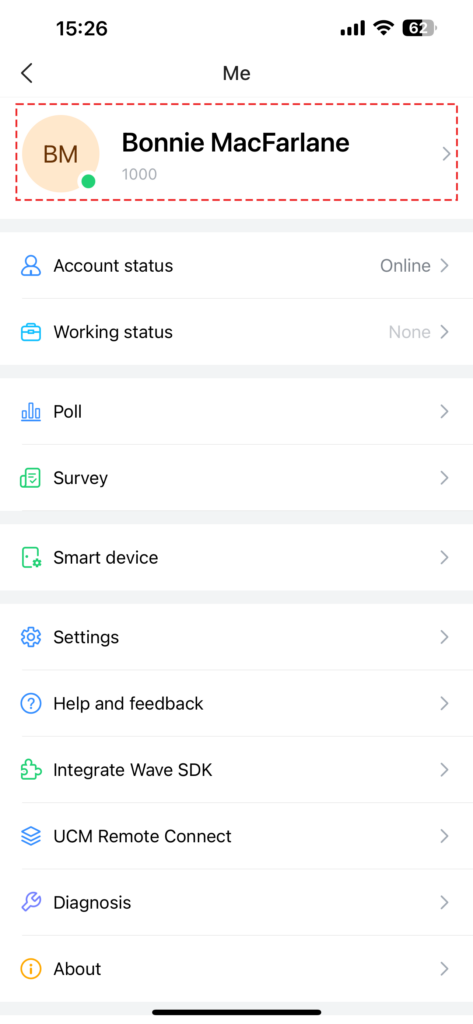
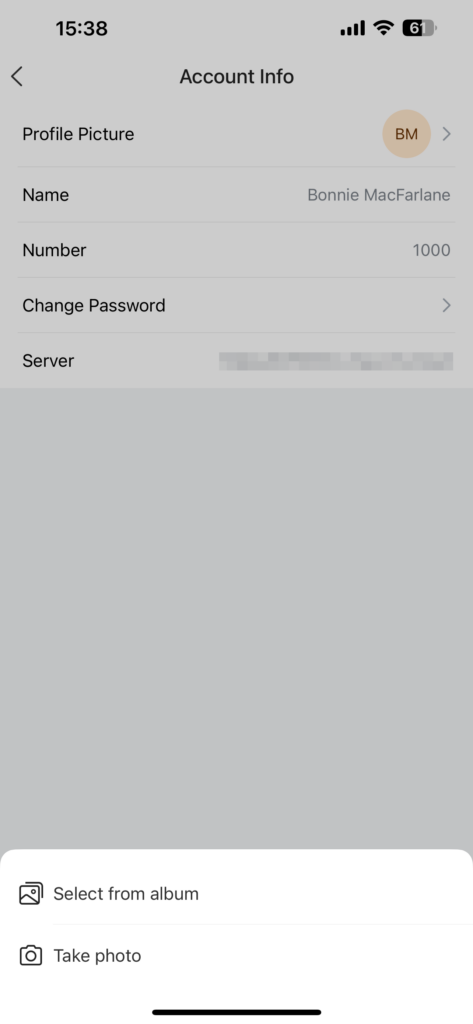


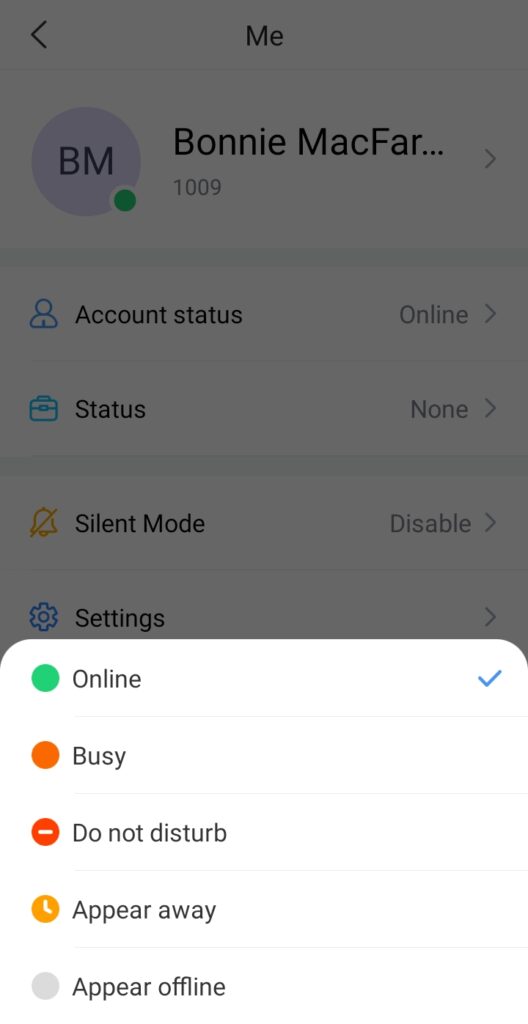
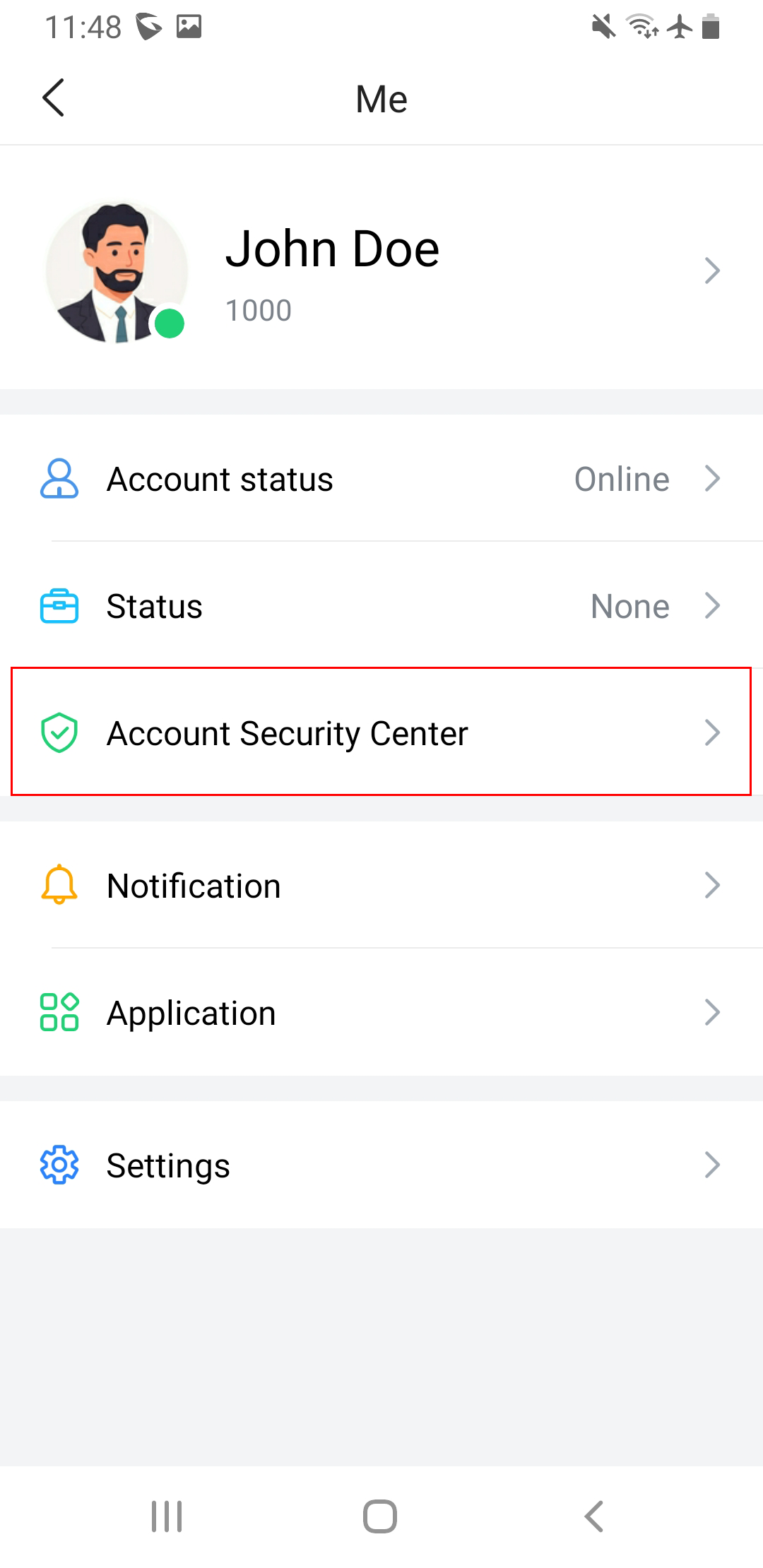
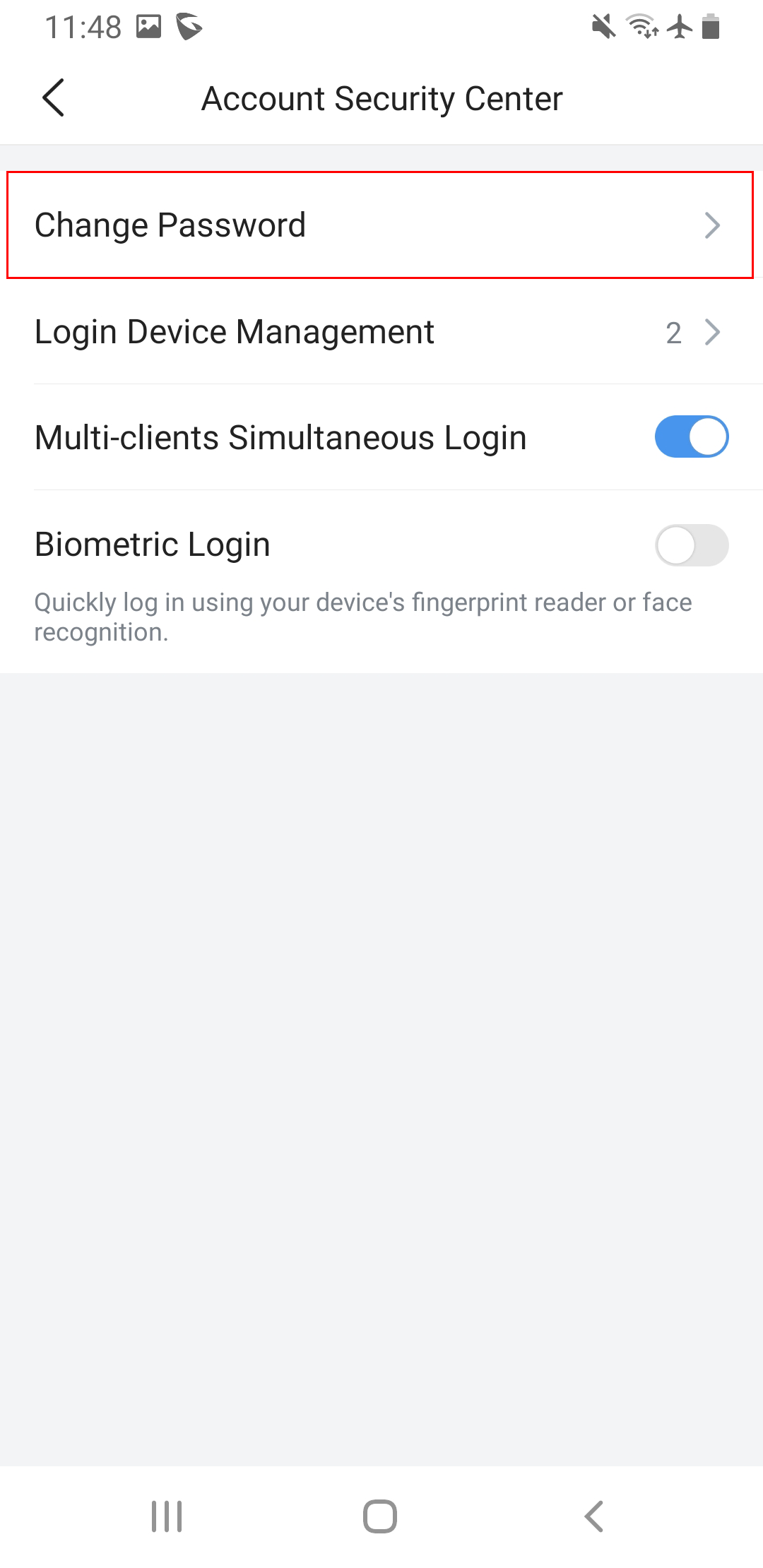
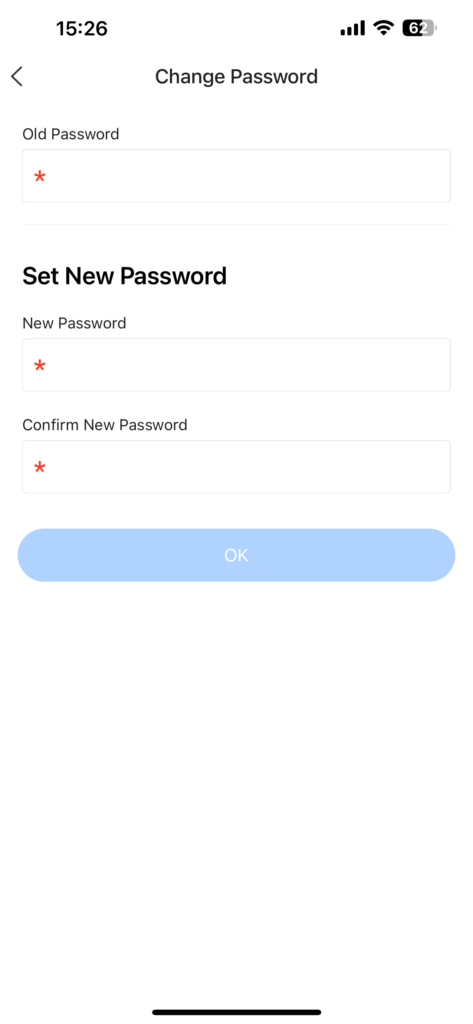
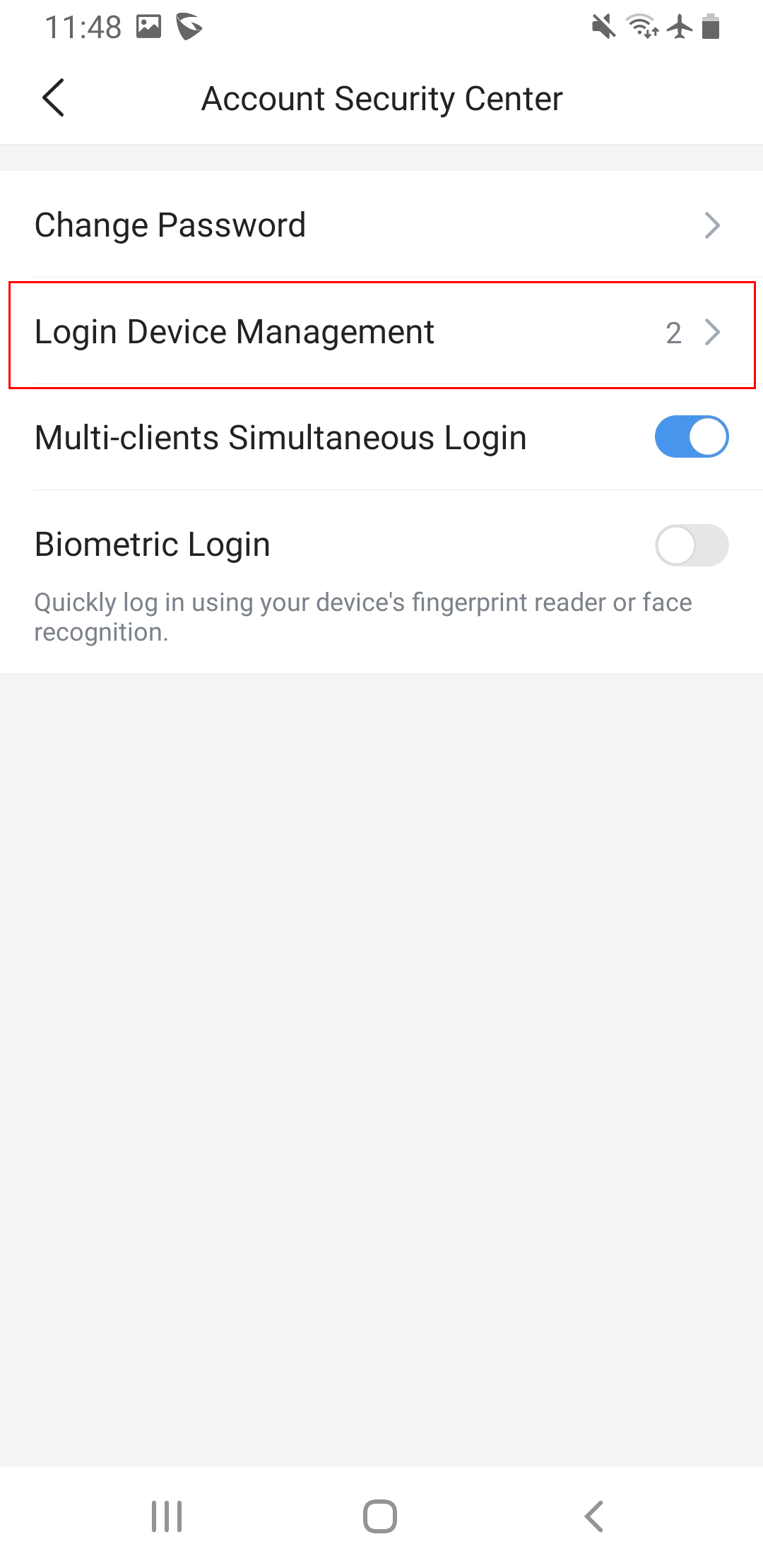
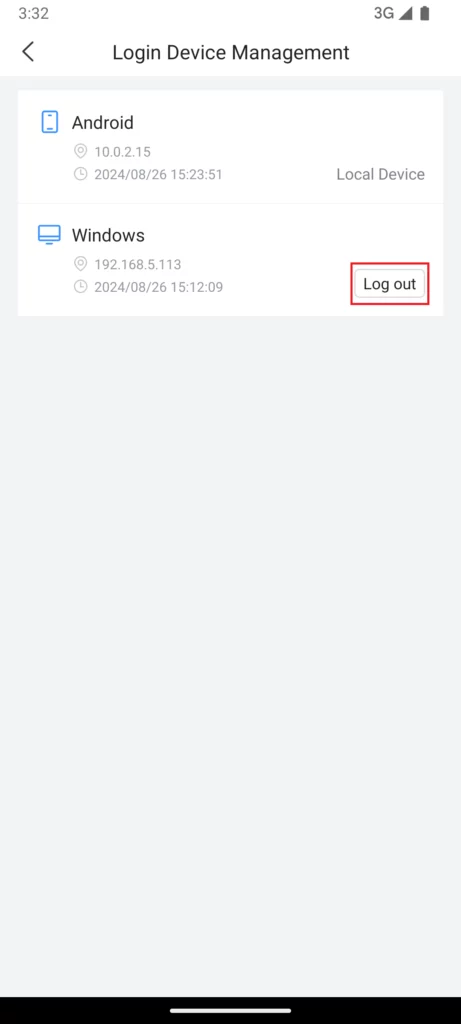
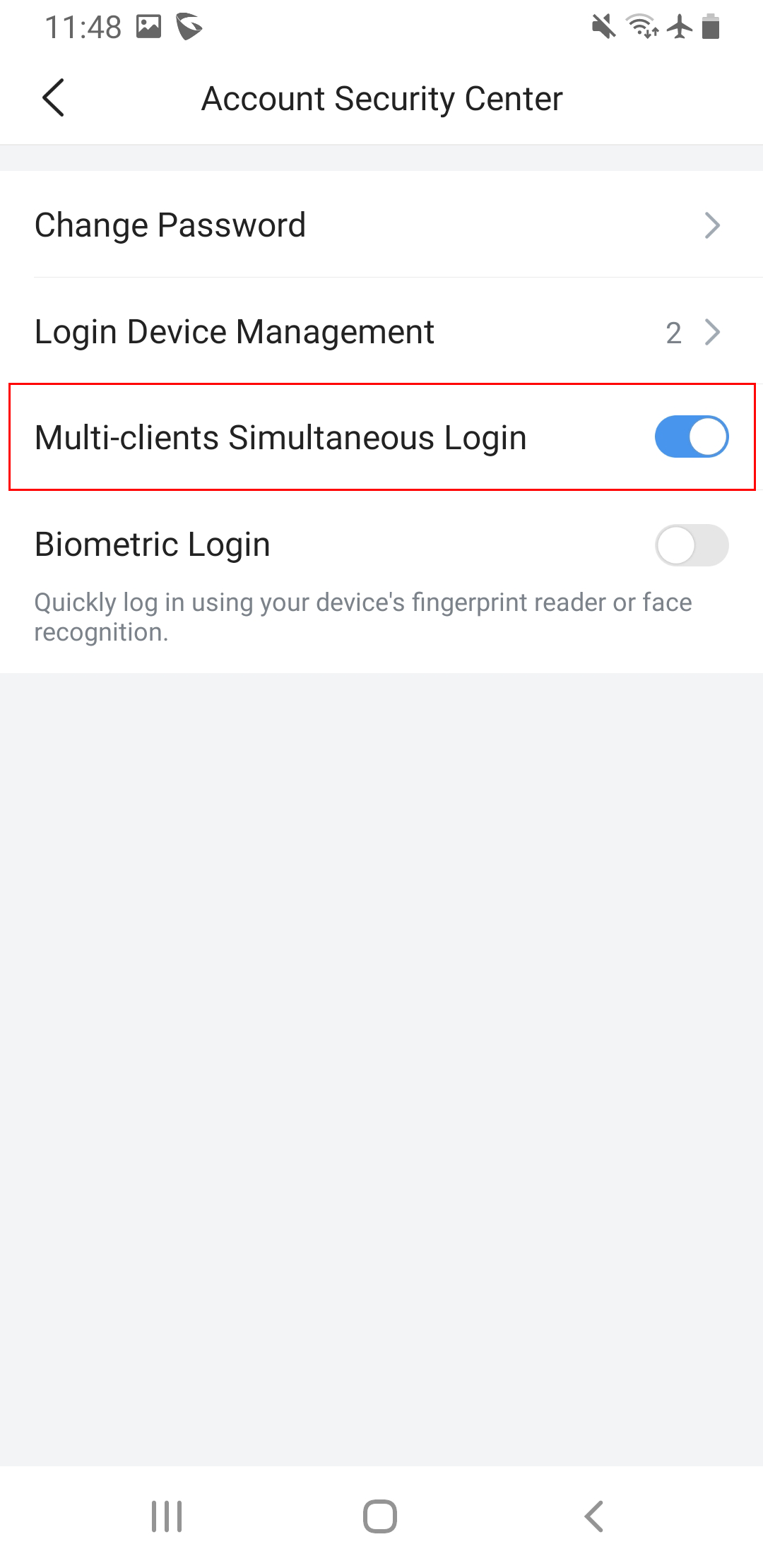
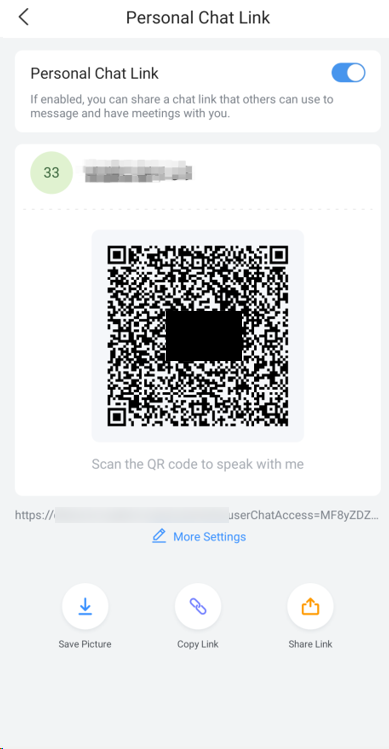


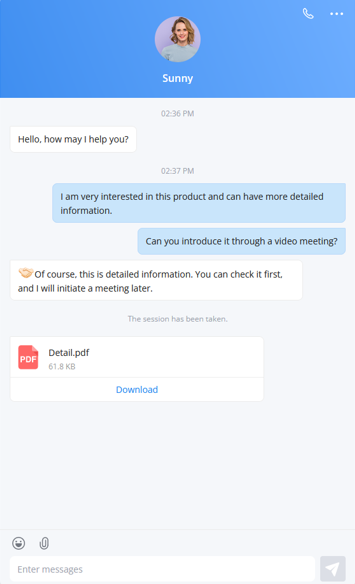


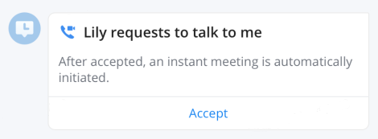
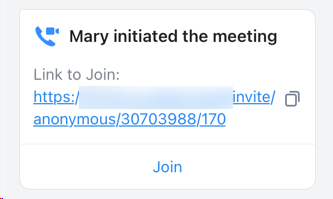
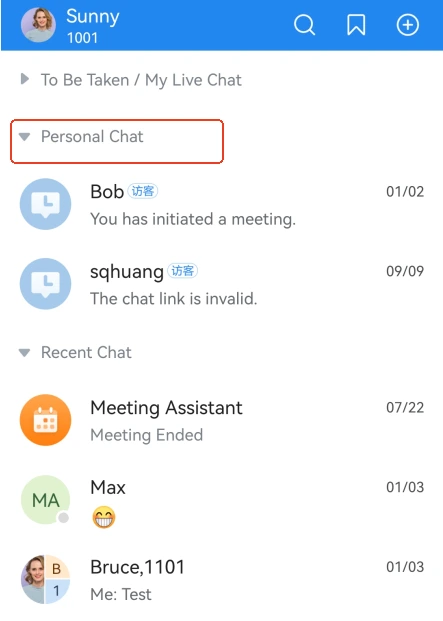
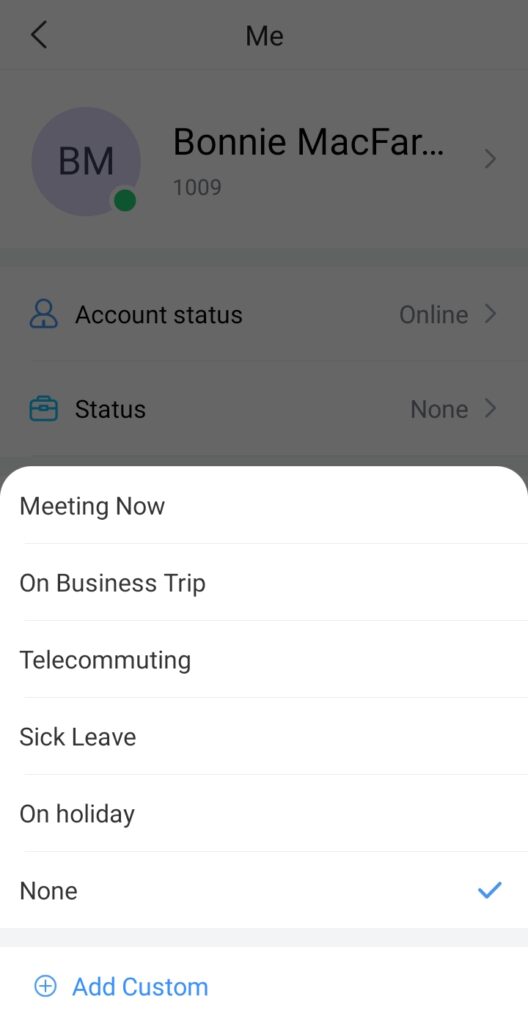
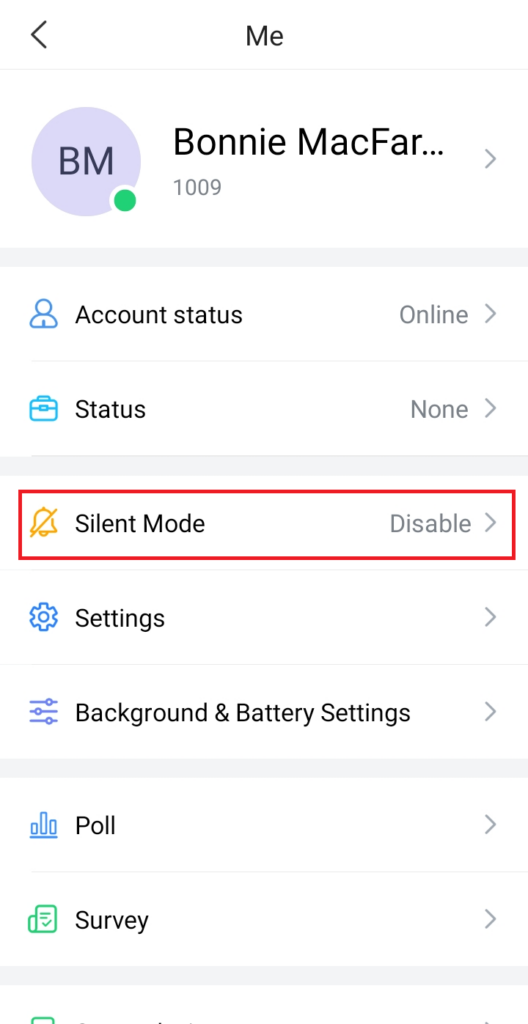
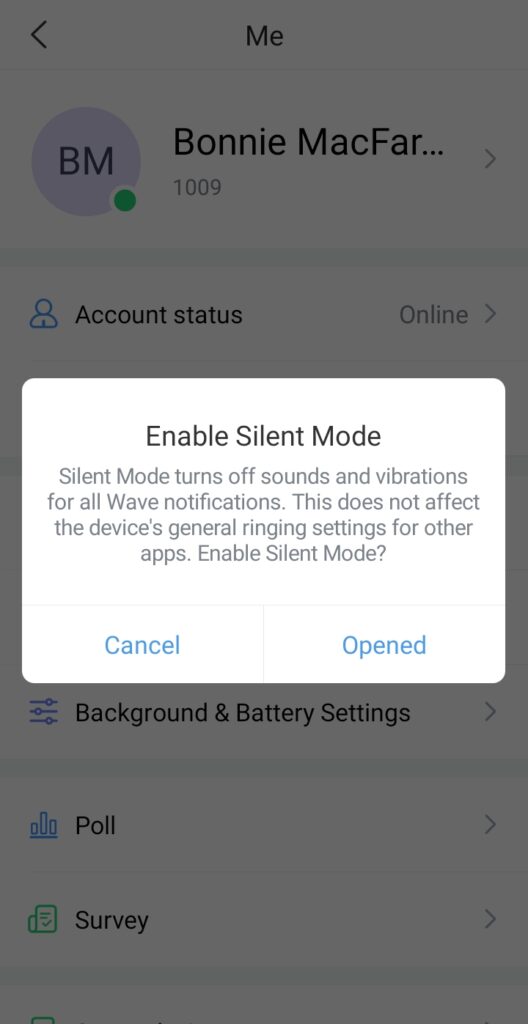
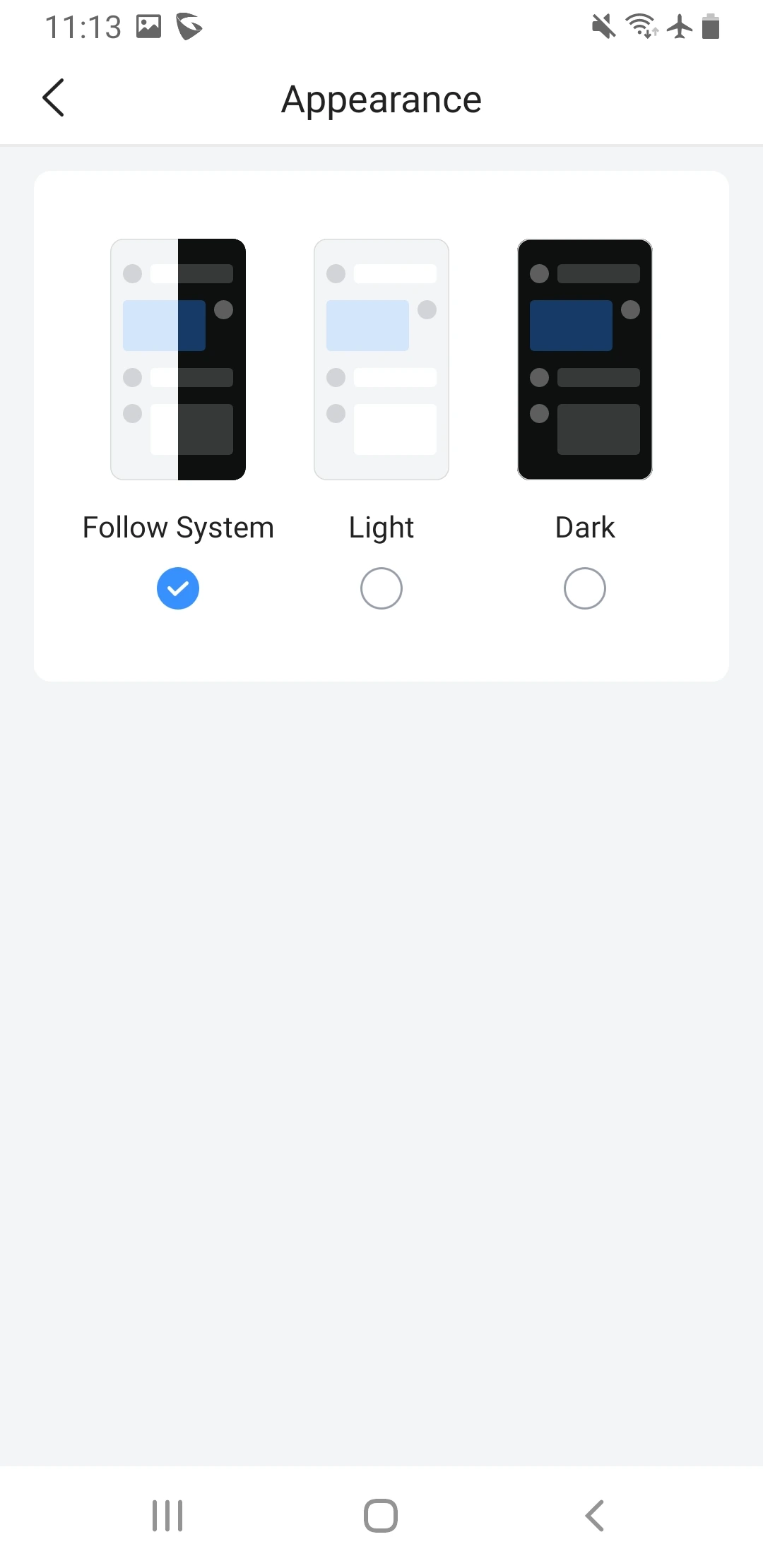
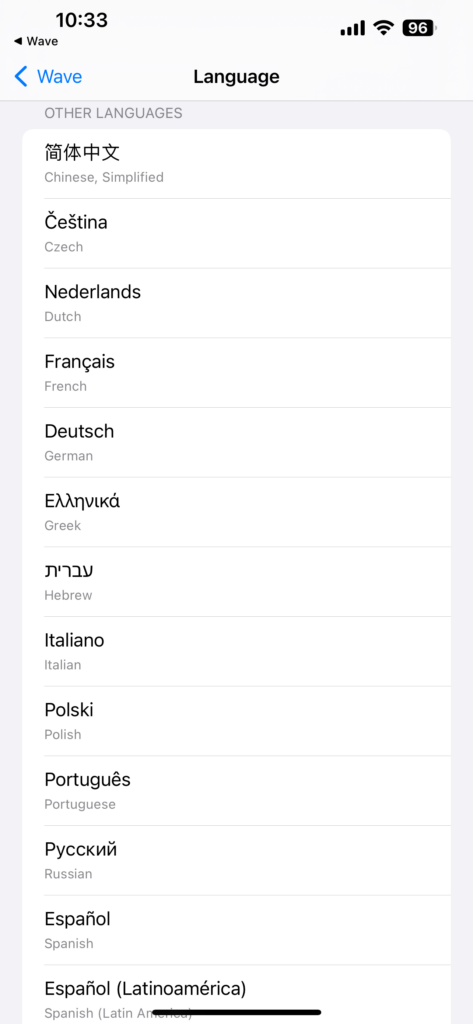
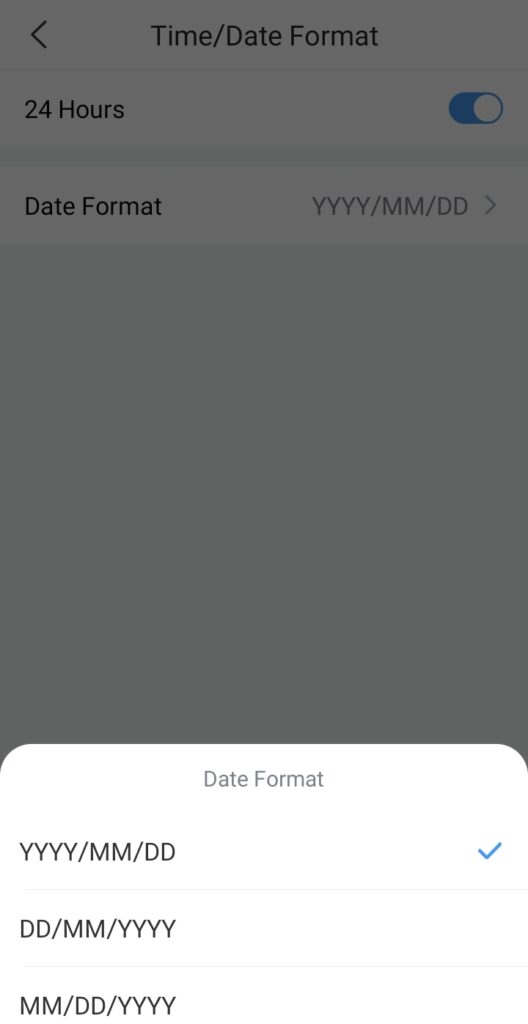
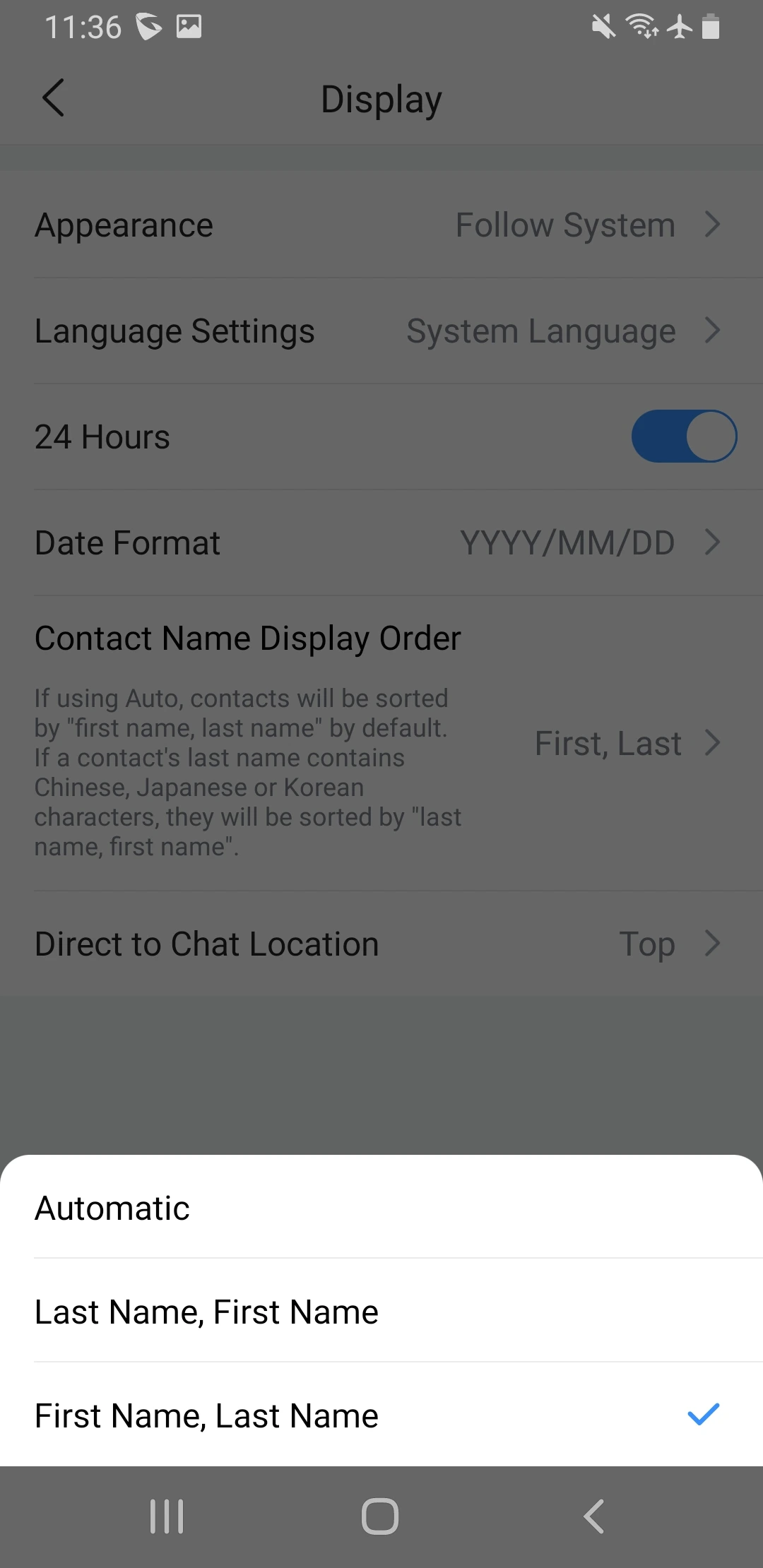
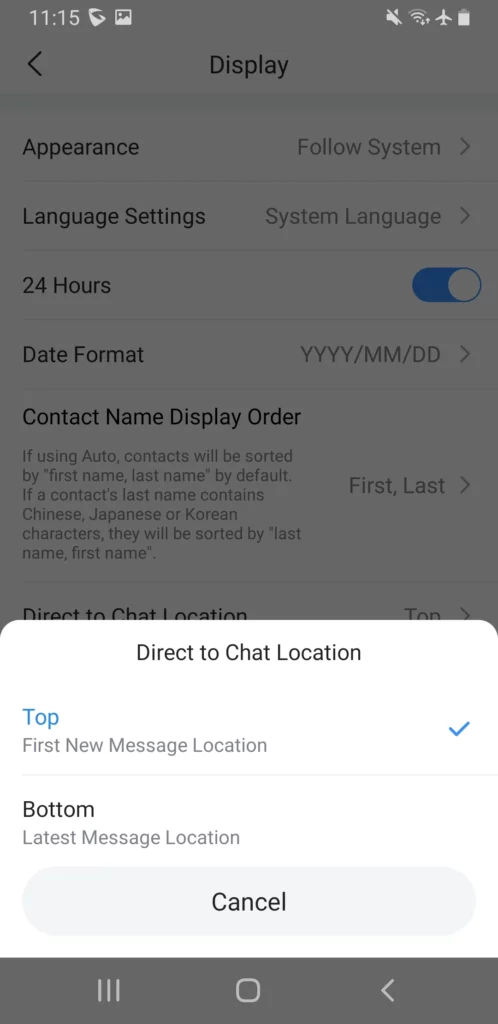
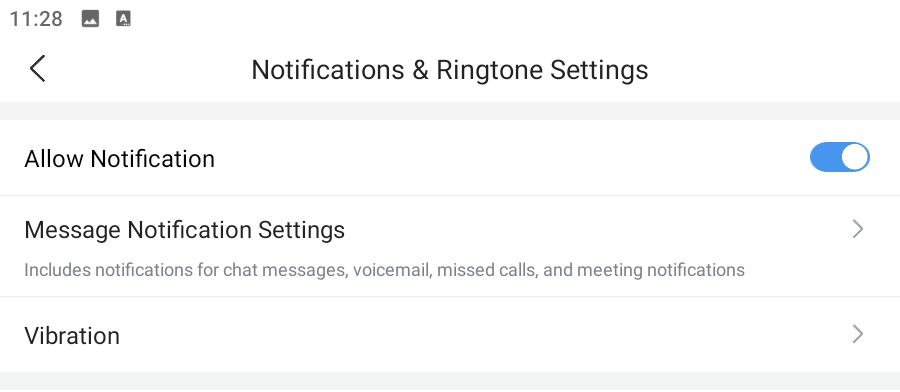
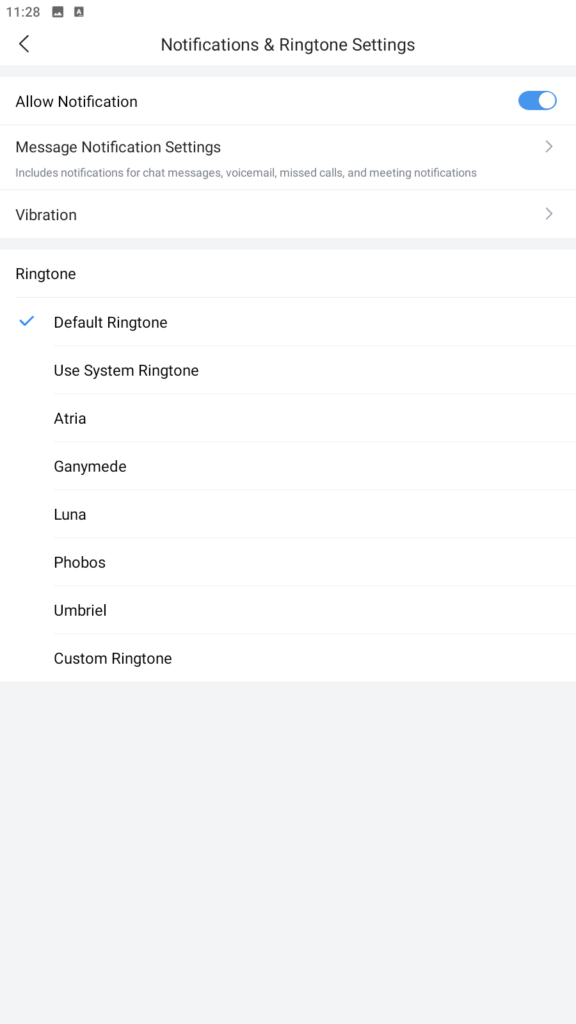
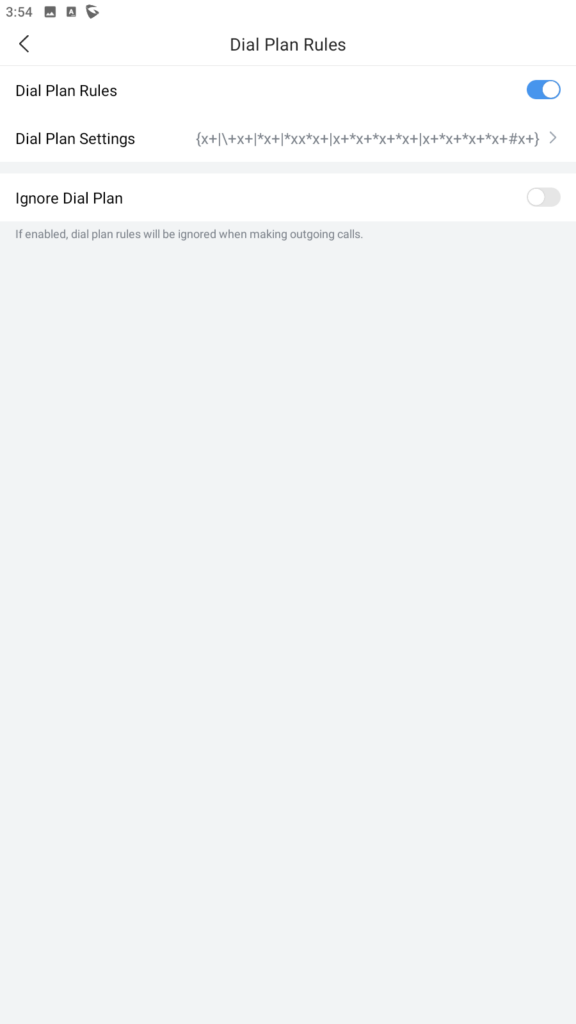
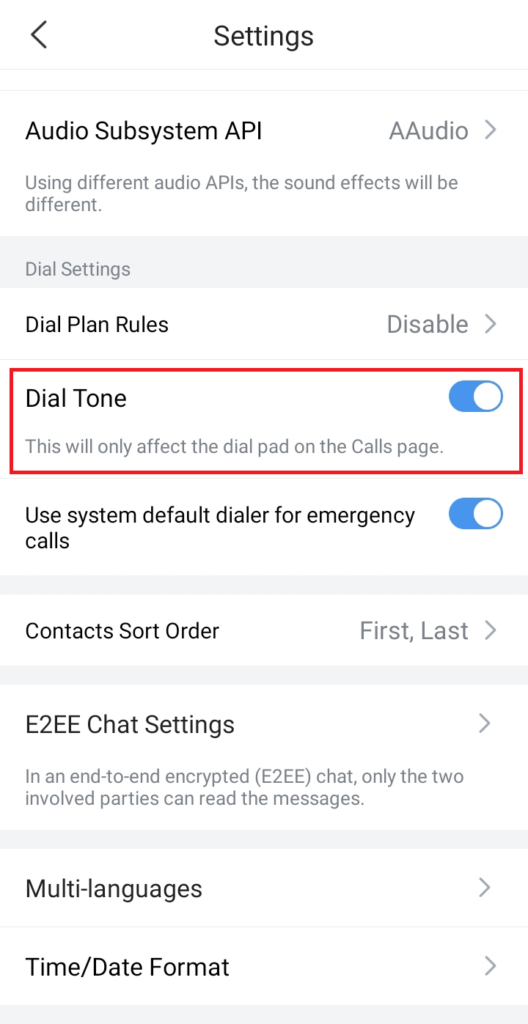
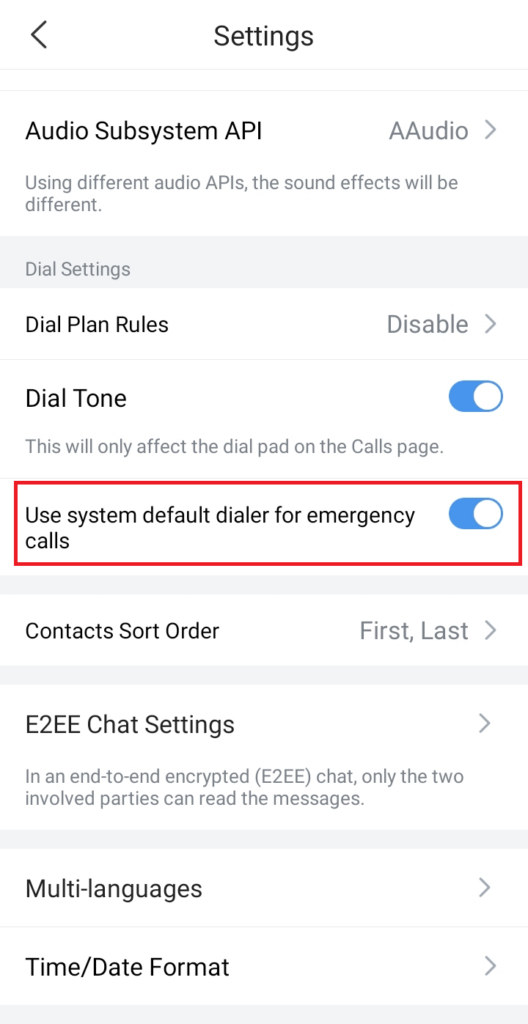
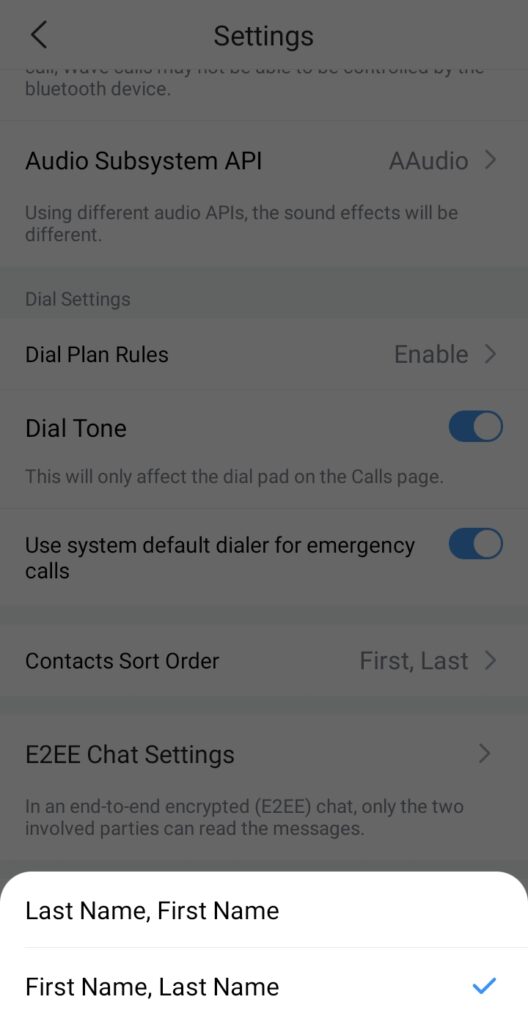
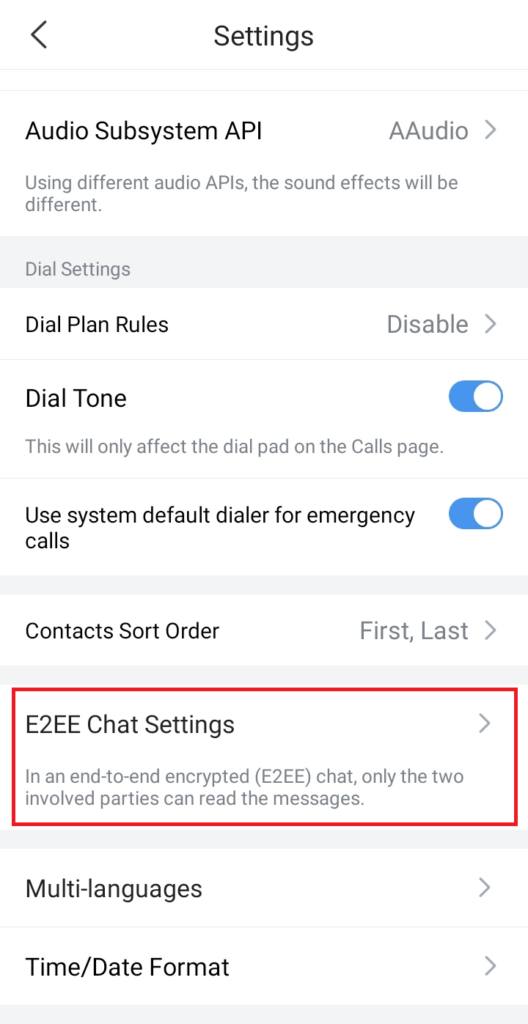
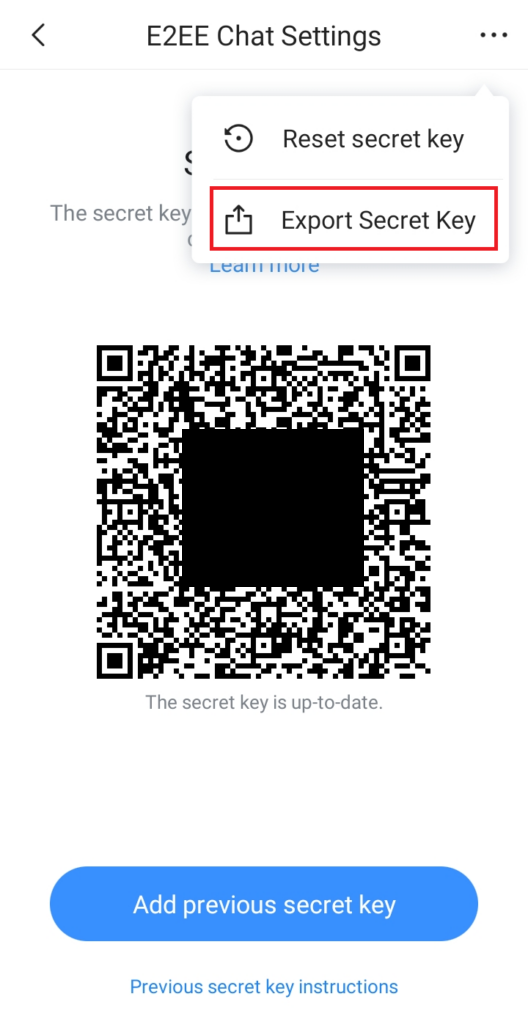
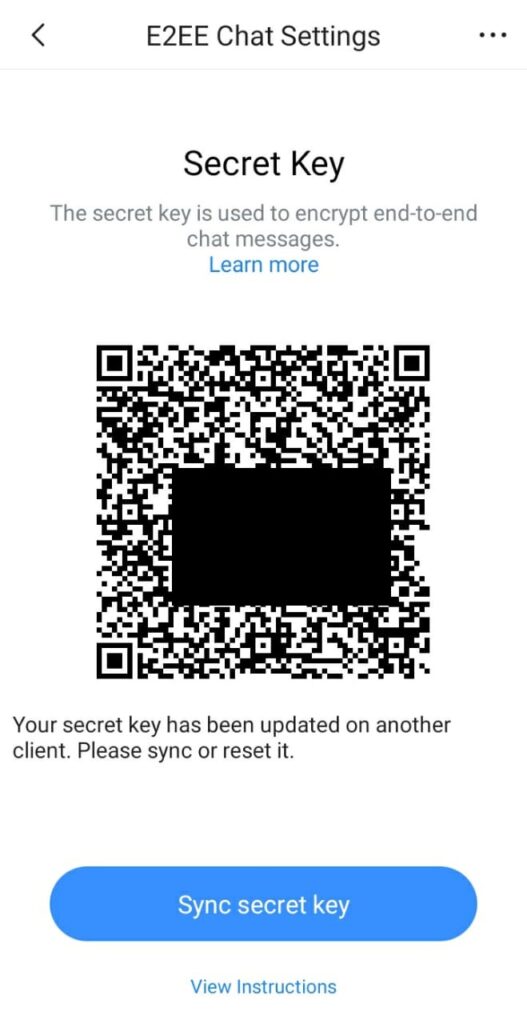
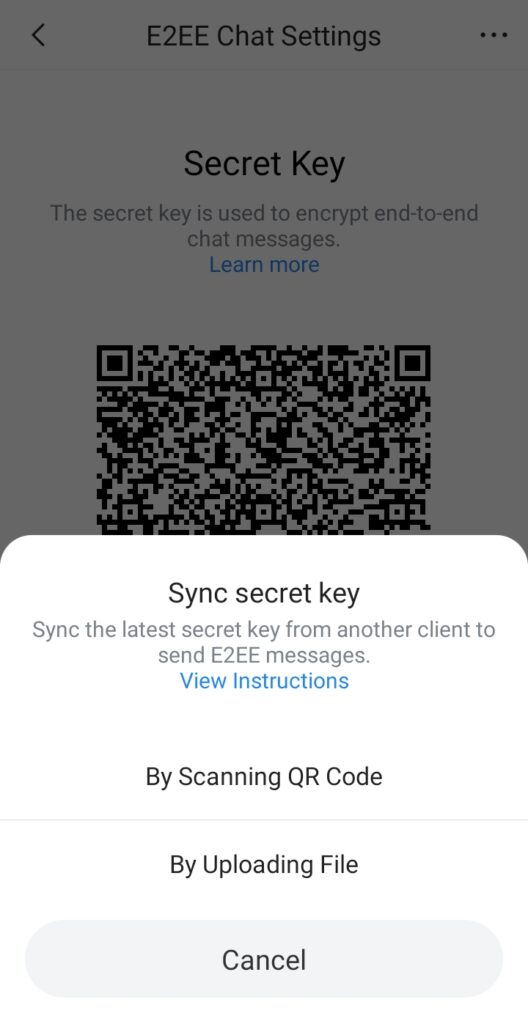
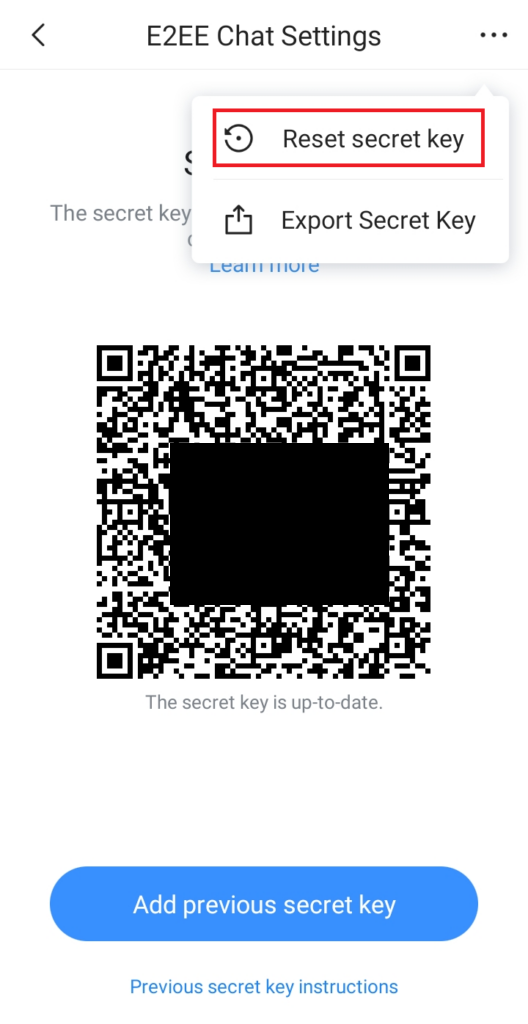
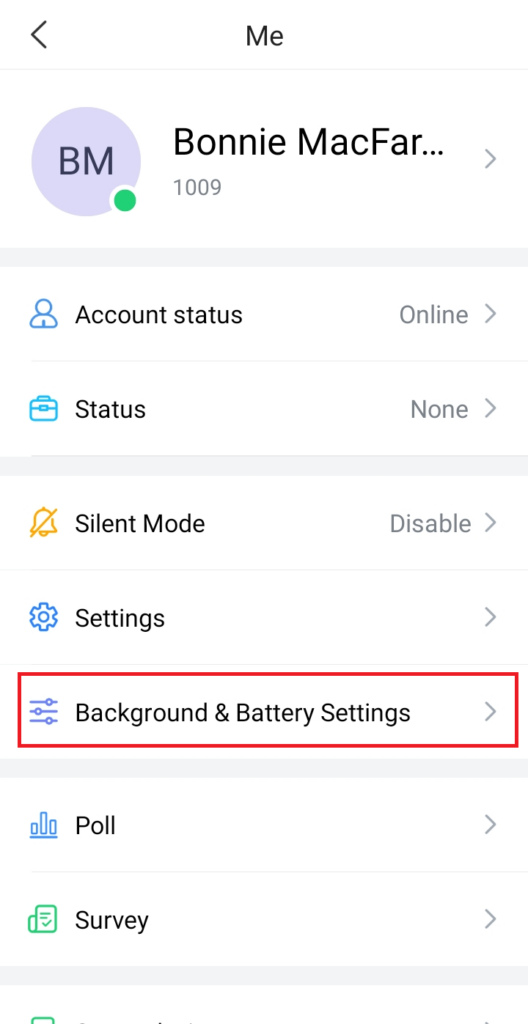
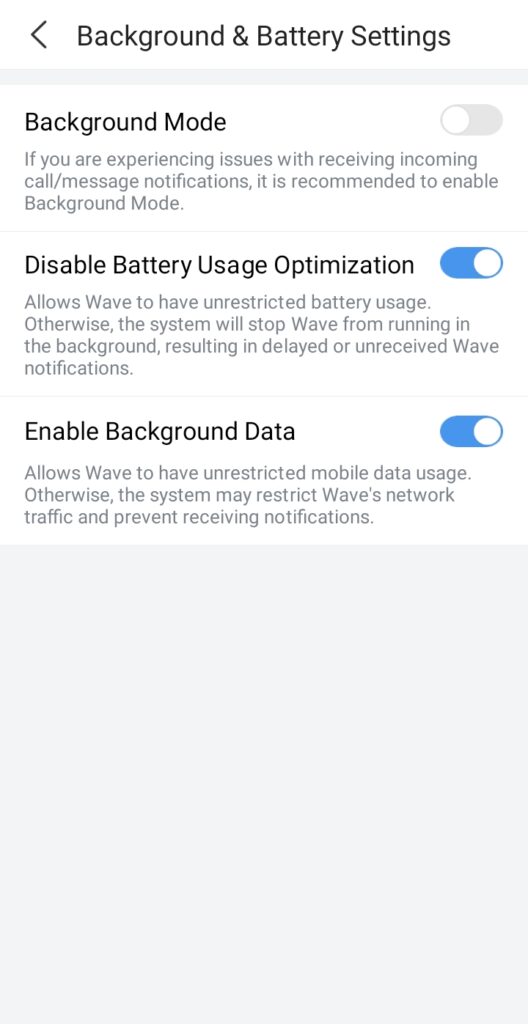
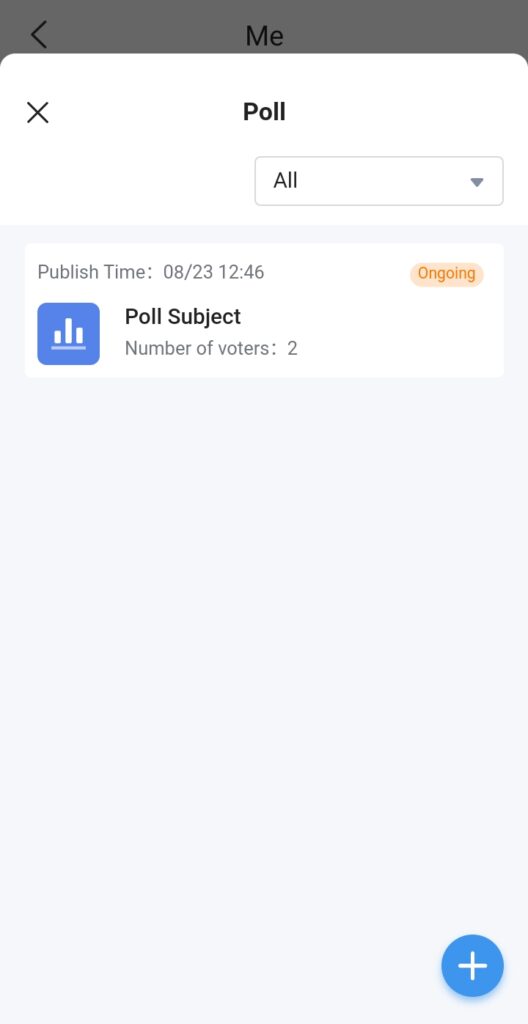
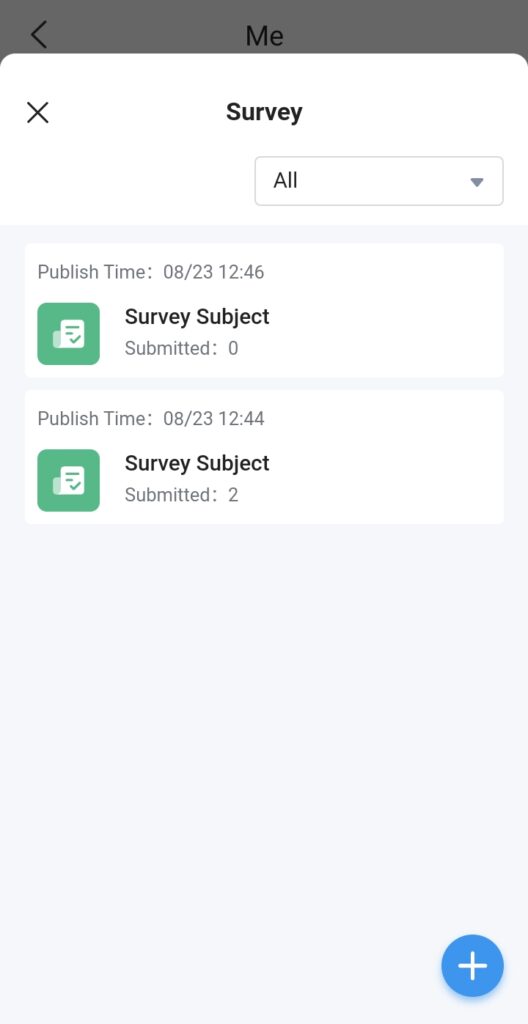
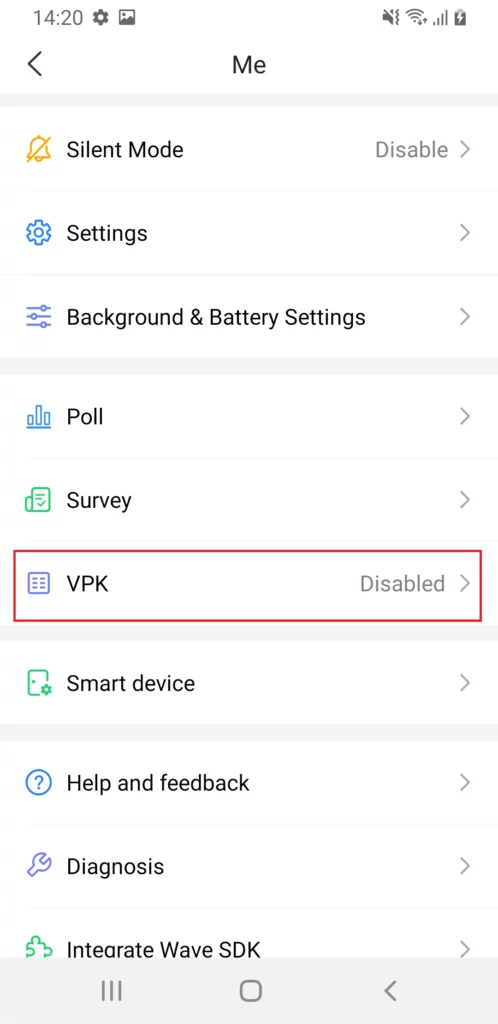
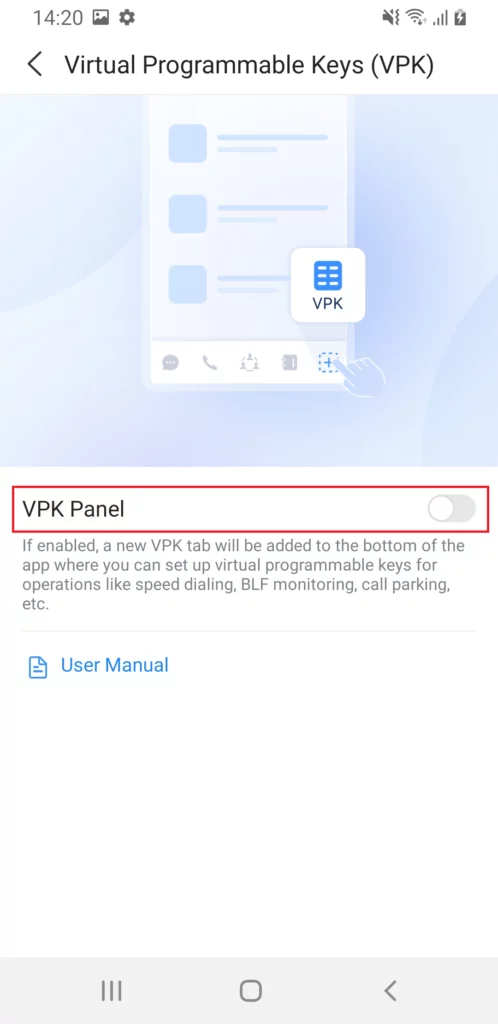
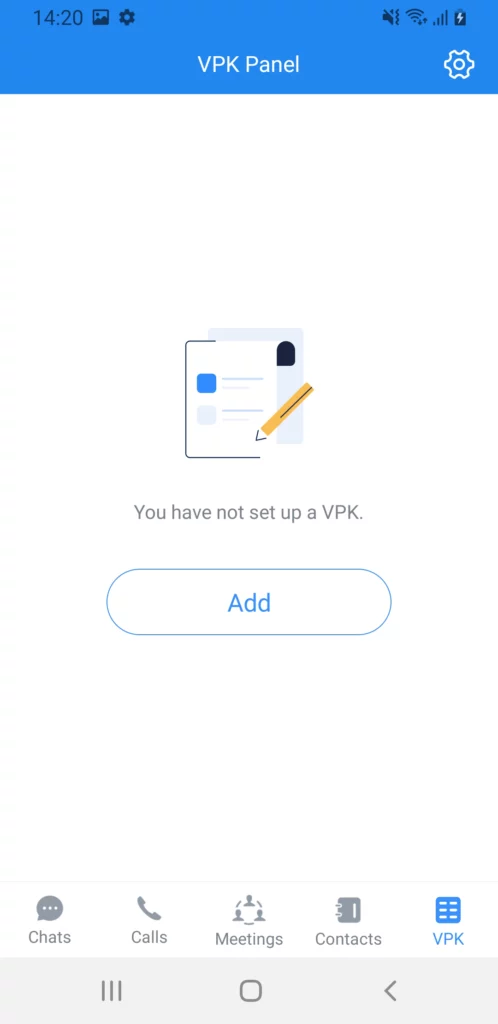
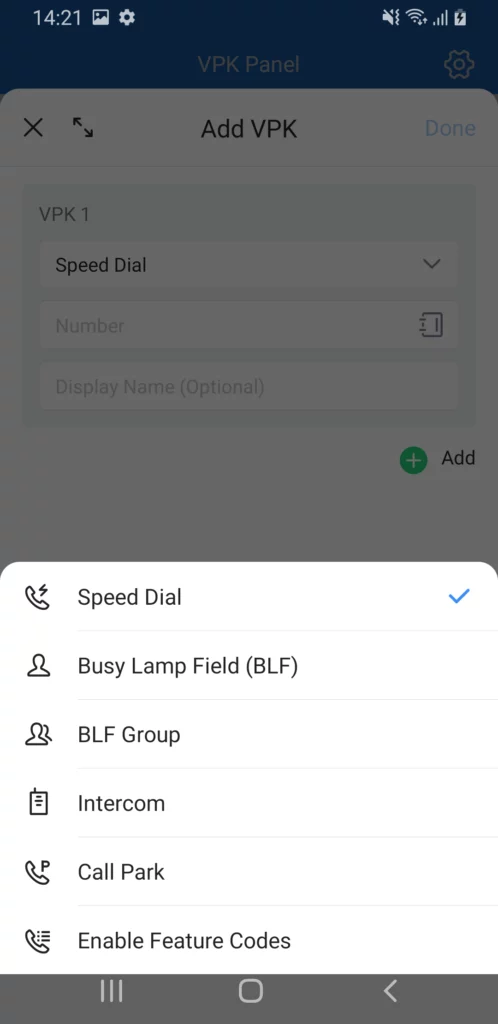
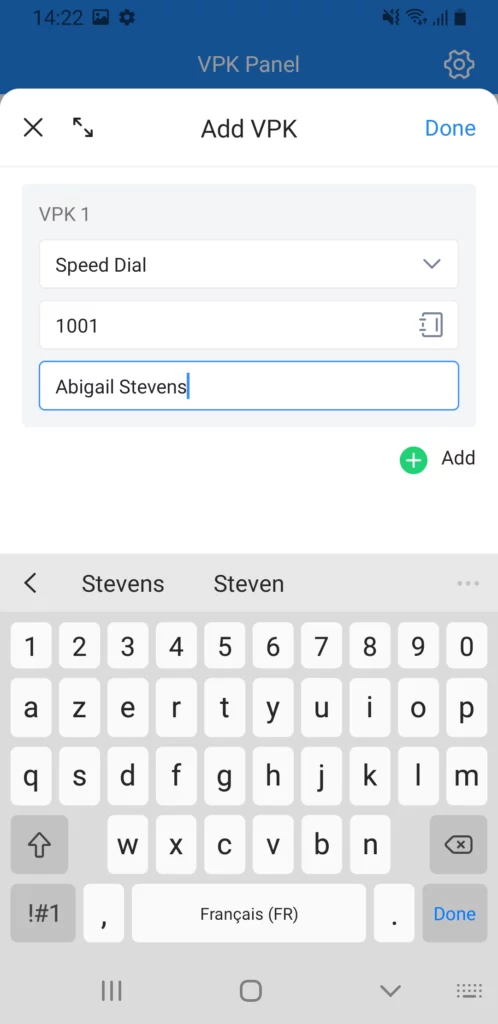
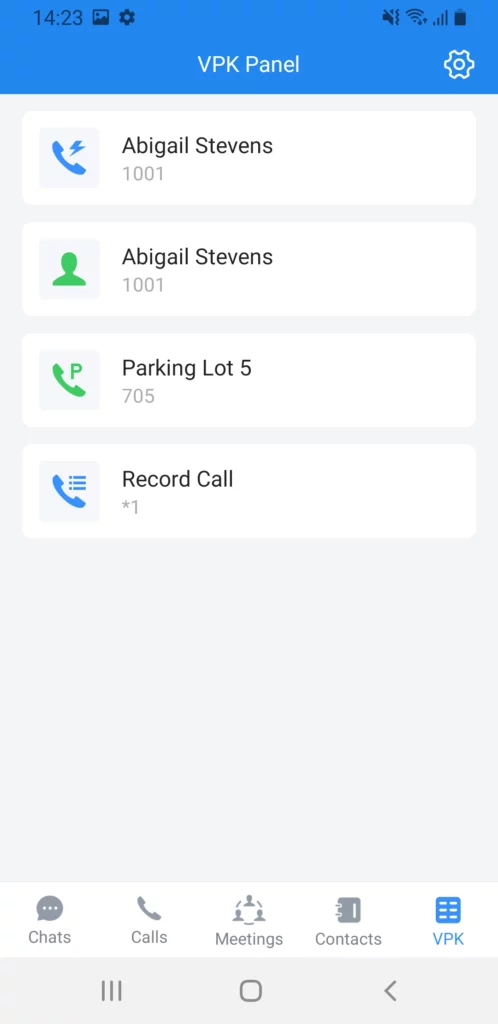
 button.